After a night shift, your ankles tell the truth. The puffiness, the ache when you finally sit down, the shoes that fit fine at 7 a.m. but feel tight by noon, that's not just fatigue. It's your circulatory system working against gravity for hours at a time, without much help.
Compression socks help. But not all of them are worth wearing inside a nursing clog for twelve hours.
Why nurses need compression socks (and what mmHg to choose)
Standing for extended shifts puts real mechanical pressure on your venous system. When your calf muscles aren't moving, the pump that pushes blood back up to the heart slows down; fluid pools in the lower legs. Compression socks counter this by applying graduated pressure, tightest at the ankle, easing off as they go up, which helps maintain blood flow and reduce swelling.
The question isn't whether to wear them. It's which compression level actually fits your workload.
The 15-20 mmHg range: right for most nurses
For the majority of nurses working standard 8-12 hour shifts, the 15-20 mmHg range (Class 1) is the right starting point. According to a clinical review published at NCBI, Class 1 compression, pressure below 20 mmHg, is appropriate for tired legs, minor swelling, and prolonged standing. You don't need a prescription for this level, and it's what most compression specialists recommend for preventive daily use.
This is also the range the Norton School of Lymphatic Therapy describes as "mild support", effective for consistent wear without the tightness that causes people to give up on compression entirely.
Nurses and other healthcare workers who stand for 8-12 hours benefit most from compression socks in the 15-20 mmHg (Class 1) range. This level applies graduated pressure from ankle to calf, supporting venous return without requiring a prescription.
When to go up to 20-30 mmHg
If you're dealing with visible varicose veins, consistent moderate edema, or you've been told by a doctor that you have chronic venous insufficiency, 20-30 mmHg (Class 2) may be more appropriate. This level does require more care with sizing and is best discussed with your GP or occupational health nurse before buying.
What actually makes a compression sock wearable for 12 hours
The pressure rating is only part of it. You'll abandon even the best compression socks if they slide down mid-shift, leave a welt at the top of your calf, or feel like wearing a tourniquet in a warm hospital corridor.
Fabric matters more than most product pages admit. Nylon-based socks tend to be more durable and wick moisture better than pure cotton, useful when you're on your feet in a warm ward all day. Cotton options breathe well but take longer to dry if you're doing back-to-back shifts. For intensive care environments or OR settings, a nylon-spandex blend typically holds up better over multiple washes.
The band at the top. This is where most cheap compression socks fail. It should grip without digging. If you're noticing indentation on your leg after taking them off, the band is too tight or the sock is the wrong size. Don't go by shoe size alone, measure your ankle and calf circumference before buying.
Durability. A nurse washing compression socks three times a week will go through a cheap pair in six weeks. Medical-grade brands (JOBST, Sigvaris, Comrad) are engineered for repeated washing without losing compression; the cost-per-wear calculation almost always favors spending more upfront.
Best compression socks for nurses, our top picks
Three picks for standard shifts at 15-20 mmHg, two for nurses who need heavier support.
15-20 mmHg, for standard 8-12 hour shifts
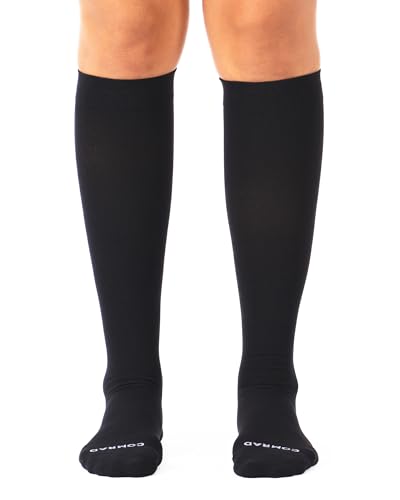
Comrad Nylon Knee-High 15-20 mmHg
A nurse-favorite for first-time compression wearers. Soft nylon blend, forgiving fit at the top band, and durable enough to survive frequent washing. Strong starting point for daily ward use.
Best for: Nurses new to compression, standard 8-12 hour shifts
Pros
- ✓ Comfortable nylon blend, breathable and moisture-wicking
- ✓ Forgiving top band, no dig at the calf
- ✓ Holds compression through repeated washes
- ✓ Genuine 15-20 mmHg graduated compression
Cons
- ✗ Limited color range vs fashion brands
- ✗ Knee-high only

JOBST UltraSheer Knee-High 15-20 mmHg
From one of the most established medical compression brands. Sheer enough to wear under scrubs or off-duty, with the precise graduated pressure JOBST is known for.
Best for: Nurses who want a discreet, sheer look on or off shift
Pros
- ✓ Sheer, almost invisible appearance
- ✓ Medical-grade compression accuracy
- ✓ Trusted brand among healthcare professionals
Cons
- ✗ Sheer fabric is less durable than opaque options
- ✗ Hand-wash recommended for longevity
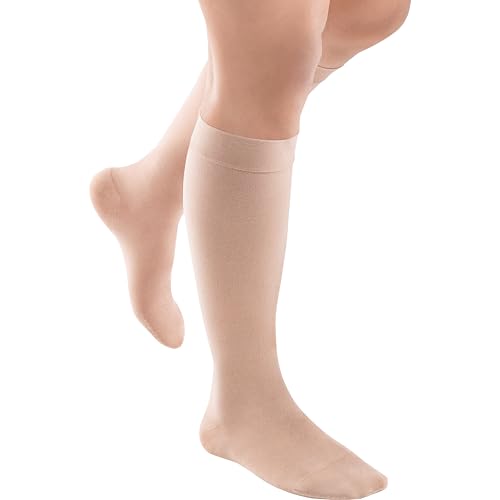
JOBST ACTIVA Opaque Knee-High 15-20 mmHg
The opaque sibling of UltraSheer, built for daily wear under scrubs. Thicker, more durable, and built to survive the hospital laundry cycle.
Best for: Nurses wanting maximum durability for daily rotation
Pros
- ✓ Opaque, hides skin discoloration or veins
- ✓ Highly durable for daily wear
- ✓ Machine washable
Cons
- ✗ Warmer than sheer options in summer wards
20-30 mmHg, for moderate swelling or varicose veins

Sigvaris Style Sheer 780 20-30 mmHg
A step up in compression for nurses managing varicose veins or persistent edema. Sheer construction keeps the look professional even at Class 2 pressure.
Best for: Nurses with varicose veins or chronic venous insufficiency
Pros
- ✓ True 20-30 mmHg graduated compression
- ✓ Sheer despite higher compression class
- ✓ Engineered for long-term medical use
Cons
- ✗ Higher price point
- ✗ Best fitted with calf measurement, not shoe size

SIGVARIS Essential Cotton Calf-High 20-30 mmHg
A cotton-rich option in Class 2 compression, softer against the skin for nurses who find synthetic blends irritating during long shifts.
Best for: Nurses with sensitive skin who need 20-30 mmHg support
Pros
- ✓ Cotton-rich blend, soft and breathable
- ✓ Reliable Sigvaris build quality
- ✓ Good option for sensitive skin
Cons
- ✗ Cotton dries slower, keep a second pair for back-to-back shifts
- ✗ Less sheer than nylon options
One last thing
If you've been getting by with regular socks and just dealing with the swelling, start with the Comrad or JOBST ACTIVA at 15-20 mmHg, both are forgiving for first-time compression wearers. Once you've worn them through a few shifts, you'll understand why so many nurses refuse to work without them.
Not sure which mmHg is right for you? See our full compression level guide.
Want to understand exactly how graduated compression works and which level fits your shift pattern?
Read the Compression Levels Guide