The label says 15–20 mmHg. Another pair says 20–30. A third says "light support" without a number at all. If you've stood in front of a compression display — or scrolled through product pages at midnight before a long rotation — and genuinely not known what any of it means, you're not alone. The numbers are medical shorthand that nobody explained to you.
This guide changes that. By the end, you'll know exactly which level is appropriate for your situation — whether you're a first-time buyer, a flight attendant who's tired of swollen ankles, or someone managing varicose veins and wondering whether to go higher.
What Is mmHg? A Plain-Language Explanation
mmHg stands for millimetres of mercury — the unit used to measure pressure, the same one your doctor uses for blood pressure readings. In compression garments, it tells you how much pressure the fabric applies to your leg.
But the number alone doesn't tell the full story. What matters is that the compression is graduated — strongest at the ankle, decreasing as it moves up toward the knee or thigh. This gradient is what makes compression garments effective: it actively works against gravity, helping push blood and fluid back up toward the heart.
mmHg (millimetres of mercury) is the unit used to measure the pressure a compression garment applies to the leg. Graduated compression means the pressure is highest at the ankle and decreases moving upward toward the knee or thigh — this helps push blood back toward the heart against gravity. For most women, including flight attendants, 15–20 mmHg is the standard starting point for daily circulatory support, while 20–30 mmHg is appropriate when swelling is persistent or more significant.
A garment that applies even pressure throughout — like a tight sock with no gradient — doesn't do this. That's why graduated compression and compression level are two different things, and why both matter when you're choosing.
The Four Compression Classes — At a Glance
Compression garments are categorised by pressure class. (Source: PMC4081237)
| Class | Range | Description | Real-world example |
|---|---|---|---|
| Class 0 | 8–15 mmHg | Light support | A teacher on her feet all day who wants some relief by 4pm — not significant swelling, just fatigue |
| Class 1 | 15–20 mmHg | Mild / Moderate | The standard for flight crew. Also appropriate for varicose veins, pregnancy, post-sclerotherapy, and anyone standing 8+ hours |
| Class 2 | 20–30 mmHg | Firm support | A flight attendant whose ankles are consistently swollen after every rotation, or someone with moderate chronic venous insufficiency |
| Class 3 | 30–40 mmHg | Extra firm | Severe lymphedema, active venous ulcers — requires medical prescription and fitting |
The boundary between Class 1 and Class 2 is where most questions happen — and where the rest of this guide focuses.
Which Level Is Right for You?
If You're a Flight Attendant or Cabin Crew
The cabin environment creates specific circulatory demands. Aircraft maintain pressure equivalent to 5,000–8,000 feet altitude, combined with humidity of just 10–20% and hours of active standing. (Source: GPNotebook) Fluid progressively shifts toward the lower limbs, and without graduated compression, swelling accumulates sector by sector.
For most cabin crew, 15–20 mmHg is the correct starting point. It provides real circulatory support without being restrictive during 10–14 hour shifts. The Aerospace Medical Association has documented absolute DVT risk at 1 in 4,656 flights — a number that rises meaningfully for crew members on oral contraceptives, or those with underlying circulatory risk factors. (Source: ASMA)
That said, a fair reading of the evidence is important: a BMJ analysis found that individual risk factors — genetics, health status, hormonal contraception — carry more weight than travel duration alone when assessing personal DVT risk. (Source: PMC434500) Compression is a sensible preventive measure; it's not a guarantee, and it doesn't replace individual medical advice for those with diagnosed risk factors.
The practical guidance: Start at 15–20 mmHg. If your ankles are consistently swollen after every rotation despite wearing 15–20, speak to your GP about whether 20–30 mmHg is appropriate for you.
If You're a Nurse or Healthcare Worker
Nurses working standard 8–12 hour shifts do well with 15–20 mmHg (Class 1). It's enough to counter the circulatory strain of standing on hard floors all day without requiring a prescription or causing discomfort during back-to-back shifts. According to a clinical review at NCBI, Class 1 compression is appropriate for tired legs, minor swelling, and prolonged standing, which covers most nursing scenarios. (Source: PMC4081237)
If you're dealing with visible varicose veins or your legs are consistently swollen by end of shift despite wearing 15–20 mmHg, it's worth trying 20–30 mmHg (Class 2), ideally after a conversation with your occupational health nurse.
For specific product recommendations, see our guide to the best compression socks for nurses.
If You Stand All Day But Don't Fly
Nurses, teachers, retail workers, and anyone on their feet for 8+ hours share the same fundamental problem: prolonged standing reduces the calf muscle pump's effectiveness at returning blood to the heart. The result is the familiar heavy-leg feeling by the end of a shift.
15–20 mmHg is the right level for most people in this category. It addresses daily fatigue and minor swelling without requiring medical consultation. If you're also dealing with early varicose veins, 20–30 mmHg is worth discussing with your GP.
If You Have Varicose Veins or Persistent Swelling
Visible varicose veins — particularly if they're causing discomfort, aching, or skin changes — typically benefit from 20–30 mmHg. The same applies if swelling in your ankles or lower legs is a consistent presence rather than an occasional end-of-day issue.
At this level, it's worth involving your GP. Not because 20–30 mmHg is unsafe, but because persistent swelling or varicose vein symptoms can have underlying causes that compression alone won't address — and because correctly fitted 20–30 mmHg garments are more effective than self-selected ones.
If You've Never Worn Compression Before
The first time you put on a compression garment — if you've sized correctly — it will feel noticeably snug. That is not a sign of the wrong size. It's the compression doing its job. The sensation typically becomes neutral within the first 15–20 minutes of wear.
Start at 15–20 mmHg. Don't begin at 20–30 mmHg unless a doctor has specifically recommended it.
Put compression garments on in the morning, before you've been standing, while any swelling is at its lowest. They're significantly easier to put on before fluid has accumulated — and more effective.
A Note on 30–40 mmHg — When to See a Doctor
Class 3 compression (30–40 mmHg) is medical-grade support for significant conditions: severe lymphedema, active venous ulcers, and post-surgical recovery from certain vascular procedures. It requires a prescription in most countries and should be fitted by a trained specialist.
If you're considering 30–40 mmHg because 20–30 hasn't been sufficient, that's a signal to see your GP or a vascular specialist — not to increase your compression level independently.
Our Picks at Each Level
15–20 mmHg — Two Reliable Starting Points
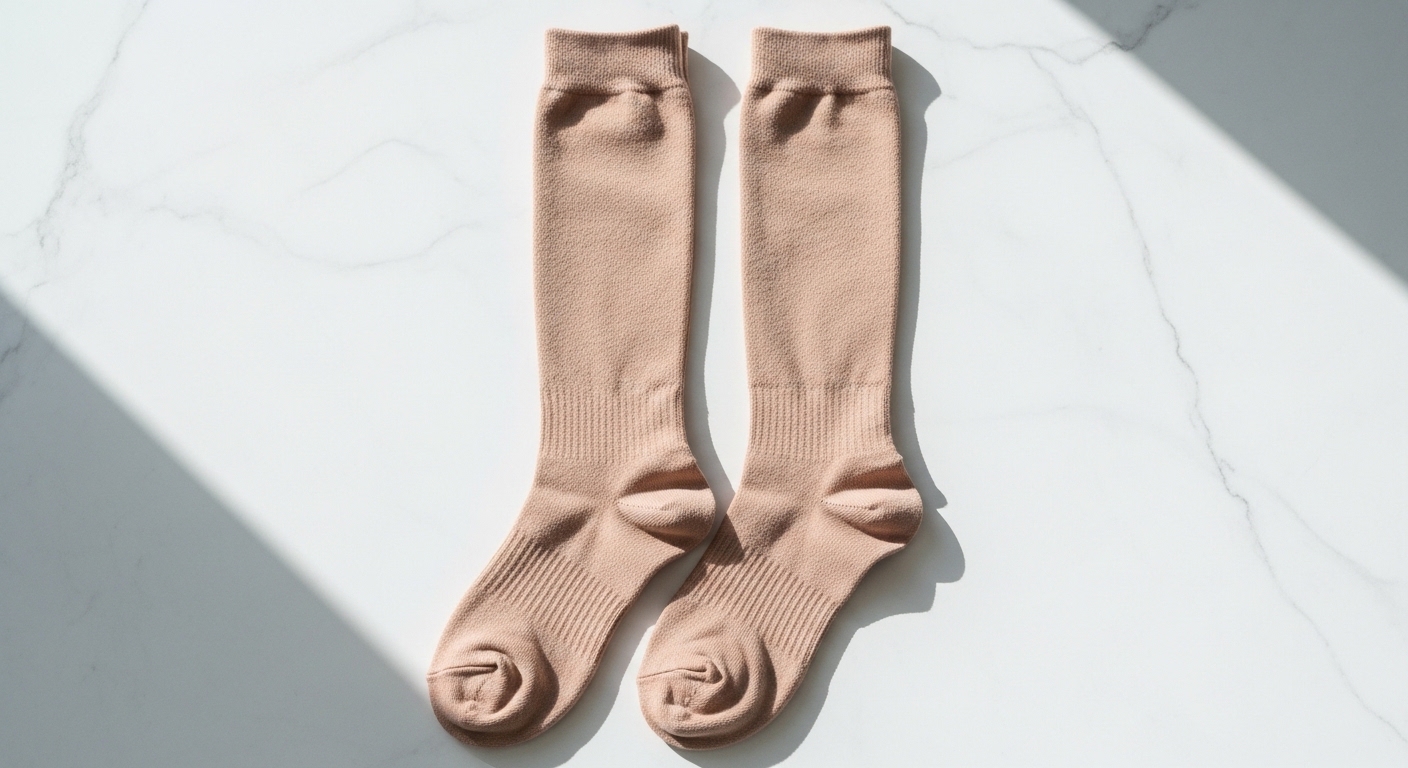
Comrad Nylon Knee-High Compression Socks — 15–20 mmHg
Comrad has become the quiet favourite among flight attendants and standing-profession workers who want compression that doesn't look clinical. Breathable nylon-spandex construction, consistent 15–20 mmHg across the full compression zone, and durable enough for daily wear without losing structure.
Best for: First-time compression wearers, daily wear, long shifts
Pros
- ✓ Looks like regular hosiery
- ✓ Breathable nylon-spandex
- ✓ Holds compression after washing
- ✓ Multiple colours including professional options
Cons
- ✗ Knee-high only — no thigh or full-length option
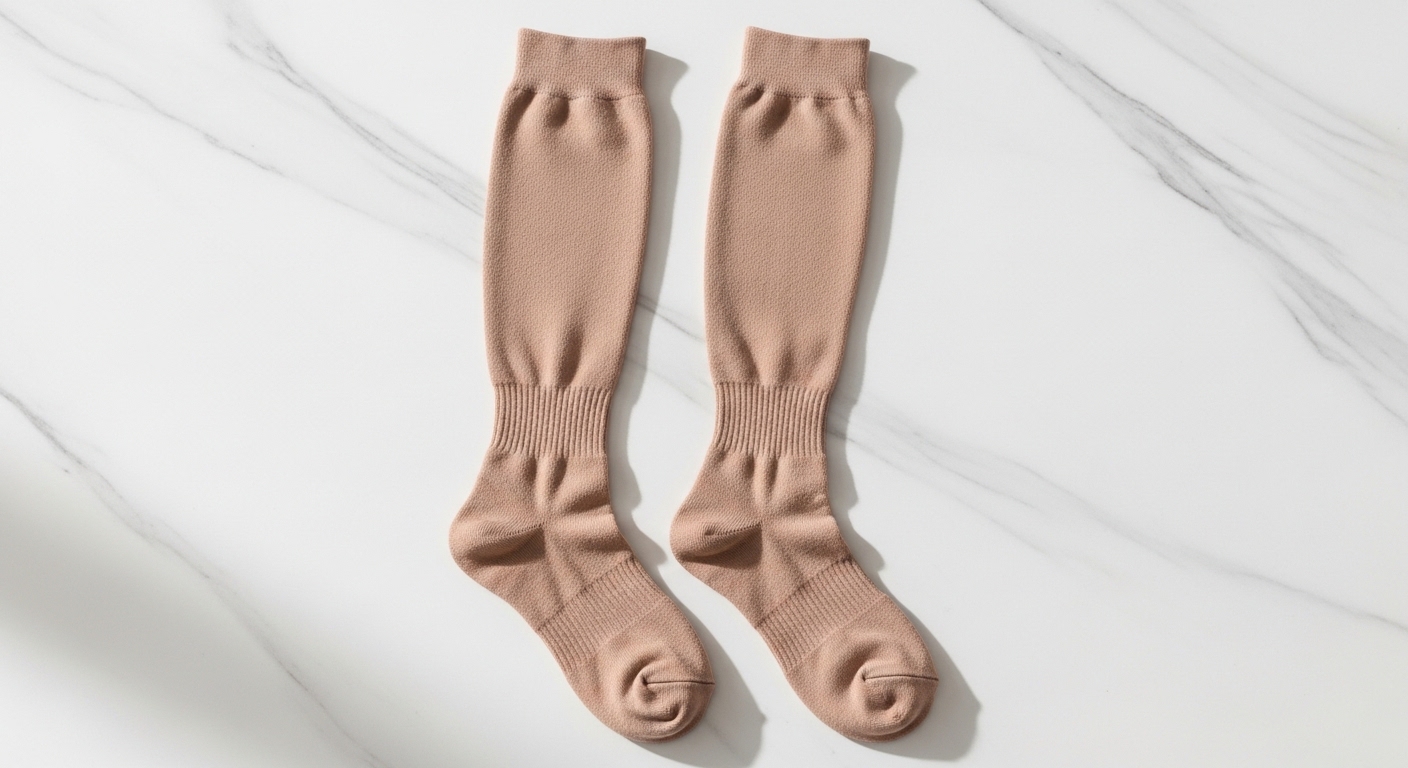
JOBST UltraSheer Knee-High — 15–20 mmHg
JOBST is one of the most trusted names in medical compression. The UltraSheer is their answer to compression that looks like regular hosiery — sheer finish, professional appearance, and consistent graduated pressure that holds through a full shift.
Best for: Uniform compliance, professional settings, flight attendants
Pros
- ✓ Medical-grade brand with decades of clinical use
- ✓ Sheer finish — invisible under trousers
- ✓ Consistent graduated pressure
Cons
- ✗ Higher price than fashion compression
- ✗ Clinical colour range
20–30 mmHg — For More Demanding Support
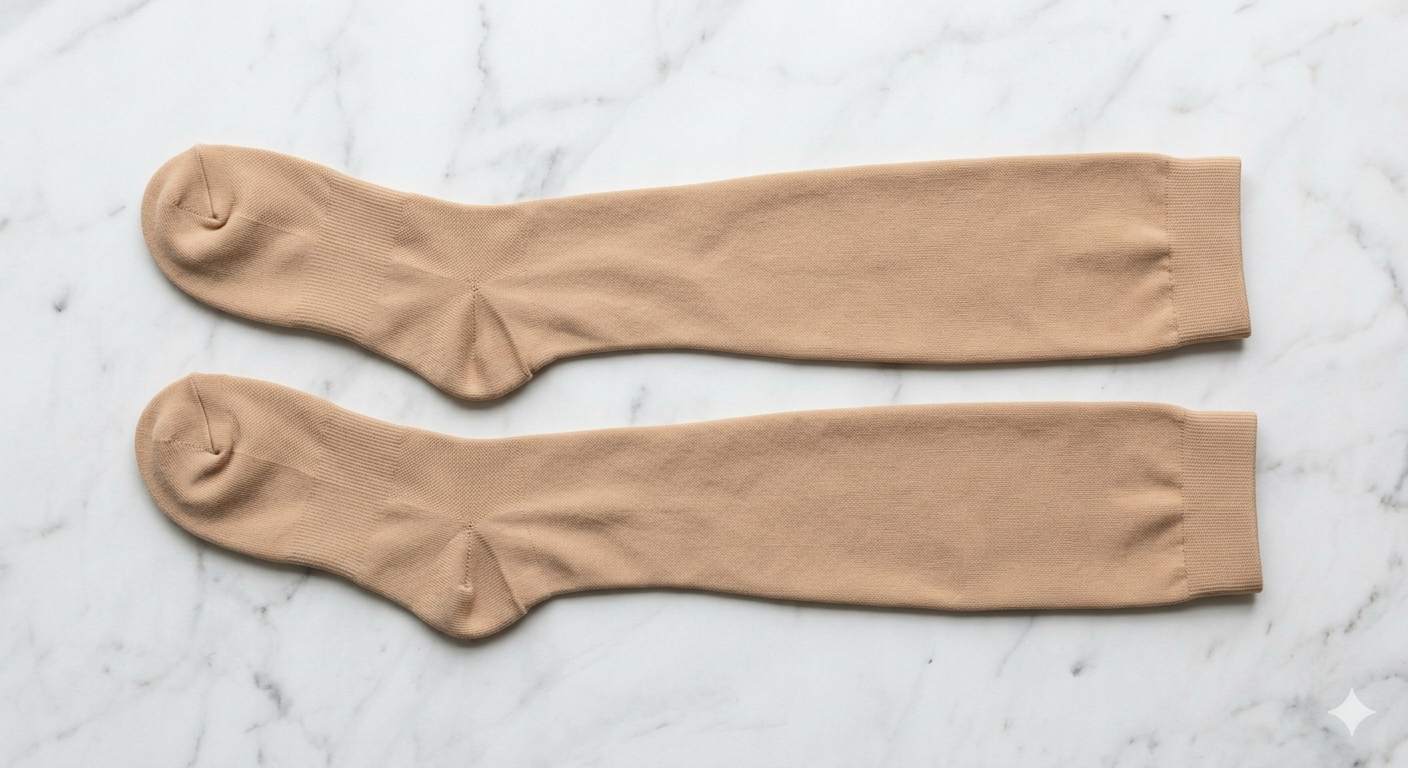
JOBST Relief Waist-High Pantyhose — 20–30 mmHg
Full-length coverage for those who need graduated compression from foot to waist — useful for flight attendants with swelling that extends above the knee, or anyone managing varicose veins across a larger area.
Best for: Swelling above the knee, varicose veins, post-surgical recovery
Pros
- ✓ Full waist-to-foot coverage
- ✓ Clinical-grade construction
- ✓ Comfortable waistband for long shifts
Cons
- ✗ Requires correct morning sizing measurement
- ✗ Medical appearance
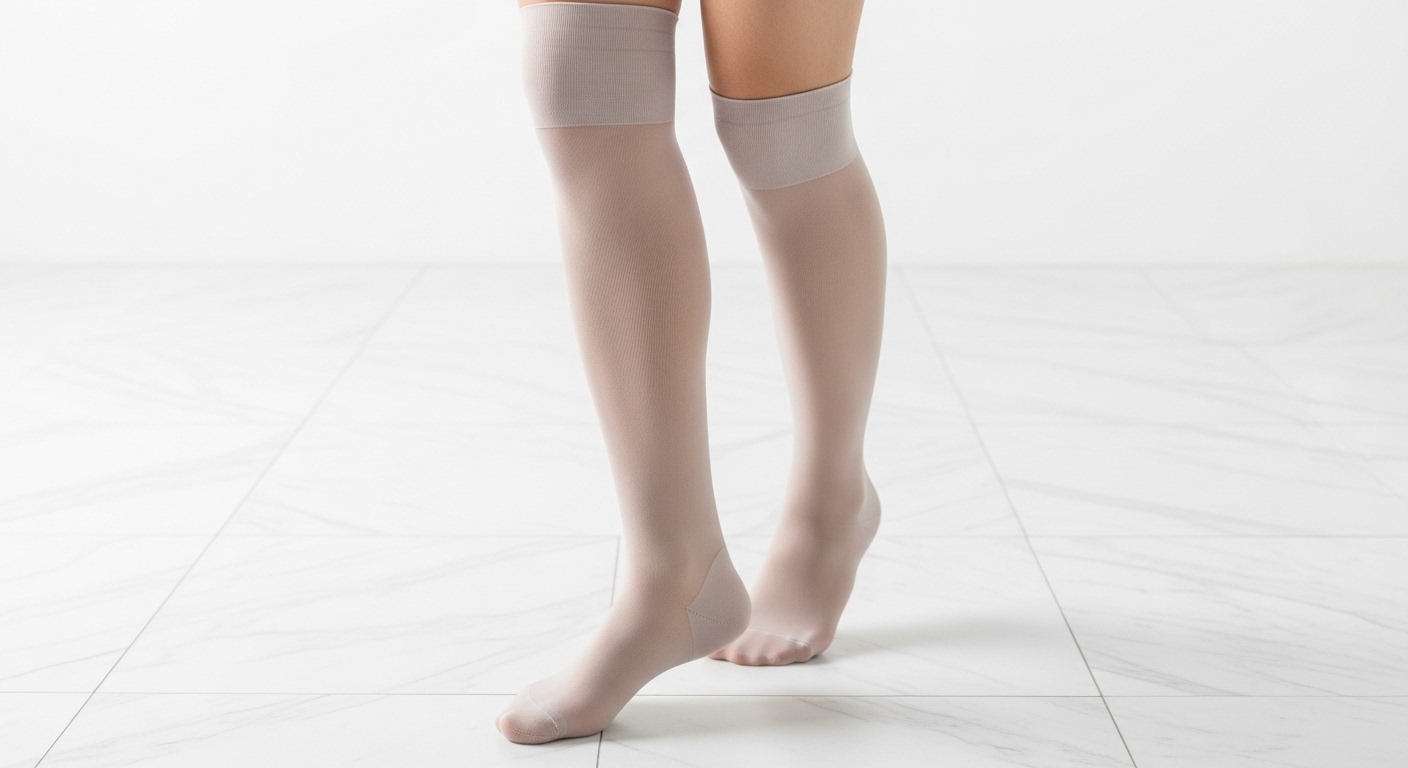
Sigvaris Style Sheer 780 Knee-High — 20–30 mmHg
Medical-grade compression with a sheer, polished finish. Sigvaris is the premium standard in graduated compression — this is the option for flight attendants who need 20–30 mmHg but cannot compromise on appearance under a tailored uniform.
Best for: Flight attendants needing 20–30 mmHg with uniform compliance
Pros
- ✓ Premium medical-grade compression
- ✓ Sheer finish — uniform compatible
- ✓ Worth the investment for daily crew wear
Cons
- ✗ Premium price point
- ✗ Knee-high only
Common questions
The Bigger Picture: Where to Go Next
Now that you know which compression level fits your situation, the next step is finding garments that work under your specific uniform and shift conditions.
Best Compression Tights for Flight Attendants 2026 →