Researched and fact-checked, July 2026
QR-LHR, hour 11. You've done two meal services, four trolley runs, and enough kilometres up and down the aisle that your feet stopped feeling like yours around hour seven. The shoes that fit at departure now don't.
This isn't just fatigue. It's physiology, and it's worse for crew than for the passengers you're serving.
Why Your Legs Swell on Long-Haul (And Why It's Worse for Crew Than Passengers)
Passengers sit. They move occasionally, which actually keeps the calf muscle pump working in short bursts. Cabin crew stand, for 8 to 12 hours, with intermittent trolley runs rather than sustained walking. That pattern is harder on the venous system than either sitting still or walking steadily.
Add the cabin environment: pressure equivalent to 5,000 to 8,000 feet altitude shifts fluid toward the lower extremities. Low cabin humidity (10 to 20%) causes mild dehydration, which increases blood viscosity. (Source: GPNotebook Cardiovascular Medicine) The result is exactly what it feels like: your ankles and feet expand over the course of a rotation, and the last few hours in your shoes become something to manage rather than ignore.
At 15 to 20 mmHg (Class 1 compression), a compression sock or tight provides enough graduated pressure to meaningfully support venous return during this kind of sustained standing. (Source: PMC4081237) That's the baseline. What you layer on top of it depends on how long the rotation is and what your uniform allows.
A note on DVT: cabin crew face elevated VTE exposure due to frequency of flying. (Source: ScienceDirect 2022) The absolute risk per individual flight is low, and personal factors like oral contraceptive use or family history matter more than any single sector. (Source: PMC434500) Compression is a well-supported preventive measure, not an overreaction.
The Protocol, Three Phases
Phase 1, Before You Leave Accommodation
Compression works by preventing fluid from pooling, not by reversing pooling that's already happened. If you put your socks on in the crew room at the gate, your legs have already been vertical for an hour or more, you've missed the best window.
Put compression on before you leave the hotel. Same principle as sunscreen: it only works if it's already there.
This is also when to put on any shapewear layer you're wearing. Dress fully, uniform, compression, shapewear, before you leave, and arrive already in the system you're going to be in for the next 14 hours.
Phase 2, During the Flight
You can't sit down. You can move differently. Short galley walks between services are more effective than longer walks less often; the calf pump works better with frequent low-intensity movement than with occasional bursts.
Drink water through the rotation. Dehydration concentrates the blood and makes the swelling worse, the cabin humidity at 10 to 20% is doing that to you regardless of what you drink, so you're compensating for a baseline deficit.
Your compression layer should stay on for the full rotation. For Class 1 (15 to 20 mmHg), there's no reason to remove it mid-flight; it's designed for extended wear.
Phase 3, After Landing
Keep compression on through airport transit. The swelling doesn't reverse at the gate. Give it another hour, through customs, through the crew bus, to the hotel, before removing it.
Elevate when you can. Even 20 minutes horizontal with feet above heart level helps faster than standing in a hotel room.
What to Wear, Products That Actually Work Under a Uniform
The filtering criteria for FA shapewear are stricter than for any other use case: nothing that shows through tailored fabric, nothing that rolls by hour five, nothing that creates a line through a fitted skirt.
| Product | Type | mmHg | Uniform compatibility |
|---|---|---|---|
| JOBST UltraSheer Knee-High | Compression sock | 15 to 20 | Sheer black/nude, invisible under trousers |
| Comrad Nylon Knee High | Compression sock | 15 to 20 | Slim profile, cushioned footbed |
| Wolford Individual 10 | Control tight | - | Extremely thin, no visible line under skirts |
| SPANX Mid-Thigh Sheers | Sheer compression tight | - | Reads as regular hosiery |
| SIGVARIS Soft Silhouette | Compression legging | 15 to 20 | Full-leg, flat waistband, no ankle cuff bulk |
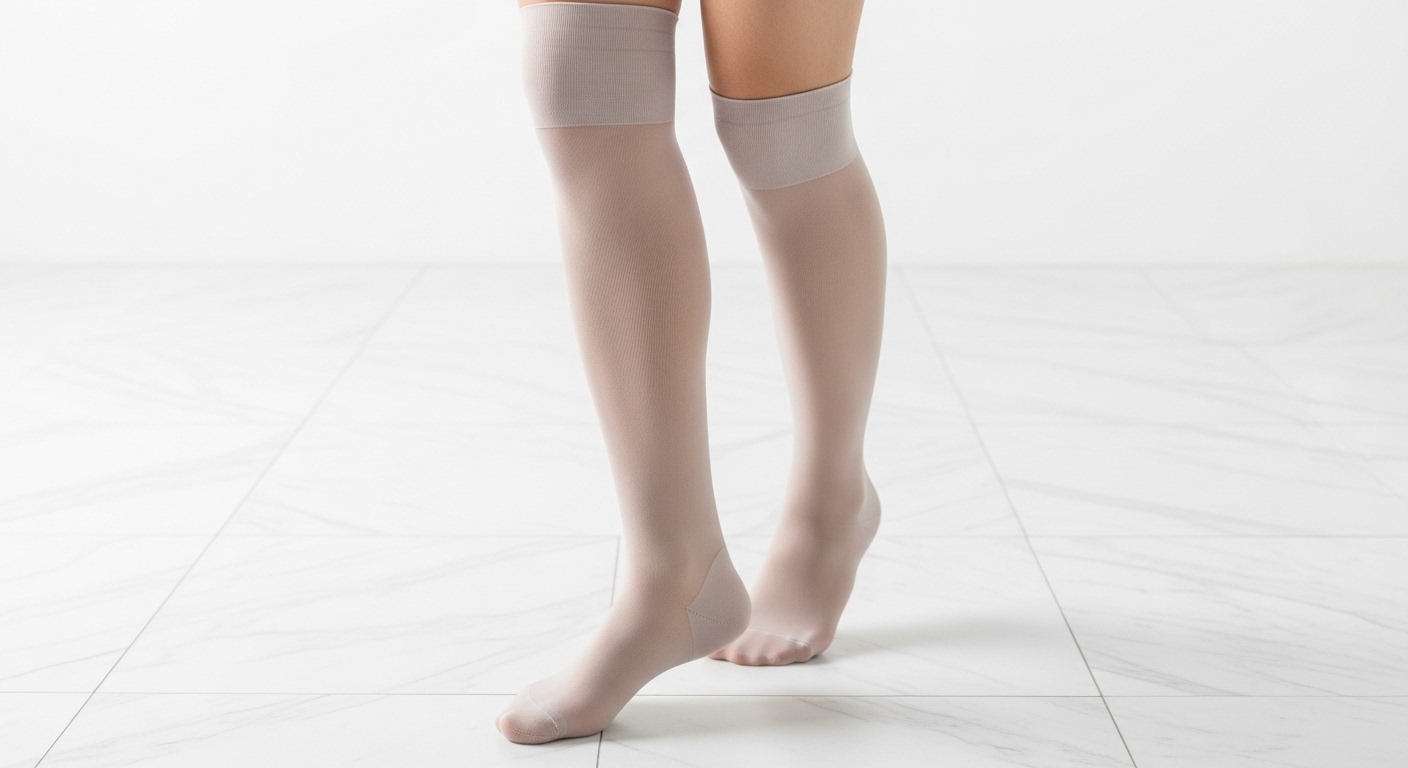
JOBST UltraSheer Knee-High
The sock that disappears under dark uniform trousers. Sheer finish, genuine Class 1 graduated compression, holds its shape through a full shift without cutting at the calf top. Put these on before you leave the hotel.
Best for: Long-haul crew, dark uniform trousers, 12 to 14 hour rotations
Pros
- ✓ Genuine sheer finish
- ✓ Class 1 15 to 20 mmHg
- ✓ Holds shape through full shift
Cons
- ✗ Premium price point
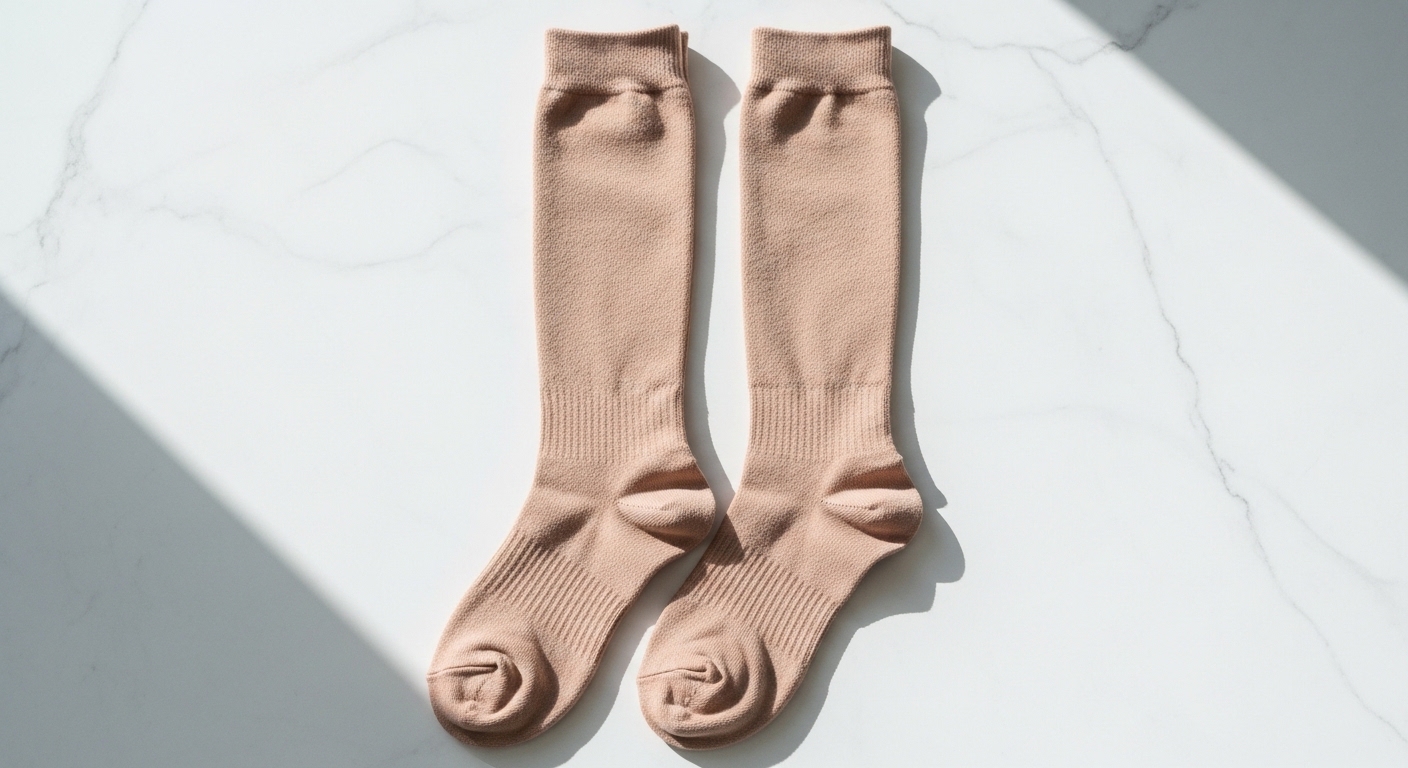
Comrad Nylon Knee High
The alternative for crews who want more footbed cushion. Slightly less sheer than JOBST but slim enough to vanish under uniform trousers. Worth it on 14+ hour rotations on hard galley floors.
Best for: Extra-long rotations, cushioned comfort, hard galley floors
Pros
- ✓ Extra footbed cushion
- ✓ Class 1 15 to 20 mmHg
- ✓ Slim profile
Cons
- ✗ Less sheer than JOBST
Wolford Individual 10 Control Top
Premium answer to the shapewear question. Thin enough to wear under a fitted Emirates or Qatar skirt without a visible line at the thigh; holds its shape through a full rotation without fabric migration. The price is high. The performance earns it.
Best for: Emirates, Qatar, Etihad crew, premium uniform compliance
Pros
- ✓ Extremely thin and sheer
- ✓ No VPL
- ✓ No fabric migration through full rotation
Cons
- ✗ High price
- ✗ Delicate, carry a spare
SPANX Mid-Thigh Sheers
Accessible version of the same approach. Sheer-finish tight that reads as regular hosiery from outside, with enough midriff control to stay smooth under a fitted jacket.
Best for: Uniform skirts, fitted jackets, accessible price point
Pros
- ✓ Sheer, reads as hosiery
- ✓ No visible waistband
- ✓ Stays in place
Cons
- ✗ Less warm in cold cabins
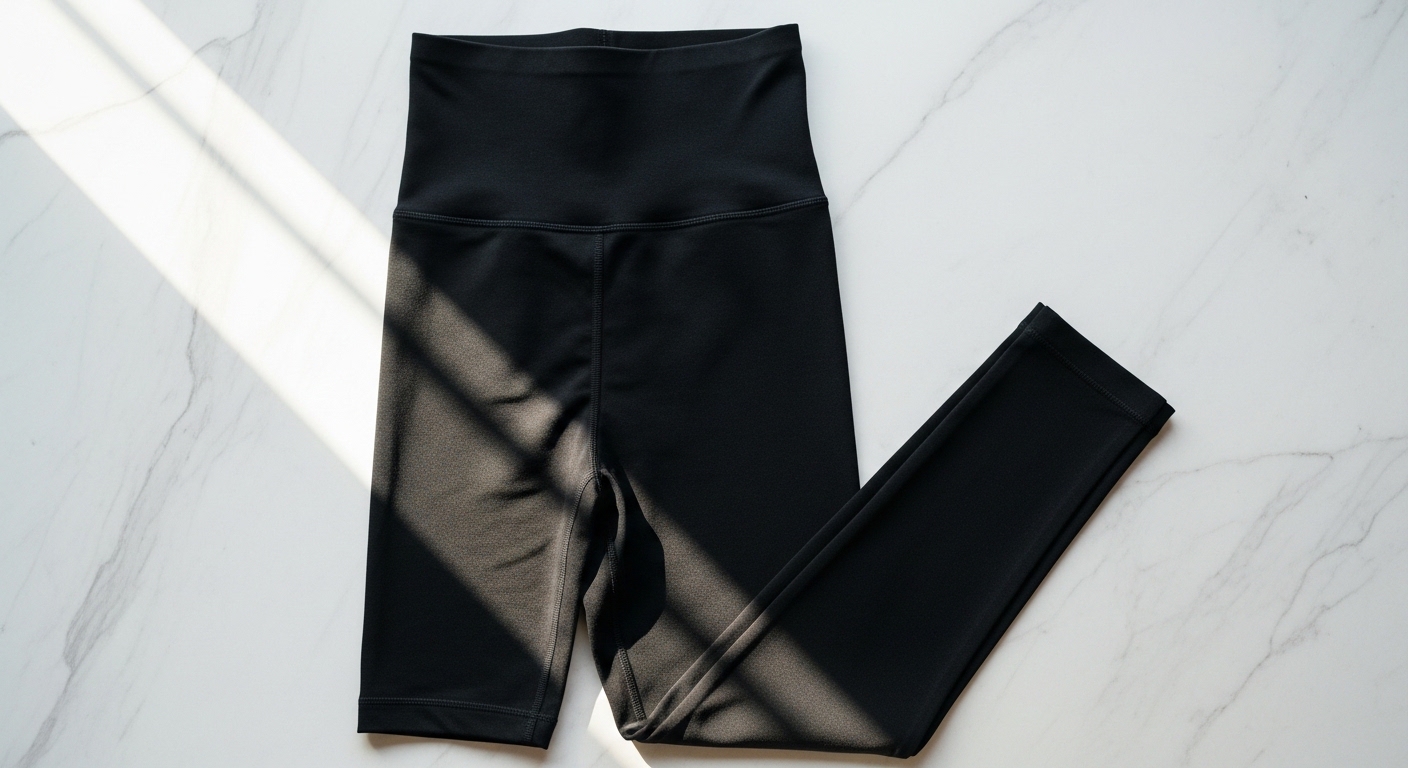
SIGVARIS Soft Silhouette Leggings
For crews on the longest rotations or those who prefer full-leg coverage. Medical-grade Class 1, slim profile under trousers, flat waistband. Replaces the sock layer entirely.
Best for: 14+ hour rotations, varicose vein history, full-leg preference
Pros
- ✓ Medical-grade 15 to 20 mmHg
- ✓ Flat non-rolling waistband
- ✓ No visible ankle cuff
Cons
- ✗ More expensive than knee-highs
- ✗ Takes longer to put on
The Uniform Compliance Question
The standard crew question: will it show?
For socks: sheer black or sheer nude in 15 to 20 mmHg reads as regular hosiery under dark trousers. A thick athletic compression sock won't. Check your specific uniform trousers in good light; if you can see the top band of the sock below the hem when seated, it's the wrong product.
For shapewear under a skirt: anything with raised seam panels, a narrow waistband, or a silicone grip band at the top will show through tailored fabric when you move. Wolford and SPANX Sheers are specifically built to be invisible; budget alternatives typically aren't.
For the legging option under trousers: the ankle cuff should not appear below the trouser hem. SIGVARIS Soft Silhouette sits clean at the ankle; check this specifically before a full rotation.
One practical note: do your uniform check in your full layering system, standing and seated, before a rotation, not in a hotel room mirror at departure time.
Going Deeper on Compression?
If you're managing lymphatic swelling or need medical-grade compression for long-haul travel, the dedicated guide on LymphaticLeggingsGuide.com covers flat-knit vs. circular-knit construction, mmHg by situation, and 2026 product picks specifically for long-haul flights.
Best Lymphatic Leggings for Long-Haul Flights: 2026 GuideRead next
What Flight Attendants Actually Wear Under Their Uniforms (And Why It Matters)
The real layering system cabin crew use: compression socks, shapewear, and full-leg options that stay in place through a 12-hour flight.
Frequently Asked Questions
The Short Version
Compression before departure, hydration through the rotation, elevation after landing. Start with JOBST UltraSheer on the sock layer and Wolford or SPANX Sheers on the shapewear layer; add SIGVARIS leggings if you're on 14+ hour rotations.
For the full breakdown of what works under a uniform, socks, shapewear, full-leg options, see the complete FA layering guide: What Flight Attendants Actually Wear Under Their Uniforms.
For lymphatic compression specifically for long-haul travel: Best Lymphatic Leggings for Long-Haul Flights: 2026 Guide on LymphaticLeggingsGuide.com.