Researched and fact-checked, July 2026
Hour six of a DXB to LHR rotation. You've served two full meal services, walked the aisle approximately 400 times, and your shoes feel like they belong to someone with slightly smaller feet. That's not in your head. Your feet actually are bigger than they were at departure.
What you're wearing under that uniform matters more than most passengers would guess. This is the layering system that gets you to landing without the ache that used to be normal.
It Starts Before You Even Get to the Gate
Modern aircraft cabins maintain pressure equivalent to roughly 5,000 to 8,000 feet altitude. At that elevation, arterial blood oxygen saturation drops by about 3%, not enough to cause problems in healthy people, but enough to shift fluid dynamics in your lower extremities. (Source: GPNotebook Cardiovascular Medicine)
Add low cabin humidity (typically 10 to 20%), which thickens the blood slightly. Add prolonged standing with intermittent bursts of movement rather than steady walking, which reduces the calf muscle pump's efficiency. The result is fluid pooling. Your ankles swell. Your feet press harder against your shoes. By hour eight, the ache is familiar.
Compression changes that equation. Not by magic, by physics.
The Sock Layer, Where Most FAs Start (and Get It Wrong)
Most crew who start wearing compression socks reach for whatever's at the pharmacy. The problem isn't compression; it's that they pick the wrong level or the wrong construction, and they end up with something that either shows through dark trousers or cuts into the calf by hour four.
What mmHg actually means for crew
For flight crew, the standard recommendation sits at Class 1: 15 to 20 mmHg. This is the range most occupational health guides refer to when they mention graduated compression. At 15 to 20 mmHg, the sock is firm enough to support venous return during long shifts and altitude exposure, but light enough to wear comfortably for a full rotation. (Source: PMC4081237)
Class 2 (20 to 30 mmHg) is firmer and requires a medical indication, it's for people with diagnosed venous insufficiency or a history of DVT, not for routine crew use.
| Level | mmHg | Who it's for |
|---|---|---|
| Class 0 | 8 to 15 mmHg | Light support, tired legs |
| Class 1 | 15 to 20 mmHg | Standard for cabin crew |
| Class 2 | 20 to 30 mmHg | Medical indication required |
| Class 3 | 30 to 40 mmHg | Severe lymphedema, prescribed only |
A note on DVT: air travel is a confirmed risk factor for venous thromboembolism, and cabin crew face elevated exposure due to frequency. (Source: ScienceDirect 2022) That said, the absolute risk per flight is low, and individual factors (genetics, oral contraceptives, hydration) matter more than any single flight. (Source: PMC434500) Compression is a reasonable and well-supported preventive measure, not a panic response.
Which socks actually work under a uniform
The key criterion for crew isn't just compression level; it's finish. A sheer or semi-sheer sock in black or nude disappears under dark tailored trousers. A thick athletic compression sock doesn't.
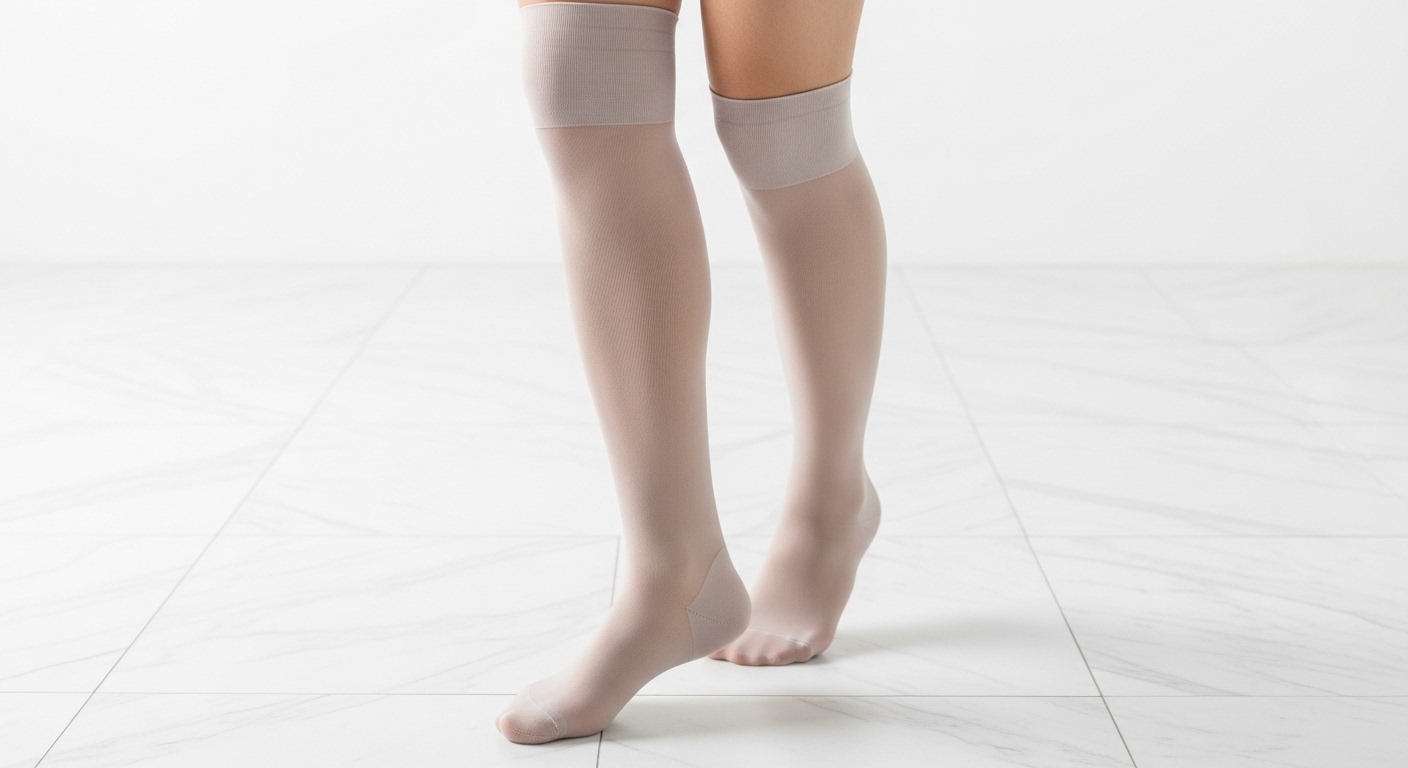
JOBST UltraSheer Knee-High
15 to 20 mmHg sheer-finish compression sock. Disappears under dark uniform trousers; holds compression through a full 12-hour shift without cutting at the calf top.
Best for: Long-haul crew, dark uniform trousers
Pros
- ✓ Genuine sheer finish
- ✓ 15 to 20 mmHg Class 1
- ✓ Holds shape through full shift
Cons
- ✗ Premium price point
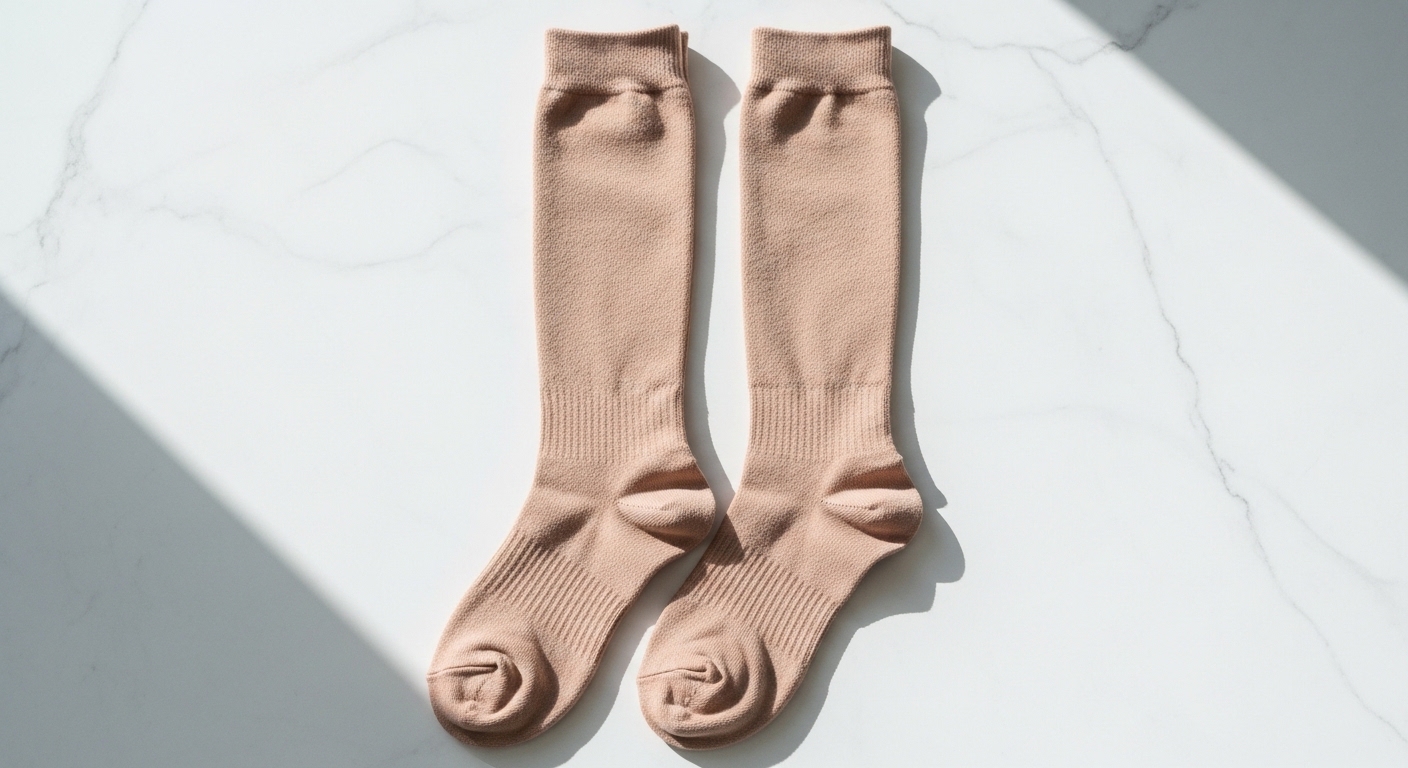
Comrad Nylon Knee High
15 to 20 mmHg with extra cushioning at the footbed, for crews who spend more time standing than walking. Slim enough to disappear under uniform trousers.
Best for: Long-haul crew, cushioned comfort
Pros
- ✓ Extra footbed cushion
- ✓ 15 to 20 mmHg Class 1
- ✓ Slim profile
Cons
- ✗ Less sheer than JOBST
The Shapewear Layer, What Stays in Place Through a 12-Hour Service
Uniform shapewear has one non-negotiable requirement: it cannot move.
A shapewear short that rolls down at the waist at hour five is worse than nothing. You're smoothing fabric back into place in the galley. That's the test no product description tells you about, not comfort in the dressing room, but stability at the end of a full service.
The second requirement is invisibility. Premium airline uniforms are tailored; they drape close. Anything with raised seams, thick waistbands, or textured panels will show through.
SPANX Mid-Thigh Sheers
Sheer-finish compression tight that reads as regular hosiery from outside. Enough midriff control to stay smooth under a fitted jacket through a full rotation.
Best for: Uniform skirts, fitted jackets, long-haul rotations
Pros
- ✓ Genuine sheer finish
- ✓ No visible waistband
- ✓ Stays in place
Cons
- ✗ Sheer finish means less warm in cold cabins
Wolford Individual 10 Control Top
Premium sheer control tight. Thin enough to wear under a fitted skirt without any visible line at the thigh. Holds shape through a full rotation without fabric creeping.
Best for: Emirates, Qatar, Etihad crew, premium uniform compliance
Pros
- ✓ Extremely thin and sheer
- ✓ No VPL
- ✓ Long-lasting shape retention
Cons
- ✗ High price point
- ✗ Delicate, bring a spare
The Full-Leg Option, When Knee-Highs Aren't Enough
Some crew prefer full-leg compression, particularly on longer hauls or if they have a history of varicose veins. A compression legging worn under trousers gives you continuous graduated pressure from ankle to waist without a gap at the knee.
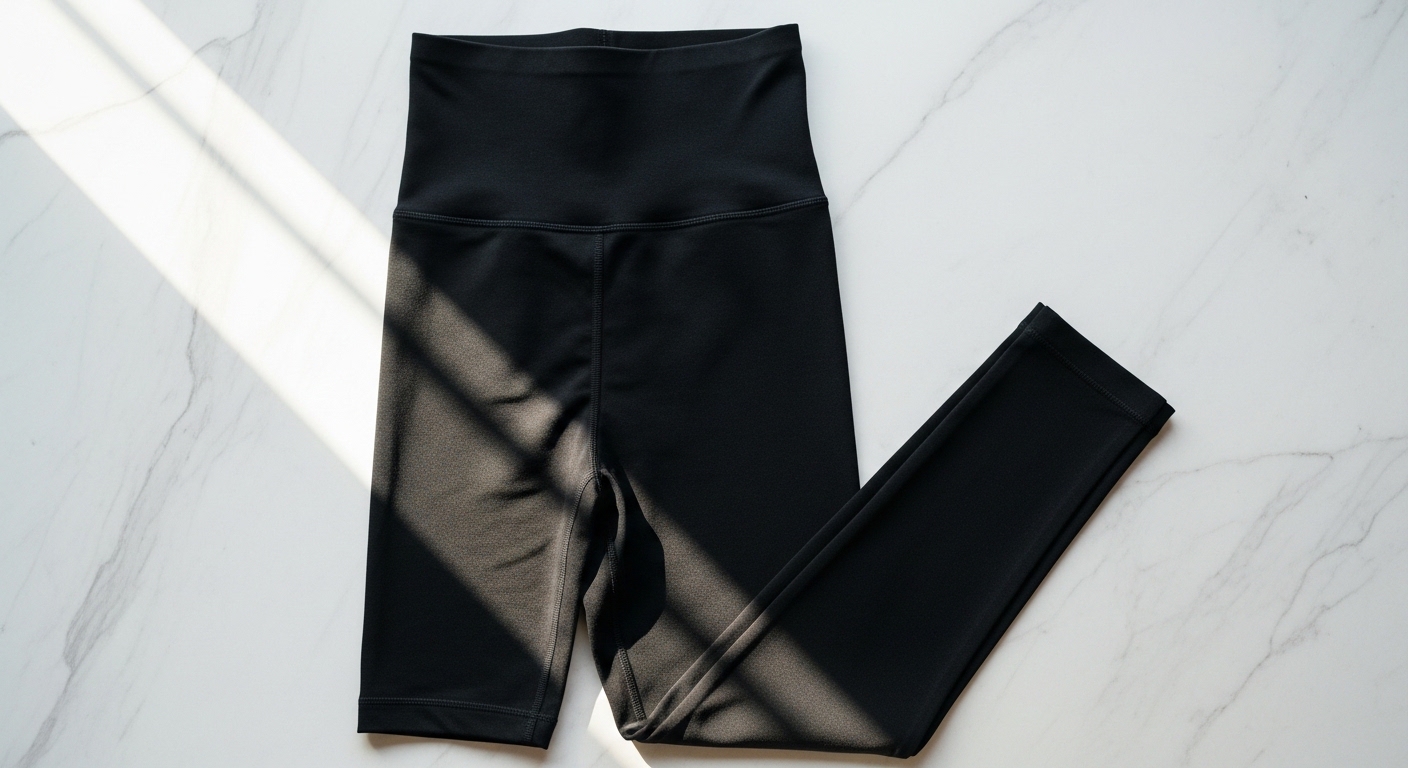
SIGVARIS Soft Silhouette Leggings
Medical-grade Class 1 (15 to 20 mmHg) compression legging. Slim enough to layer under uniform trousers without bulk. Clean ankle silhouette, no visible cuff when seated.
Best for: Long-haul crew with varicose vein concerns, full-leg coverage preference
Pros
- ✓ Medical-grade 15 to 20 mmHg
- ✓ No visible cuff at ankle
- ✓ Layers under uniform trousers
Cons
- ✗ More expensive than knee-highs
- ✗ Takes longer to put on
Uniform Compliance Checklist
Before your next rotation, run through this mentally:
Socks: Do they disappear under your uniform trousers when you sit? If you can see the top band of the sock from below the hem, it's the wrong sock. Sheer black or sheer nude at 15 to 20 mmHg.
Shapewear: Stand in front of a mirror in your full uniform. Turn sideways. Any visible waistband ridge? Any panel seam through the skirt? If yes: different product or different size. The fit at rest is not the fit after six hours of service, size up if you're between sizes.
Leggings (if using): The ankle cuff should not show below the trouser hem. If it does, tuck it under or find a footless variant.
Put everything on at the hotel before you leave for the airport. Not in the crew room at the gate. By the time you board, the compression layer should feel like it's been on for an hour already.
Going Deeper on Compression?
If you're managing lymphatic swelling or need medical-grade compression for long-haul travel, the dedicated guide on LymphaticLeggingsGuide.com covers flat-knit vs. circular-knit construction, mmHg by situation, and 2026 product picks specifically for long-haul flights.
Best Lymphatic Leggings for Long-Haul Flights: 2026 GuideRead next
How to Survive Long-Haul Flights Without Swelling — A Guide for Emirates and Qatar Crew
A three-phase protocol for preventing and managing leg swelling on long-haul rotations, with specific shapewear and compression picks that work under uniform.
Frequently Asked Questions
Before Your Next Rotation
You don't need to overhaul everything at once. Start with the sock layer, JOBST UltraSheer or Comrad, and wear it for two rotations. That's usually enough to feel the difference in how your feet land at the end of a long-haul.
Going deeper into compression? See our 2026 guide to the best compression leggings for full-leg options built for long-haul wear.