Researched and fact-checked by the Shape & Support editorial team against the cited sources. Last updated October 2026. Informational only; not medical advice.
You've lost the weight. The jeans are two sizes down. And yet the shopping question has got harder, not easier, because there are two very different kinds of tight garment aimed at you: medical-style compression with a mmHg number on the box, and shapewear that promises a smooth silhouette. They look similar on the hanger. They don't do the same job.
The short answer: shapewear shapes, compression supports. Shapewear holds loose skin flat under clothes and is best for the belly, waist and occasions where the line matters. Graduated compression applies measured pressure (usually 15–20 mmHg) that's tightest at the ankle and is better for long days, aching or swelling legs, and workouts. Neither one tightens skin; both only work while you wear them.
What each garment actually does
Graduated compression is measured. The pressure is stated in mmHg and is highest at the ankle, easing off toward the thigh; that gradient is what helps blood and fluid move back up the leg. Low compression means less than 20 mmHg (class 1), medium is 20–30 mmHg (class 2). (Source: PMC4081237, NCBI) For loose skin after weight loss, with no circulation problem diagnosed, the 15–20 mmHg range is the sensible ceiling for everyday wear.
Shapewear isn't measured in mmHg at all. Its pressure is concentrated where a silhouette changes (waist, lower belly, the top of the thigh) and brands describe it in words: light, firm, extra firm. Its goal is how you look in clothes, not what happens in your veins.
| Graduated compression | Shapewear | |
|---|---|---|
| Pressure | Stated in mmHg, highest at the ankle | Described as light, firm or extra firm; strongest at the waist |
| Main job | Supports the legs, reduces heaviness and swelling | Smooths and holds skin for a clean line under clothes |
| Typical shape | Leggings, footless tights, knee-highs | Shorts, briefs, bodysuits, torsettes, fajas |
| Comfortable wear time | Morning to bedtime, if the fit is right | Gentle pieces all day; firm pieces a few hours |
| Best areas | Thighs, knees, calves | Belly, waist, back, upper thigh |
| Sizing by | Ankle, calf and thigh circumference | Waist and hip measurement |
What neither one can do
Let's be straight about this, because a lot of product pages aren't.
Skin that has been stretched for a long time loses elasticity, and after major weight loss it often can't shrink back to the new shape. (Source: Cleveland Clinic) No garment changes that. Compression and shapewear hold the skin while they're on; the skin is the same when they come off. Any product promising to "tighten" or "firm" loose skin permanently is selling you something it can't deliver.
What a good garment can do is still worth a lot. Clothes fit properly again. The skin stops swinging when you walk or train. And skin stops rubbing on skin, which matters: friction, moisture and poor air flow between skin surfaces are what cause the red, sore rash in folds (intertrigo). (Source: American Family Physician) Cleveland Clinic also notes that skin folds raise the risk of rashes and skin infections. (Source: Cleveland Clinic)
One practical consequence: a garment only helps with chafing if it stays put. Fabric that slides around adds friction rather than removing it, so fit matters more than strength.
Which one, for which day?
Most people don't need to choose forever. They need to choose for tomorrow. This is how it usually breaks down.
| Situation | Better choice | Why |
|---|---|---|
| Long workday, standing or sitting | Graduated compression leggings | Comfortable for 10+ hours, supports tired legs |
| Gym, walking, running | Compression leggings | Holds thigh skin still, breathes better than firm shapewear |
| Fitted dress or skirt | Shapewear shorts or a thigh shaper | Smooth line at the belly and stops thighs rubbing under a dress |
| Apron belly | Shapewear with the top edge above the skin | Compression leggings' waistband tends to sit right across the fold |
| Legs swell by evening | Graduated compression | Shapewear has no ankle-to-thigh gradient |
| Recovering from surgery | Whatever your surgeon prescribes | Pressure and wear time are part of the treatment plan |
If your loose skin is mainly a fold over the lower belly, our guide to shapewear for an apron belly explains where the top edge needs to sit so it doesn't roll.
Belly, thighs, arms: where each one works
Belly and waist. Shapewear wins here. Compression leggings stop at the waist, and their waistband often lands in exactly the wrong place: across loose skin, where it creates a fold. A high-waisted shaper or an open-bust torsette puts the edge above the skin instead. Our shapewear guide for loose skin sorts the picks by body area.
Inner thighs. Both can work, for different reasons. Compression leggings hold the thigh skin still through movement and keep going down to the ankle, so there's no hem to ride up. Shapewear shorts are the better choice under dresses, where leggings aren't an option.
Knees and calves. Compression, every time. Shapewear rarely reaches this far and has no graduated pressure when it does.
Upper arms. Neither leggings nor shorts help, obviously; arm shapers are a separate product category. We're covering them in a dedicated guide.
Picks for each side of the decision
Two compression options for all-day and active wear, and one shaper for dresses. All three are pull-on pieces without hooks, which matters when you're doing this every morning.
All-day compression

Rejuva 15–20 mmHg Graduated Compression Leggings
Graduated 15–20 mmHg compression in a full-length legging that reads as ordinary black leggings. It holds thigh skin still from waist to ankle, so there's no hem halfway down the leg for loose skin to fold over.
Best for: Long workdays, walking, thighs that chafe
Pros
- ✓ Measured 15–20 mmHg, highest at the ankle
- ✓ Full length, no mid-thigh hem
- ✓ Looks like regular leggings
Cons
- ✗ Waistband can sit across lower-belly skin
- ✗ Runs slightly small, so size up if between sizes
Compression you can wear under a skirt
VIM & VIGR Nylon Footless Compression Tights (15–20 mmHg)
The same 15–20 mmHg graduated support in a thinner footless tight, so you get leg support under a skirt or dress where leggings would look out of place. Footless means it works with any shoes.
Best for: Office wear, skirts and dresses, everyday leg support
Pros
- ✓ 15–20 mmHg graduated compression
- ✓ Thin enough to wear under a skirt
- ✓ Footless, so any shoes work
Cons
- ✗ Less hold on loose thigh skin than a thicker legging
- ✗ Sheer nylon is less durable than legging fabric
Shapewear for dresses
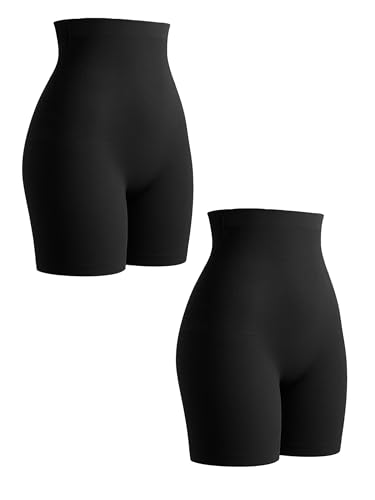
SHAPERMINT High-Waisted Shapewear Shorts
High-waisted shaping shorts made to wear under dresses: the high waist keeps the top edge above lower-belly skin, and the legs stop the inner thighs rubbing together. Sizes run from S to 4XL.
Best for: Dresses and skirts, belly smoothing, thigh chafing
Pros
- ✓ High waist sits above lower-belly skin
- ✓ Stops inner-thigh rubbing under dresses
- ✓ Sizes S to 4XL
Cons
- ✗ No graduated compression for the legs
- ✗ Ends at the thigh, so it won't help knees or calves
Not sure what size you need after losing weight?
If you're choosing compression leggings, measure again first: your ankle, calf and thigh have probably changed. Our free size finder compares five brands' official size charts (Rejuva, JOBST, SIGVARIS, VIM & VIGR and CzSalus) from one set of measurements.
Find your size →Wearing either one comfortably
Put compression on first thing in the morning, when legs are least swollen, and plan on two pairs so one can be washed each day. Replace them every 3 to 6 months; the elastic wears out before the fabric looks tired. (Source: MedlinePlus)
For shapewear, match firmness to the hours: gentle pieces for a full day, firm ones for an evening. Whichever you wear, keep the skin in the folds clean and fully dry before dressing; dryness and airflow are what prevent fold rashes. (Source: American Family Physician) Take the garment off if it leaves deep marks, numbs the skin or hurts.
Our sister site has a detailed guide on how many hours a day to wear compression leggings.
After skin removal surgery
Surgical compression garments are a third category, and they follow your surgeon's instructions rather than anything in this guide. Plastic surgeons usually want your weight stable for at least six months before body contouring. (Source: Cleveland Clinic) For what to expect from recovery garments, see recovery compression on our sister site.
Read next
Best Shapewear for Loose Skin After Weight Loss
Picks by body area, where the edge should sit to stop rolling, and how to size while you're still losing.
Common questions
Where to start
If you only buy one thing this month, buy for the situation you're in most often. For most people that's a long ordinary day, which points to a 15–20 mmHg legging; add a pair of shaping shorts the first time a dress comes out of the wardrobe.