Compression wear is an investment, and how you care for it directly affects how long it keeps working. The elastic fibres that create compression degrade with heat, harsh detergents, and improper storage. A piece that should last six months can lose its effectiveness in six weeks if it's cared for incorrectly.
The good news is that proper care is simple. These guidelines apply to compression socks, shapewear, compression tights, and lymphatic leggings alike.
The Golden Rules of Compression Care
✓ Always wash after every wear
✓ Use cool or lukewarm water only, never hot
✓ Gentle detergent only, no fabric softener, no bleach
✓ Hand wash or machine wash on delicate cycle in a mesh laundry bag
✓ Air dry only, never tumble dry
✓ Store flat or loosely rolled, never folded tight
Washing, Step by Step
Hand Washing (Recommended)
Hand washing is the gentlest method and extends the life of your compression wear the most. Fill a basin with cool or lukewarm water and add a small amount of gentle, fragrance-free detergent. Submerge the garment and gently squeeze the water through the fabric, do not wring or twist. Rinse thoroughly until no detergent remains.
Machine Washing
If you prefer to machine wash, use the delicate or gentle cycle with cool water. Always place compression wear inside a mesh laundry bag to protect the fabric from friction and snagging. Use a gentle detergent without fabric softener or bleach additives.
What to Avoid
- Hot water, breaks down elastic fibres permanently
- Fabric softener, coats fibres and reduces elasticity
- Bleach or harsh detergents, damages the compression structure
- Washing with rough fabrics like denim or towels (without a laundry bag)
Drying, The Most Important Step
Heat is the primary enemy of compression wear. Tumble drying, even on a low setting, will permanently reduce the compression level of your socks, tights, or shapewear. There is no way to restore compression once heat damage has occurred.
How to Air Dry Correctly
After washing, gently press (do not wring) excess water out of the garment using a clean towel. Lay flat on a dry towel or hang to dry on a rack. Keep away from direct sunlight and radiators, both degrade elastic fibres over time. Allow to dry completely before wearing or storing.
Storage Tips
How you store compression wear between uses matters more than most people realise.
- Store flat or loosely rolled, folding tightly along the same crease repeatedly weakens the fabric at that point
- Keep in a cool, dry drawer away from direct sunlight
- Avoid storing with rough or heavy items that could snag delicate fabrics
- For shapewear with boning or structure, store flat to maintain shape
How Long Should Compression Wear Last?
| Item | With Proper Care | Signs of Replacement Needed |
|---|---|---|
| Compression socks | 3 to 6 months daily | Fabric feels loose, no snugness |
| Compression tights | 4 to 6 months daily | Waistband rolls, legs feel loose |
| Shapewear | 6 to 12 months | No longer smooth, boning shifts |
| Lymphatic leggings | 4 to 6 months daily | Compression feels absent |
Signs Your Compression Wear Needs Replacing
Even with perfect care, compression wear has a lifespan. Watch for these signs:
The fabric feels loose when you put it on, not just stretched out after a long day, but noticeably less snug from the start. The waistband rolls or folds during wear. You notice increased swelling or leg fatigue that your compression wear previously prevented. The fabric has developed runs, holes, or visible thinning.
When in doubt, replace. Compression wear that has lost its compression level provides neither the physical support nor the circulatory benefit you're relying on it for.
Care Tips by Product Type
Compression Socks and Knee-Highs
Wash after every single wear, this is non-negotiable. Oils and sweat break down elastic fibres faster than anything else. For medical-grade compression socks (Jobst, Sigvaris, Comrad), hand washing extends their therapeutic life significantly. Turn inside out before washing to clean the inner surface that contacts your skin.
Compression Tights and Leggings
Turn inside out before washing. Use a mesh laundry bag even for hand washing to protect against snagging on jewelry or rough surfaces. For sheer compression tights (such as FALKE), handle the fabric with particular care, the fine knit is delicate when wet.
Shapewear
For shapewear with boning or structured panels (Honeylove, Spanx), always hand wash. Machine washing, even on delicate, can stress the boning inserts over time. Lay flat to dry to maintain the structure of the panels.
Editor's Pick, Compression Socks
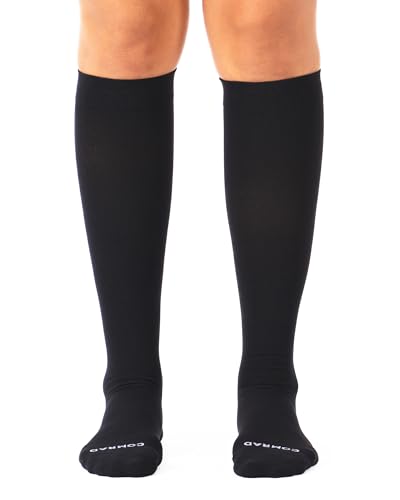
Comrad Nylon Knee-High Compression Socks
Well-made compression socks that maintain their 15 to 20 mmHg compression level with proper care. Soft nylon-spandex blend washes well and air-dries quickly.
Best for: Flight attendants, nurses, long travel days
Pros
- ✓ Consistent 15 to 20 mmHg graduated compression
- ✓ Nylon-spandex blend washes and dries well
- ✓ Holds shape after dozens of washes
Cons
- ✗ Limited colour options
- ✗ Athletic look may not suit all uniforms
Medical-Grade Compression

JOBST UltraSheer Knee-High Compression Stockings
Medical-grade 15 to 20 mmHg compression stockings that reward careful laundering with a significantly longer lifespan. Closed toe, sheer finish.
Best for: Clinical use, travel, varicose vein support
Pros
- ✓ Medical-grade consistent compression
- ✓ Sheer, professional appearance
- ✓ Trusted clinical brand
Cons
- ✗ Higher price point
- ✗ Requires careful hand washing for best results
Frequently Asked Questions
Can I put compression wear in the dryer?
No. Heat from a dryer breaks down the elastic fibres in compression wear and permanently reduces its compression level. Always air dry flat or hang to dry away from direct sunlight.
How often should I wash my compression socks or tights?
After every single wear. Oils, sweat and dirt break down elastic fibres over time. Regular washing in cool water actually helps the garment maintain its shape and compression level.
When should I replace my compression wear?
Compression socks with daily use typically need replacing every 3 to 6 months. Shapewear lasts 6 to 12 months with proper care. Replace when the fabric no longer feels snug from the moment you put it on.
Can I use fabric softener on compression wear?
No. Fabric softener coats elastic fibres and reduces their elasticity over time. Use a gentle, fragrance-free detergent instead.
Not sure which compression level is right for you?
Read our guide → How to Choose the Right Compression Level