Reviewed for accuracy by the Shape & Support editorial team, March 2026
The question most first-time shapewear buyers ask is: what body shape am I? Pear, apple, hourglass, pick your category, buy the matching product. This framework sounds logical. It also produces a lot of wrong purchases, returned items, and women who conclude that shapewear just isn't for them.
This guide reframes the question. The right starting point isn't your shape, it's where you want support. Once you know that, finding the right product becomes straightforward.
If your shape has changed after weight loss, start with our guide to shapewear for loose skin.
Start Here: Think Coverage, Not Shape
Body shape categories are a marketing convention, not a fit system. Two women with identical measurements can have completely different priorities: one wants smooth hips under a pencil skirt, the other wants a flat tummy under a fitted blouse. The same label tells you nothing about which product serves each of them.
Coverage zone does. Before you look at a single product, answer one question: where do I want support? Your answer maps directly to a product category, and skips the confusion entirely.
The most useful question when choosing shapewear isn't "what body shape am I?", it's "where do I want support?" The four main coverage zones are: waist and tummy (high-waist styles), hips and seat (shorts), thighs (mid-thigh shorts), and full torso (bodysuits or full shapers). Choosing by coverage zone rather than body shape label produces better fit decisions and fewer returns for first-time buyers.
The Four Coverage Zones, What Each Style Actually Targets
| Style | Targets | Real outfit example | Compression feel |
|---|---|---|---|
| High-waist short | Waist, tummy, hips, seat | Fitted blazer + tailored trousers for a work presentation | Smooth, evenly firm from hip to waist |
| Mid-thigh short | Waist, hips, seat + inner/outer thighs | Fitted midi dress or pencil skirt where the hemline reveals the upper thigh | Firmer at thigh, releases at the knee |
| Brief | Waist and lower tummy only | High-waisted jeans + tucked shirt when you want a flat front, nothing lower | Light to medium, targeted |
| Full-body shaper | Full torso from bust to thigh | A fitted occasion dress where complete smoothness from top to hem matters | Graduated, firmer at waist, lighter at chest |
High-Waisted Shorts, The Most Versatile Starting Point
If you're buying your first piece of shapewear, start here. High-waisted shorts cover the three zones most women prioritise, tummy, hips, seat, and work under almost every outfit: trousers, skirts, dresses, jeans. They're also the most forgiving to size because the coverage is generous. When in doubt, this is your default.
Mid-Thigh Shorts: When You Need Thigh Coverage
The moment a fitted skirt or dress is involved and the hemline falls near the mid-thigh, coverage lower down matters. A short that ends at the hip creates a visible ridge at the leg opening. Mid-thigh styles minimize this, the right choice for tailored dresses, pencil skirts, and anything body-con.
Briefs: Targeted Waist and Tummy, Nothing More
Some women want a flatter front without any additional coverage on the thighs or seat. A shaping brief is lighter, easier to wear in warmer weather, and completely unobtrusive under looser-cut trousers or a high-waisted skirt. The trade-off: it does nothing below the hip.
Full-Body Shapers, Maximum Coverage
For occasion wear, a wedding, a fitted event dress, anything where you want complete smoothness from chest to thigh, a full bodysuit is the right tool. Not everyday shapewear. For specific outfits where nothing else does the job as cleanly.
Shapewear Compression vs. Medical Compression, What's the Difference?
Both shapewear and compression garments apply pressure to the body, and some products are marketed using compression language. They are not the same category.
Medical compression garments are clinically standardised. Compression levels are measured in millimetres of mercury (mmHg), and the classes are defined: Class 1 is 15 to 20 mmHg, Class 2 is 20 to 30 mmHg, and Class 3 is 30 to 40 mmHg. (Source: PMC4081237, pmc.ncbi.nlm.nih.gov/articles/PMC4081237/) The starting point for everyday circulatory use, tired legs, standing professions, and travel, is 15 to 20 mmHg. (Source: Norton School of Lymphatic Therapy)
Shapewear compression is not standardised in this way. When a shapewear product says "light," "medium," or "firm," it refers to the density and stretch resistance of the fabric, not a measured mmHg value. A "firm" shapewear garment is not the same as 20 to 30 mmHg medical compression.
The practical rule
Choosing shapewear for a smoother silhouette? Use the coverage zone framework and the light/medium/firm label as a comfort guide. Choosing compression for circulatory support, swollen legs, long flights, standing all day? That's a different product category. Both have their place; confusion comes from treating them as one.
Sizing, The Mistake That Ends Most First Purchases
Here's what the wrong size feels like: tight enough that the waistband digs in within an hour, the fabric rolls at the leg openings by mid-afternoon, and you spend the rest of the day adjusting. This is almost always the result of sizing down, choosing a smaller size in the belief that more compression means better results.
It doesn't. Shapewear works by applying even, graduated pressure. A garment that's too small creates uneven pressure, cutting in at the edges, rolling at waistbands, creating visible lines rather than smoothing them.
- Measure your natural waist (narrowest point above the hip) and your hips (widest point) before consulting any size chart
- When two sizes are equally valid, your measurements fall between them, size up
- Try your shapewear for at least two hours before deciding on fit; compression fabric settles to your body over the first 20 to 30 minutes
- If the waistband leaves a red mark after an hour, it is too small regardless of what the size chart says
Premium brands like Honeylove invest heavily in their size ranges, their fit is more reliable across the range. Budget brands can have more variation. If buying a budget brand for the first time, prioritise the size that fits your hip measurement, even if the waist runs slightly loose.
Our Picks for First-Time Buyers
These four products cover the four main coverage zones. Each recommendation is specific, if the reason doesn't match your situation, choose a different one.
Honeylove SuperPower Short, Best Overall
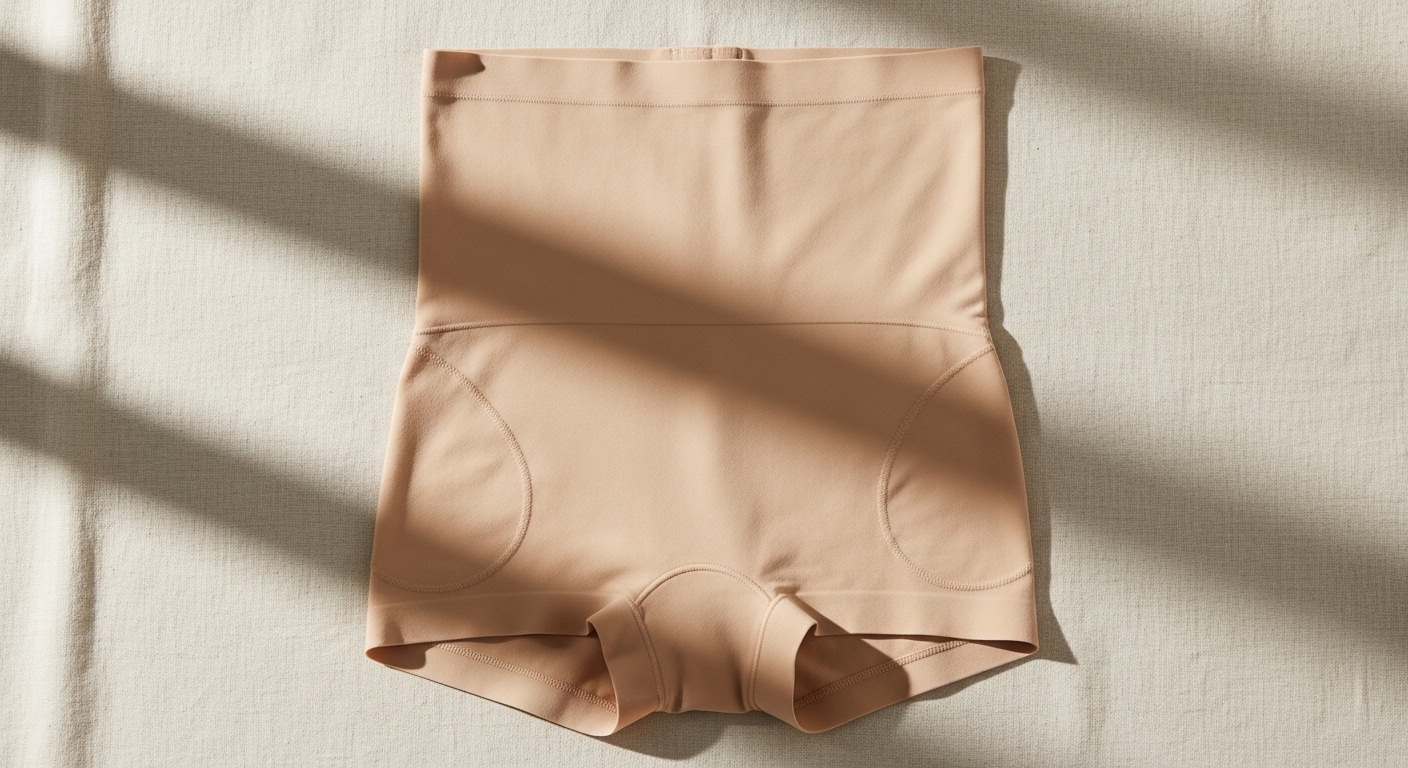
Honeylove SuperPower Short
A strong all-round starting point. High-waisted, firm but breathable, with a bonded waistband that doesn't roll. Covers tummy, hips, and seat without excess bulk.
Best for: First-time buyers who want one piece that works under almost everything
Pros
- ✓ Bonded waistband stays in place all day
- ✓ Breathable fabric for warm weather
- ✓ Generous size range with reliable fit
Cons
- ✗ Premium price point
- ✗ No thigh coverage below the hip
Shapermint Empetua High-Waisted Short, Best Entry Point
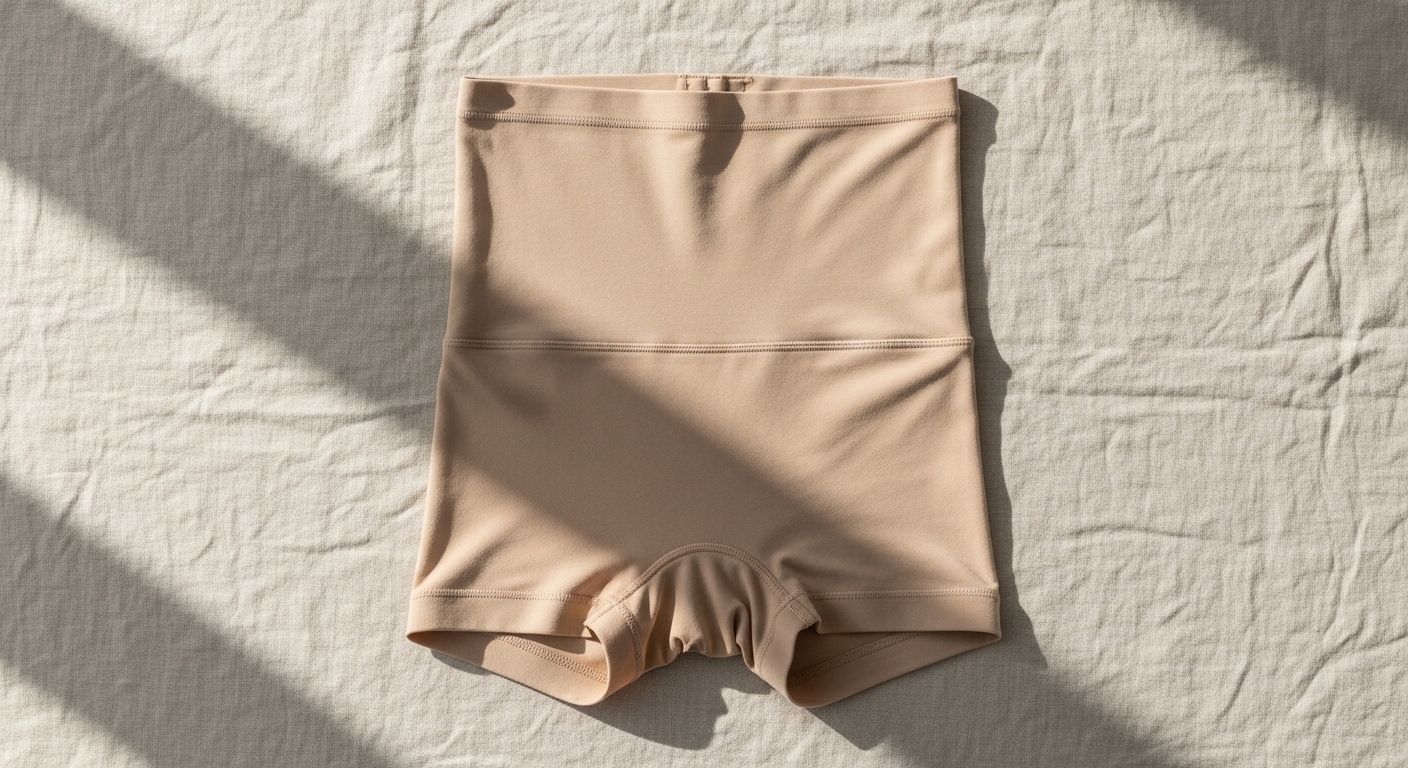
Shapermint Empetua High-Waisted Short
A solid budget option for anyone testing shapewear for the first time. Medium compression, comfortable waistband, and smooth coverage from waist to upper thigh.
Best for: Budget-conscious first purchase, good enough to know if shapewear works for you
Pros
- ✓ Affordable entry point
- ✓ Comfortable for all-day wear
- ✓ Smooth under most fabrics
Cons
- ✗ Compression is lighter than premium brands
- ✗ Sizing can vary, measure carefully
SPANX SPANXsculpt OnCore Mid-Thigh, Best for Thigh Coverage
SPANX SPANXsculpt OnCore Mid-Thigh Short
When the outfit demands smooth thighs, pencil skirts, fitted midi dresses, body-con silhouettes, this is the piece. Firm compression from waist to mid-thigh with a clean leg opening that doesn't dig.
Best for: Fitted dresses and skirts where thigh smoothing matters
Pros
- ✓ Excellent thigh coverage without bulk
- ✓ Clean leg opening, no visible ridge
- ✓ Firm compression that holds all day
Cons
- ✗ Higher price point
- ✗ Not ideal for casual or warm-weather wear
Honeylove Queen Brief, Best Brief Option
Honeylove Queen Brief
When you only need waist and tummy support and nothing below the hip. Lightweight, breathable, and invisible under high-waisted jeans or looser skirts.
Best for: Targeted tummy smoothing without thigh or seat coverage
Pros
- ✓ Lightweight and breathable
- ✓ Invisible under most clothing
- ✓ Comfortable for all-day and warm-weather wear
Cons
- ✗ No hip or thigh coverage
- ✗ Less versatile than a short
Frequently Asked Questions
Should I size up or size down in shapewear?
Size to fit based on your measurements, never size down in the hope of more compression. A garment that's too small will roll at the waistband, dig in at the leg openings, and create visible lines rather than smoothing them. When your measurements fall between two sizes, always go up.
What's the difference between light, medium, and firm compression in shapewear?
These terms describe the stretch resistance of the fabric, not a standardised medical measurement. Unlike medical compression garments (which use mmHg values), shapewear brands use their own labels. Light typically means a smoother, more breathable garment; firm means denser fabric with stronger shaping. If you're new to shapewear, start with medium.
Can I wear shapewear every day?
Yes. Everyday-weight shapewear in medium compression is designed for all-day wear and can be worn daily without concern. Rotate between two or three pairs if wearing regularly, compression fabric benefits from 24 hours of rest between wears, which also extends the life of each garment.
How do I know if my shapewear is the wrong size?
The clearest signs: the waistband leaves a red indentation after one hour of wear; leg openings roll down or dig in during the day; the fabric creates a visible line or ridge under your clothing rather than smoothing it. Any of these means the garment is too small. A correctly sized garment should feel snug but should not cause discomfort or visible edges after settling.
Is shapewear the same as compression wear?
No. Shapewear focuses on silhouette smoothing using fabric density and structure. Medical compression wear applies measured, graduated pressure in mmHg to support circulation, helping move blood and fluid from the lower extremities back toward the heart. Some shapewear uses compression language, but without a standardised mmHg value it is not equivalent to medical compression. For circulatory support, swollen legs, long-haul travel, standing professions, medical compression is the appropriate category.
Ready to Go Further?
Once you've found the right style and size, the next question is usually: how do I make the most of it, and what mistakes do experienced shapewear wearers wish they'd avoided earlier?
If your main concern is an apron belly and a waistband that rolls down, start with our guide to shapewear for an apron belly.
Our guide on common shapewear mistakes covers exactly that, with honest, practical lessons that make a real difference to how well your shapewear performs.