Heavy legs without a clear reason. Ankles that puff up by mid-afternoon and take until morning to settle. A persistent feeling of pressure in the calves that walking briefly relieves. These are the signs of sluggish lymphatic drainage, and unlike cardiovascular swelling, most people don't realise the lymphatic system is involved at all.
The good news is that most mild cases respond well to consistent, non-medical intervention. Here's what actually moves the needle.
How the lymphatic system works in your legs
The lymphatic system is a secondary circulatory network that collects excess fluid, waste products, and immune cells from your tissues and returns them to the bloodstream. In the legs, it runs alongside the venous system, but with one critical difference.
The cardiovascular system has a pump. The lymphatic system doesn't.
Lymphatic fluid in the legs moves almost entirely through muscle contraction and movement. Every step you take compresses the lymphatic vessels and pushes fluid upward. When you stop moving (standing still for hours, sitting on a long flight, working a sedentary shift), that movement disappears; fluid accumulates in the lower extremities.
The lymphatic system in the legs relies almost entirely on muscle contraction and movement to push lymphatic fluid upward. Unlike the cardiovascular system, it has no pump of its own. When movement stops for extended periods, lymphatic flow slows and fluid accumulates in the lower extremities. Graduated compression at 15 to 20 mmHg supports this process mechanically, applying external pressure that encourages lymphatic fluid to move even during periods of inactivity.
What slows lymphatic drainage down
Several things compound the effect of inactivity:
Heat. Warm temperatures dilate blood vessels and increase fluid leakage into surrounding tissue, giving the lymphatic system more to collect. This is why legs swell more in summer and in heated indoor environments.
Dehydration. Counter-intuitively, not drinking enough water causes the body to retain fluid; the lymphatic system becomes less efficient when blood viscosity increases. Staying hydrated keeps the system moving.
Prolonged standing without movement. Walking activates the calf muscle pump; standing still doesn't. Nurses, flight attendants, and retail workers who stand without walking for extended periods experience more lower-leg lymphatic congestion than those who move regularly throughout the shift.
Tight clothing at the groin or waist. Garments that compress the lymphatic vessels at the top of the leg restrict drainage from below. Waistbands that dig in are a common but overlooked contributor.
How to improve it: in order of effort
Movement first
The single most effective intervention is walking. Even ten minutes of brisk walking activates the calf muscle pump and moves more lymphatic fluid than any passive intervention. For people who stand all day, the issue is often that they're stationary, not active; shift workers who move regularly throughout the shift have measurably less end-of-day swelling than those who stand in one place.
If walking isn't possible during the day, ankle circles and calf raises at your station work. Ten repetitions every hour is more effective than a 30-minute walk at the end of the shift.
Elevation
Lying with your legs raised above heart level (a pillow under the calves, legs propped against a wall) allows gravity to assist lymphatic drainage without muscular effort. Twenty minutes after a long shift is enough to make a difference. It won't substitute for movement, but it accelerates the clearance of fluid that's already accumulated.
Graduated compression
Compression leggings or socks at 15-20 mmHg apply external pressure to the lymphatic vessels in the legs, encouraging fluid to move upward even when you're not actively contracting the muscles. This is the intervention most consistently recommended for chronic mild lymphatic congestion. (Source: PMC4081237)
The key is graduated compression, tightest at the ankle, progressively less as it moves up. Uniform-pressure leggings labeled "compression" in sportswear don't provide this effect.
When to see a specialist
If swelling is unilateral (one leg significantly more than the other), if it doesn't improve with elevation overnight, or if the skin feels hard or thickened rather than soft and pitting, those are signs of lymphedema that require assessment by a lymphoedema specialist or GP. Compression can help manage diagnosed lymphedema, but should be fitted by a specialist at the appropriate compression class rather than self-selected.
Compression leggings for lymphatic support: our picks
For daily support and mild-to-moderate lymphatic congestion. These are preventive and supportive; they're not a substitute for specialist assessment if you have diagnosed lymphedema.

Rejuva Compression Seamless Leggings 15-20 mmHg
Seamless construction with graduated compression at 15 to 20 mmHg. The seamless knit and flat waistband reduce pressure points, which makes these comfortable for all-day wear under work clothing.
Best for: All-day comfort, seamless under clothing, daily lymphatic support
Pros
- ✓ Seamless construction
- ✓ Flat waistband
- ✓ Graduated 15-20 mmHg
- ✓ Easy to layer
Cons
- ✗ Less structured than medical brands
- ✗ Sizing runs generous
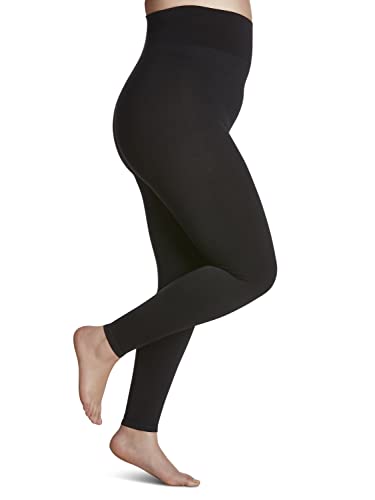
SIGVARIS Soft Silhouette Leggings 15-20 mmHg
Graduated compression leggings designed for all-day wear. The soft silhouette construction provides consistent 15 to 20 mmHg pressure that supports lymphatic flow from ankle to thigh without feeling medical.
Best for: Daily wear, mild lymphatic congestion, standing professions
Pros
- ✓ Genuine graduated compression
- ✓ Soft, wearable fabric
- ✓ Holds compression through washing
- ✓ Discreet under clothing
Cons
- ✗ Premium price point
- ✗ Limited colour range

CzSalus Lipedema/Lymphedema Leggings
Designed for women managing lipedema and lymphedema, these leggings provide gentle graduated compression with a focus on comfort for condition-specific needs. A good entry point for those newly diagnosed.
Best for: Lipedema, lymphedema, condition-specific compression needs
Pros
- ✓ Condition-specific design
- ✓ Gentle graduated pressure
- ✓ Comfort-focused construction
- ✓ Affordable entry point
Cons
- ✗ Less elegant for professional settings
- ✗ Limited style options
For women managing diagnosed lymphedema or lipedema, LymphaticLeggingsGuide.com covers condition-specific compression guidance in more detail.
Common questions
A practical starting point
Start with movement (ten minutes of walking daily) and elevation after any long shift or sedentary day. Add compression leggings at 15-20 mmHg for consistent daily support. If swelling persists despite these changes, or if one leg swells significantly more than the other, see your GP before increasing compression. Our guide to compression socks for swelling covers the broader picture if knee-highs are more practical for your situation.