The morning after a long shift, or the evening after a transatlantic flight, your ankles tell the whole story. The puffiness, the shoes that won't close properly, the skin that leaves an indent when you press it. That's not just tiredness. It's fluid your circulatory system couldn't move back up — and graduated compression is, consistently, the most effective non-medical intervention for it.
But not every compression sock does the same thing. Here's what the difference actually is.
Why legs and feet swell — and what compression does about it
The mechanics of swelling
Swelling in the lower legs happens when venous return slows. When you're stationary for hours — standing at a nursing station, sitting in a cabin seat, on your feet in a warehouse — the calf muscle pump slows down; fluid pools in the lower extremities. That pump, which contracts with every step and pushes blood upward through the veins, does most of the circulatory work in your legs. Take it out of the equation and gravity wins.
Heat makes it worse. Aircraft cabins run at 10–20% humidity, causing mild dehydration that thickens the blood slightly. Hormonal fluctuations and certain medications are contributing factors most people don't identify until swelling becomes consistent.
What compression does differently
Graduated compression socks apply the greatest pressure at the ankle and progressively less as they move up the leg. That gradient is what matters — it mechanically supports venous return even when you're not moving. According to a clinical review published at NCBI, Class 1 compression (below 20 mmHg) is appropriate for tired legs, minor swelling, and prolonged standing. (Source: PMC4081237)
Leg and foot swelling caused by prolonged standing or sitting occurs when the calf muscle pump, which drives venous blood back toward the heart, becomes fatigued or inactive. Fluid pools in the lower extremities. Graduated compression socks counter this by applying the greatest pressure at the ankle and progressively less as they move up the leg, mechanically supporting venous return. According to a clinical review published at NCBI (PMC4081237), Class 1 compression is appropriate for tired legs, minor swelling, and prolonged standing.
Uniform-pressure socks — including many sportswear options labeled "compression" — don't provide this benefit. The gradient is the mechanism. Without it, you have a tight sock.
What compression level do you need for swelling?
For most activity-related swelling — post-shift, post-flight, end-of-day — 15–20 mmHg (Class 1) is the right starting point. No prescription needed, designed for all-day wear, covers the majority of scenarios.
20–30 mmHg (Class 2) is appropriate when 15–20 hasn't been enough: swelling that doesn't fully resolve overnight, visible varicose veins, or a diagnosed condition like chronic venous insufficiency. At this level, sizing matters more; a too-narrow calf at firm compression becomes uncomfortable fast.
Not sure which class applies to you? Our compression levels guide covers every scenario in detail.
Best compression socks for swelling — our picks
For everyday swelling from standing or walking:
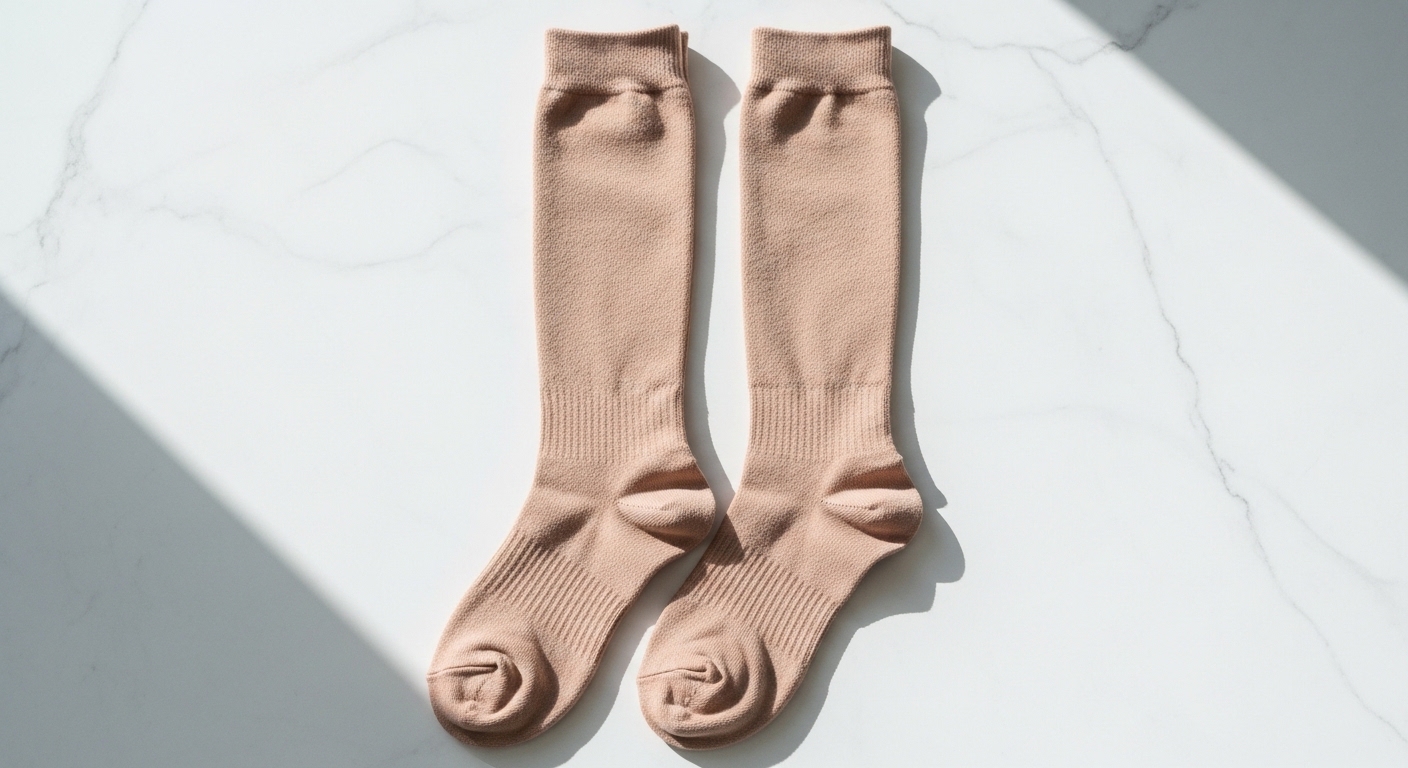
Comrad Nylon Knee-High Compression Socks — 15–20 mmHg
A forgiving first compression sock. Breathable nylon-spandex, consistent 15–20 mmHg, and a finish that doesn't look clinical under trousers or a uniform.
Best for: Daily wear, long shifts, first-time compression wearers
Pros
- ✓ Comfortable for all-day wear
- ✓ Holds compression after washing
- ✓ Looks like regular hosiery
Cons
- ✗ Knee-high only
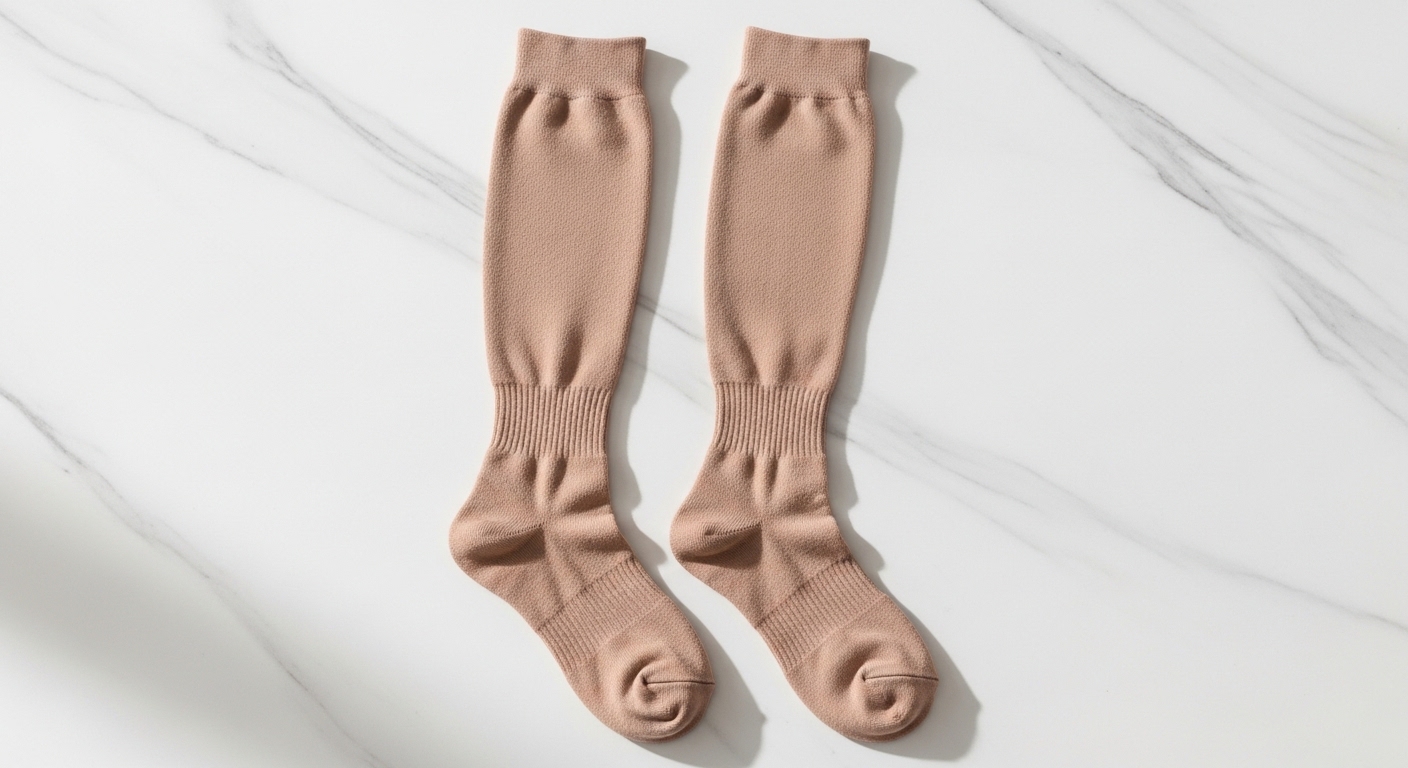
JOBST ACTIVA Opaque Knee-High — 15–20 mmHg
Medical-grade build at an entry-level compression class. Opaque finish, durable knit, and the consistency JOBST is known for. A reliable workhorse for people on their feet.
Best for: Standing professions, persistent end-of-day swelling, durability
Pros
- ✓ Medical-grade construction
- ✓ Opaque, professional finish
- ✓ Holds shape over many washes
Cons
- ✗ Less sheer than dress hosiery options
For swelling in professional or visible-skin situations:
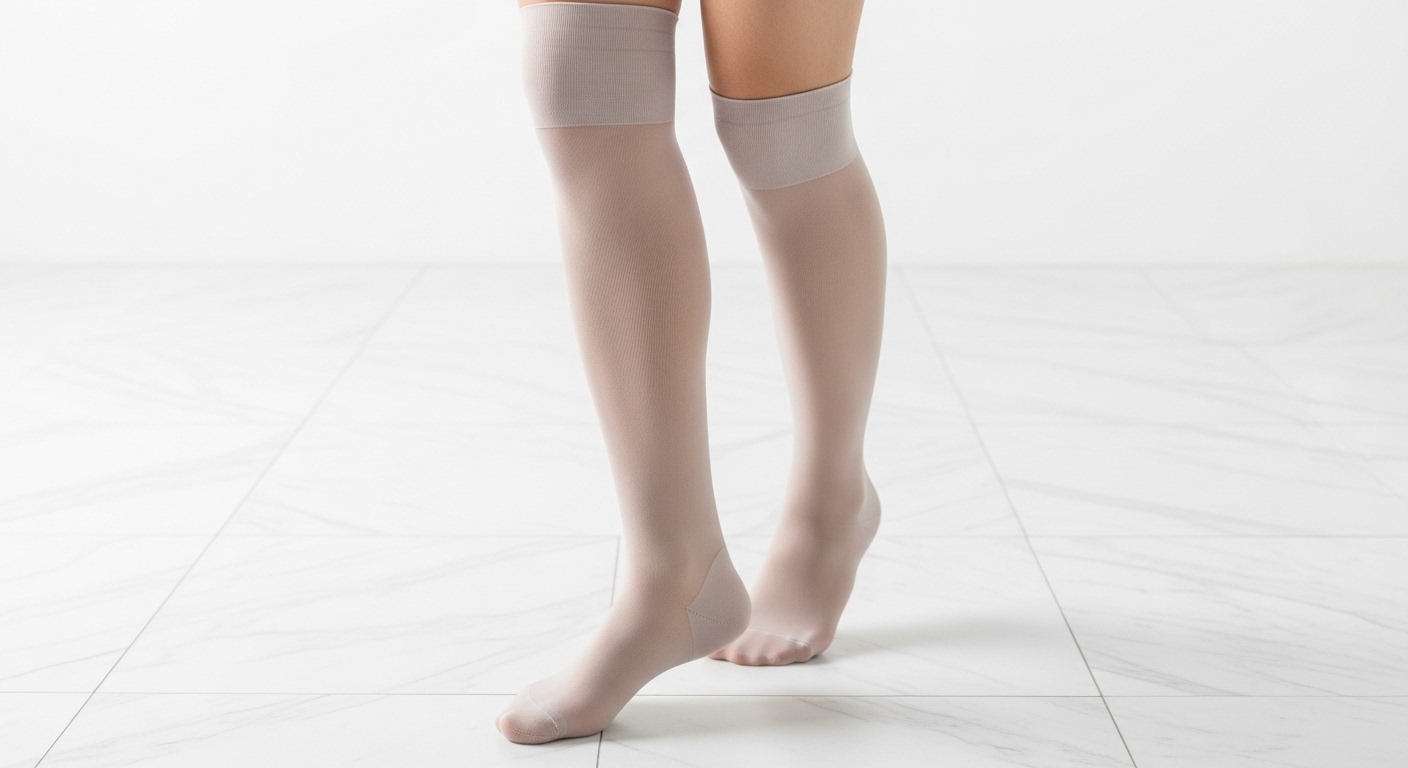
JOBST UltraSheer Knee-High — 15–20 mmHg
Medical-grade compression in a genuinely sheer finish. Pairs with skirts, dresses, and uniforms where opaque knit looks out of place. Same circulatory support, more discreet appearance.
Best for: Uniforms, dress code, sheer hosiery looks
Pros
- ✓ Sheer, elegant finish
- ✓ Medical-grade compression
- ✓ Trusted clinical brand
Cons
- ✗ Requires careful laundering
- ✗ Higher price point
For persistent or moderate swelling:
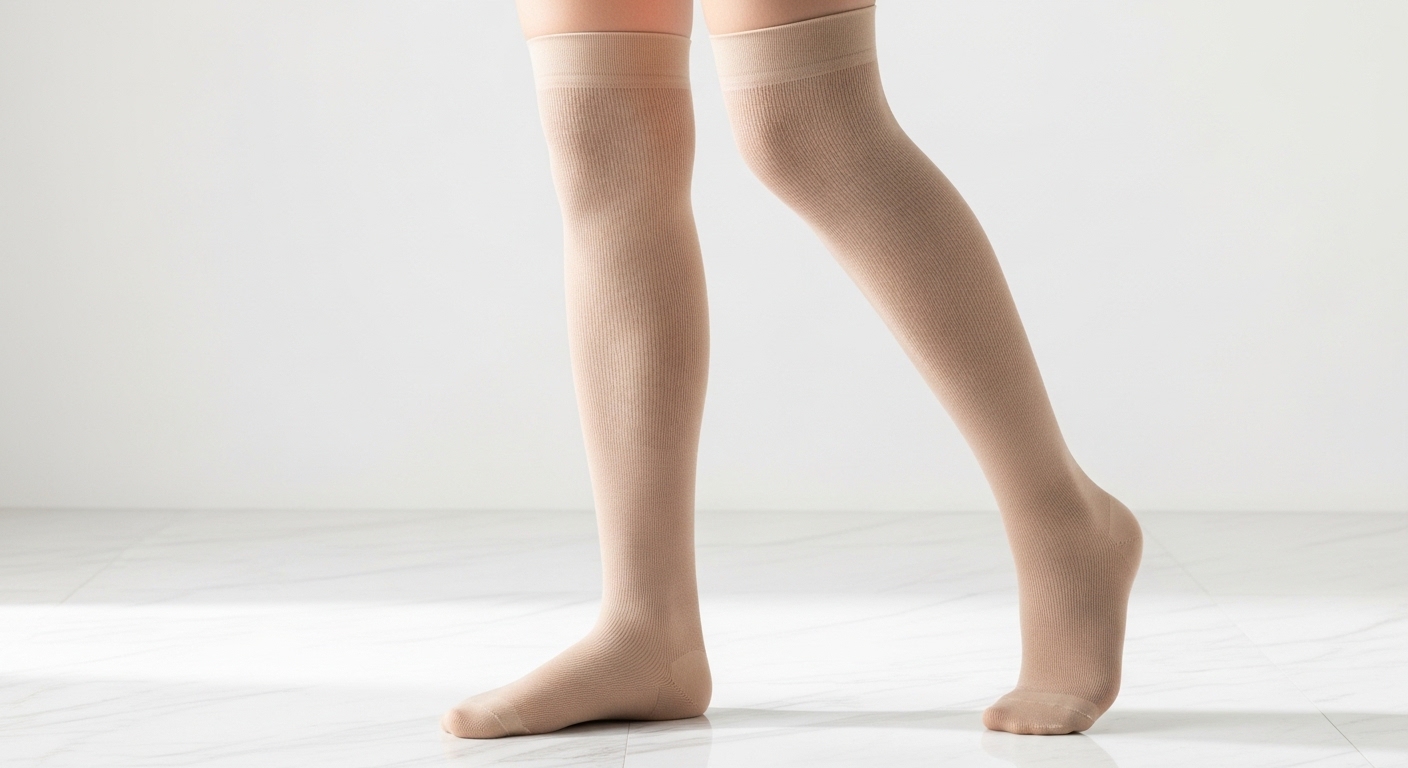
Sigvaris Style Sheer 780 Knee-High — 20–30 mmHg
A firmer compression class in a still-elegant sheer finish. Appropriate when 15–20 mmHg hasn't been enough — persistent swelling, visible varicose veins, diagnosed venous insufficiency.
Best for: Persistent swelling, varicose veins, chronic venous insufficiency
Pros
- ✓ Firm 20–30 mmHg in a sheer finish
- ✓ Premium European construction
- ✓ Targeted for vein management
Cons
- ✗ Sizing is less forgiving at firmer compression
- ✗ Premium price
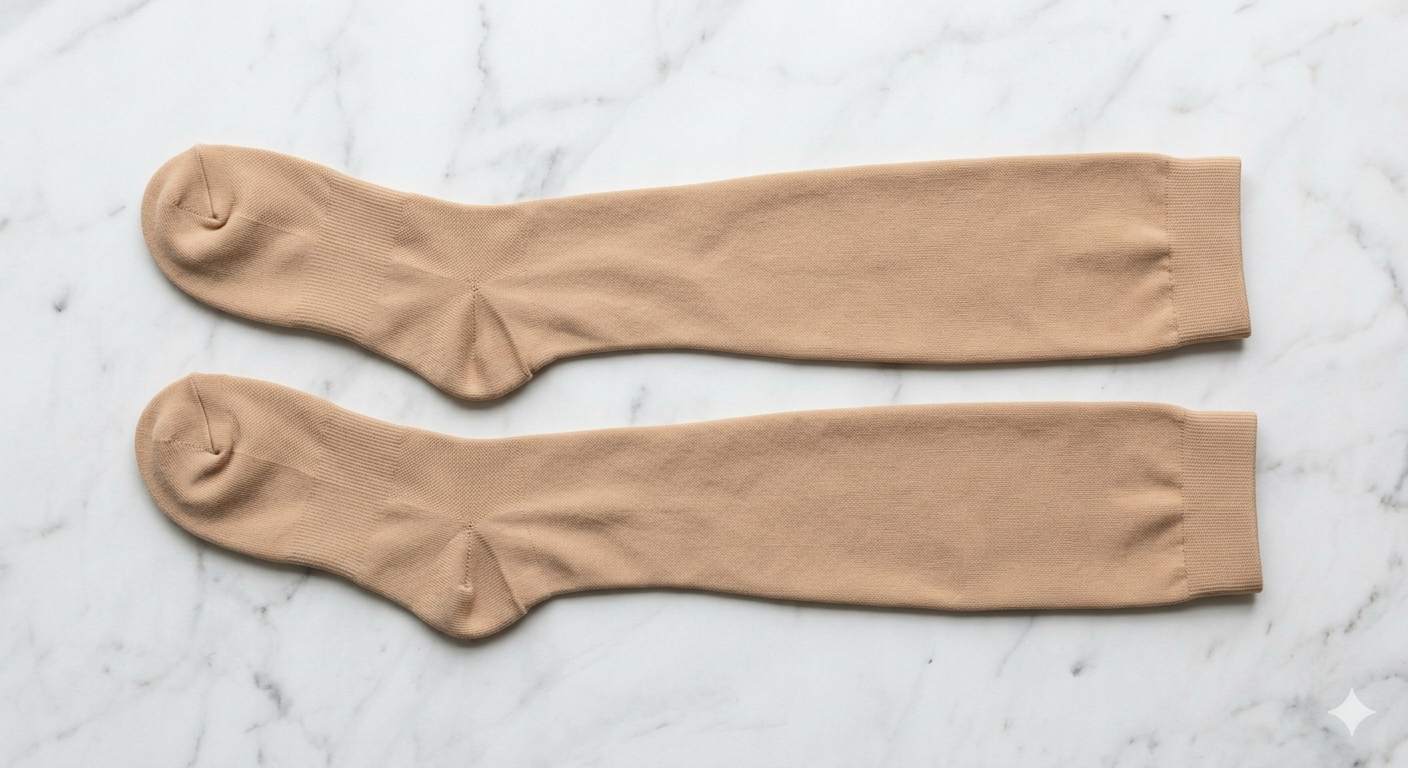
SIGVARIS Essential Cotton Calf-High — 20–30 mmHg
A cotton-rich 20–30 mmHg option for people who find synthetic compression knit too warm. Substantial, breathable, and built for daily wear at a firmer pressure class.
Best for: Warm climates, sensitive skin, daily 20–30 mmHg wear
Pros
- ✓ Cotton-rich knit, breathable
- ✓ Firm 20–30 mmHg support
- ✓ Comfortable for sensitive skin
Cons
- ✗ Less sheer than hosiery alternatives
- ✗ Heavier handfeel
When compression socks won't fix the problem
Graduated compression works for mechanical swelling — immobility, standing, heat, mild circulatory fatigue. It doesn't work as well, or at all, for:
Swelling from a cardiovascular or kidney condition. Bilateral swelling that's persistent at rest, accompanied by shortness of breath or unexplained weight gain — those are signs of systemic fluid retention that requires medical assessment, not a better compression sock.
Swelling from peripheral arterial disease. Compression is contraindicated when arterial blood flow is compromised. If you have PAD or a history of poor arterial circulation, speak to your GP before using any compression garment.
Swelling that doesn't resolve overnight. Mild post-activity swelling should be gone by morning. If it isn't, consistently, that's worth a conversation with your doctor.
One research note worth knowing: a BMJ review found no definitive evidence that prolonged travel increases DVT risk in otherwise healthy individuals, and concluded that individual risk factors matter more than the activity itself. (Source: PMC434500) Compression socks reduce swelling and discomfort during travel; whether they reduce DVT risk in healthy travellers is a separate question with less certain evidence.
Common questions
Where to start
If your legs swell at the end of most days, start with the Comrad or JOBST ACTIVA at 15–20 mmHg — both are forgiving for first-time compression wearers and hold up through regular washing. If the swelling is specifically flight-related, our guide to compression socks for flying covers the aviation context in more detail.