Your feet carry you through 8-, 10-, even 12-hour shifts. Whether you're a nurse, flight attendant, teacher, or retail worker, the end of the day often means swollen ankles, aching arches, and legs that feel twice their weight. Compression socks are one of the simplest research-based tools to change that, but only if you choose the right ones.
In this guide, we've researched and compared compression socks for women who work long shifts. Our comparison is based on published product specifications, compression level, materials, and customer feedback on retailer sites rather than a formal wear study.
What Makes a Compression Sock Worth Wearing on a Long Shift?
Not all compression socks are created equal. For professional wear, look for:
- Graduated compression (15 to 20 mmHg or 20 to 30 mmHg), tightest at the ankle, loosening upward
- Moisture-wicking fabric, no cotton, look for nylon/spandex blends or merino wool
- Reinforced heel and toe, critical for durability during 10+ hour wear
- Correct sizing, too tight causes discomfort, too loose provides zero benefit
- Low-profile design, fits inside professional shoes without bunching
Our Top Picks for Long Shifts
1. Comrad Nylon Knee High Compression Socks (15 to 20 mmHg)
Comrad is one of the most recommended brands among nurses and flight attendants for a reason: their graduated compression is consistent, the nylon blend breathes well, and they hold their shape even after dozens of washes.
- Compression level: 15 to 20 mmHg (ideal for prevention and all-day wear)
- Best for: Nurses, flight attendants, long shifts up to 12 hours
- Fabric: Soft nylon-spandex blend, moisture-wicking
- Sizing: True to size, available in multiple lengths
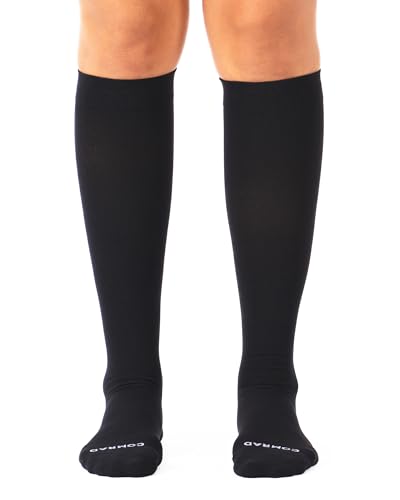
Comrad Nylon Knee High Compression Socks
Graduated 15 to 20 mmHg compression in a soft nylon blend. Long-haul flight favourite, reduces ankle swelling without cutting in.
Best for: Nurses, flight attendants, long shifts up to 12 hours
Pros
- ✓ Consistent graduated compression
- ✓ Breathable nylon-spandex blend
- ✓ Holds shape after dozens of washes
Cons
- ✗ Knee-high only, no thigh coverage
- ✗ Runs slightly small; size up if between sizes
2. FALKE Vitalize 20 Den Compression Tights
For those who want something more elegant, especially flight attendants who need to look polished under uniform, FALKE's Vitalize line is a standout. The 20 denier sheer finish looks like regular tights, but delivers real compression support.
- Compression level: Light graduated compression, 20 den
- Best for: Flight attendants, office workers, any profession requiring a polished look
- Fabric: Ultra-sheer, smooth finish, no visible compression lines
- Bonus: EU made, excellent quality control

FALKE Vitalize 20 Den Compression Tights
20-denier sheer compression tights with graduated support. Elegant enough to wear with airline uniforms, functional enough for 12-hour shifts.
Best for: Flight attendants, office workers, polished professional look
Pros
- ✓ Sheer 20-denier finish suits uniform dress codes
- ✓ Full-leg graduated compression
- ✓ EU made with excellent quality control
Cons
- ✗ Premium price point
- ✗ Sheer fabric less durable than opaque alternatives
3. JOBST ACTIVA Opaque Compression Socks (15 to 20 mmHg)
JOBST has been trusted by medical professionals for decades. Their ACTIVA Opaque line gives you clinical-grade compression in a professional-looking sock that works equally well in a hospital or on a plane.
- Compression level: 15 to 20 mmHg
- Best for: Nurses, healthcare workers, anyone with history of leg swelling
- Fabric: Opaque nylon, moisture-wicking, closed toe
- Available in: Knee high and thigh high
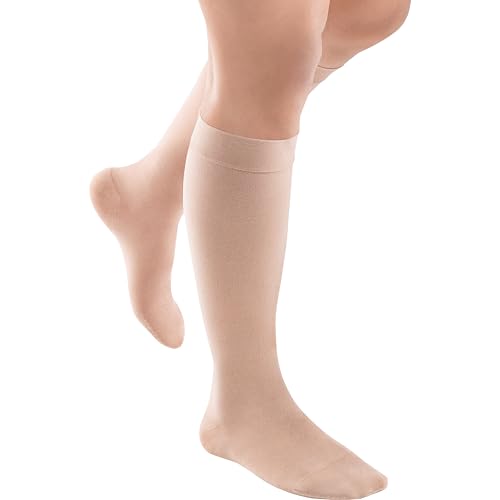
JOBST ACTIVA Opaque Compression Socks 15 to 20 mmHg
Medical-grade graduated compression in a classic knee-high. Widely used by healthcare professionals; designed to help manage oedema.
Best for: Nurses, healthcare workers, anyone with history of leg swelling
Pros
- ✓ Widely used in clinical settings for 30+ years
- ✓ Opaque fabric works under scrubs
- ✓ Available in knee high and thigh high
Cons
- ✗ Clinical look, not ideal under skirts or dresses
- ✗ Limited colour selection
4. Sigvaris Style Sheer 780 Knee-High Stockings (20 to 30 mmHg)
When you need stronger compression, perhaps you're recovering from a long-haul flight, dealing with mild edema, or your doctor recommended stepped-up compression, Sigvaris delivers. The Style Sheer line manages to offer 20 to 30 mmHg in a light, elegant stocking that looks nothing like a medical garment.
- Compression level: 20 to 30 mmHg (medical grade)
- Best for: Women with active vein issues, edema, long-haul flights
- Fabric: Sheer, moisture-wicking, soft waistband
- Note: At this compression level, consult your doctor first

Sigvaris Style Sheer 780 Knee-High Stockings 20 to 30 mmHg
Higher-grade 20 to 30 mmHg compression for women with significant swelling or varicose vein concerns. Sheer finish and moisture-wicking fabric for full shifts.
Best for: Women with active vein issues, edema, long-haul flights
Pros
- ✓ Medical-grade 20 to 30 mmHg compression
- ✓ Sheer finish looks professional
- ✓ Moisture-wicking with soft waistband
Cons
- ✗ May feel firm if you're new to compression
- ✗ Higher price point
Quick Comparison
| Product | Compression | Best For | Look | Price Range |
|---|---|---|---|---|
| Comrad Nylon Knee High | 15 to 20 mmHg | Nurses, all-day comfort | Athletic-casual | $$ |
| FALKE Vitalize 20 Den | Light / 20 den | Flight attendants, uniform | Sheer, elegant | $$$ |
| JOBST ACTIVA Opaque | 15 to 20 mmHg | Healthcare, clinical use | Opaque, professional | $$ |
| Sigvaris Style Sheer 780 | 20 to 30 mmHg | Edema, vein issues | Sheer, elegant | $$$ |
How to Wear Compression Socks Correctly
- Put them on first thing in the morning, before swelling starts
- Roll them on gently, never pull from the top
- Smooth out any wrinkles, bunching reduces effectiveness
- Wear for the full duration of your shift, remove at home
- Wash after every wear, compression degrades with body oils over time
For a full recovery routine after your shift, read our guide to Recovery Rituals for Long Shifts.
Frequently Asked Questions
What compression level is best for long shifts?
For general fatigue and swelling prevention, 15 to 20 mmHg is the most commonly recommended range for healthy adults. If you have a diagnosed vein condition, your doctor may recommend 20 to 30 mmHg.
Can flight attendants wear compression socks under uniform tights?
Yes, but layer carefully. Opt for sheer compression tights like FALKE Vitalize instead, which serve both purposes at once. Layering two garments can restrict circulation if both are tight.
How long do compression socks last?
With proper care (gentle wash, no dryer), a quality pair typically lasts 4 to 6 months of regular daily wear. Replace them when they start to feel loose, elastic degradation means loss of compression.
Are cheap compression socks from Amazon worth it?
Some are fine for occasional wear, but for daily professional use, 8 to 12 hours, five or six days a week, invest in quality. The difference in durability and consistent compression level is significant.