The shift is over. You have charted, restocked, taught, stood, walked and given everything you have. Now it is time to give something back to yourself.
Recovery is not indulgence, it is maintenance. The nurses, retail workers and teachers who feel best over long careers in standing professions are the ones who treat recovery as seriously as they treat showing up. Here is how to do it beautifully.
The First 20 Minutes, the Most Important Window
What you do in the first twenty minutes after a 12-hour ward shift, a full day on the retail floor or a long teaching day has a disproportionate impact on how quickly your body recovers.
Elevate your legs. Lie down and raise your legs against a wall or on pillows above heart level. This single action uses gravity to drain pooled fluid from your lower legs faster than almost anything else you can do. Twenty minutes of elevation equals hours of passive recovery.
Remove your compression. Your lymphatic system works differently when you are horizontal. Compression during rest is generally unnecessary and can restrict the natural recovery process.
Hydrate immediately. Drink 500ml of water as soon as possible after your shift. Long shifts on a ward or sales floor, where breaks get skipped and water bottles sit untouched, create quiet dehydration that contributes directly to leg fatigue and swelling.
Standing Shifts Are Not Flights, but the Logic Is the Same
A 12-hour ward shift, back-to-back retail shifts over a Black Friday weekend or a full day at the front of a classroom places different demands on your body than flying. There is no cabin pressure and no altitude-driven dehydration factor. What stays the same is the physiology of long, upright hours: blood and lymph pool in the lower legs whenever the calf muscles stay still for too long.
That is why the same graduated-compression logic applies. Compression classes are standardized by pressure at the ankle, from light 15-20 mmHg support up to medical-grade 20-30 mmHg, and the class that works on a long-haul flight is the class that works across a double shift (Source: PMC4081237).
Leg Recovery, What Actually Works
Cold water immersion. Fill a basin with cool (not ice cold) water and soak your feet and ankles for 10 minutes. Cool water constricts blood vessels, reduces inflammation and provides immediate relief from swelling and heat in your lower legs.
Contrast therapy. Alternating between cool and warm water for 2-minute intervals stimulates circulation more effectively than either alone. End on cool.
Self-massage. Gentle upward strokes from ankle toward knee, following the direction of lymphatic flow, help move pooled fluid back into circulation. Use a light oil if you prefer; lavender has the added benefit of promoting relaxation.
A gentle walk. Counterintuitively, a 20-minute gentle walk after a long shift clears pooled fluid faster than passive rest alone. Your calf muscles are your lymphatic pump. Gentle movement activates them.
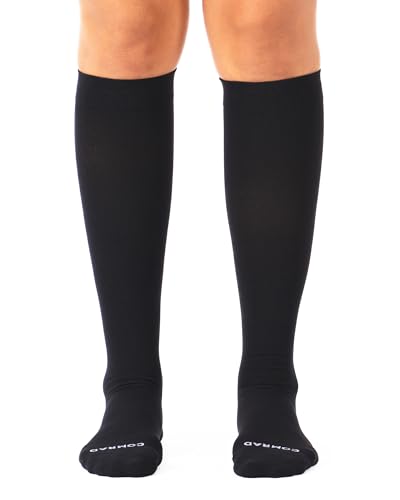
Comrad Compression Socks, For Recovery Days
On rest days between shifts, lighter compression socks maintain circulation without the formality of full tights. Comrad's recovery-focused designs are the quiet choice of many nurses on rest days between shifts.
Best for: Recovery days, rest days, gentle daily support
Pros
- ✓ 15-20 mmHg gentle graduated compression
- ✓ Comfortable for passive wear
- ✓ Professional enough for any setting
- ✓ Supports recovery without restricting rest
Cons
- ✗ Ankle and calf only
- ✗ Not full-leg coverage
Sleep, the Non-Negotiable Recovery Tool
No ritual, product or routine compensates for inadequate sleep. For nurses on rotating rosters, retail staff working late closes followed by early opens, and teachers running on five hours during exam season, sleep quality is the foundation everything else builds on.
Create darkness. Your body's recovery processes, including lymphatic drainage, are most active in deep sleep. Blackout curtains are not luxury; they are maintenance, especially if you sleep during the day after a night shift.
Elevate slightly. A pillow under your mattress at the foot end provides gentle overnight elevation for your legs without the discomfort of sleeping with pillows under your feet.
Magnesium. Many women in physically demanding professions are subtly deficient in magnesium, which contributes to muscle cramping and poor sleep quality. The evidence on magnesium for cramps is mixed. The largest review (Cochrane) found no meaningful benefit for most people at any dose tested, though a couple of trials found modest improvement in cramp frequency and sleep quality after 60 days of consistent use. It's low-risk to try, just don't expect it to fix a cramp the night you take it. (Source: Cochrane Database of Systematic Reviews, PMC8094171)
The Morning After, How to Start Right
How you begin the day after a long shift determines how your body performs in the next one.
Compression on before you are upright. Put your compression tights or socks on before you stand up in the morning if possible, or as early as you can. This helps prevent the immediate pooling that happens when you stand after a night horizontal.
Gentle movement before intensity. Ten minutes of gentle stretching or walking before any strenuous activity allows your circulatory system to adjust and reduces the shock of sudden exertion on a body that has been horizontal all night.
Hydrate before caffeine. Drink 500ml of water before your morning coffee. Caffeine is mildly diuretic, so starting hydrated before adding it maintains the fluid balance your legs need.
VIM & VIGR Nylon Footless Compression Tights (15–20 mmHg)
Class 1 graduated compression in a footless nylon tight, covering ankle to waist. The footless cut lets you wear your own socks or knee-highs and keeps shoe fit unchanged.
Best for: Pre-shift prevention, 12-hour ward shifts, daily wear on your feet
Pros
- ✓ 15–20 mmHg graduated compression
- ✓ Full-leg coverage from ankle to waist
- ✓ Footless: pairs with your own socks or hosiery
Cons
- ✗ Footless edge shows at the ankle with open shoes or skirts unless layered
- ✗ Size by ankle and calf measurement, not dress size
A Complete Recovery Ritual, Your Evening Guide
Here is a simple, complete recovery sequence for after a demanding shift:
Immediately after: 500ml water, legs elevated for 20 minutes, remove compression.
After elevation: Cool foot bath for 10 minutes, followed by gentle self-massage upward from ankle to knee.
Evening: Gentle 20-minute walk if energy allows. Light, protein-rich meal. Magnesium supplement.
Before sleep: Darken the room completely. Slight overnight elevation with a pillow under the mattress at the foot end.
Morning: Hydrate before standing if possible. Compression on early. Gentle movement before intensity.
This sequence takes less than an hour of active time and changes how your body feels over weeks and months of consistent practice.
Frequently Asked Questions
Related reading
Recovery works best when the shift itself is supported. Our best compression socks for long shifts covers what holds up over a full week, and if you work in healthcare, the compression socks for nurses guide explains when to move from 15-20 to 20-30 mmHg.
Ready to start with the most important foundation, the right compression for your next shift?
Best Compression Socks for Nurses