Your legs swell more in summer. That's not imagination; it's physiology. Heat causes blood vessels to dilate, which pushes fluid into surrounding tissue, and if you're standing, flying, or moving through a hot terminal for hours, that fluid has gravity working against it too. The irony is that the season when compression matters most is also the season most women leave their support garments in the drawer.
You don't have to.
Why Heat Actually Makes Swelling Worse
When temperatures rise, your body responds by expanding blood vessels near the skin to release heat. This vasodilation is efficient for cooling, but it means more blood pools in your lower legs, especially when you're upright and stationary. Add dehydration (your blood thickens, circulation slows) and reduced calf muscle pump activity from heat-related fatigue, and the result is predictable: tight, heavy legs by mid-afternoon.
This isn't a comfort complaint; it's a circulatory one. According to GPNotebook's cardiovascular medicine reference, even modest environmental changes affect venous return. (Source: GPNotebook Cardiovascular Medicine)
If you're prone to swelling at all, from long shifts, travel, pregnancy, or varicose veins, summer doesn't pause that. It amplifies it.
The Case for Light Compression, Even in Summer
The answer isn't heavy compression. It's the right compression.
Class 1 (15 to 20 mmHg) is the standard recommendation for most people managing everyday leg fatigue and mild swelling. At this range, the fabric supports venous return without generating significant additional heat. The pressure is enough to counteract the vasodilation caused by warmth, which is the core mechanism behind summer leg swelling. (Source: PMC4081237)
"Light compression (15 to 20 mmHg, Class 1) is clinically appropriate for warm-weather wear because it supports venous return without generating significant additional heat. At this range, the fabric applies enough graduated pressure to counteract the vasodilation caused by heat, the primary mechanism behind summer leg swelling."
Sources: PMC4081237; Norton School of Lymphatic Therapy
Modern summer compression fabrics are nothing like the thick hospital-grade stockings most people picture. Sheer knit technology, moisture-wicking fibers, and flat construction mean you're not adding heat, you're managing it.
| Class | mmHg | Summer suitability |
|---|---|---|
| Class 0 | 8-15 | Light support; minimal swelling only |
| Class 1 | 15-20 | Recommended for summer wear. Everyday fatigue, travel, long shifts. |
| Class 2 | 20-30 | Firm; better for cooler conditions or medical-grade need |
| Class 3 | 30-40 | Prescribed only; not for general summer wear |
What to Wear: Lightweight Options That Work
Not all compression is made equal in summer. These five options sit in the sweet spot: light enough to wear comfortably in heat, effective enough to make a real difference.
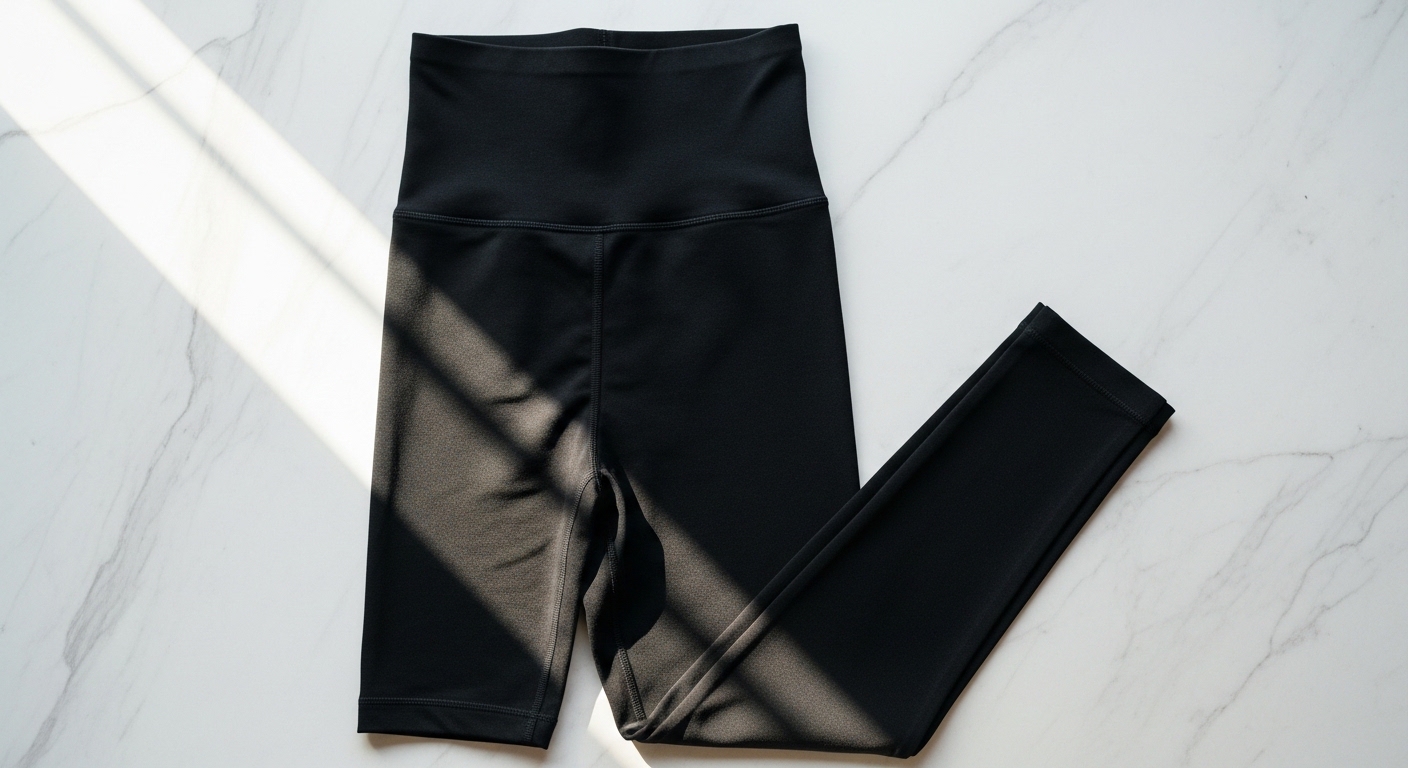
Rejuva Compression Seamless Leggings
No-seam knit construction means no pressure points or dig-in during heat swelling. Graduated 15 to 20 mmHg with a flat waistband, cut longer than most compression leggings, which matters if you need thigh coverage.
Best for: Heat swelling, longer length, no pressure points
Pros
- ✓ Seamless, no dig-in
- ✓ Flat waistband
- ✓ Comfortable in heat
Cons
- ✗ Limited color options
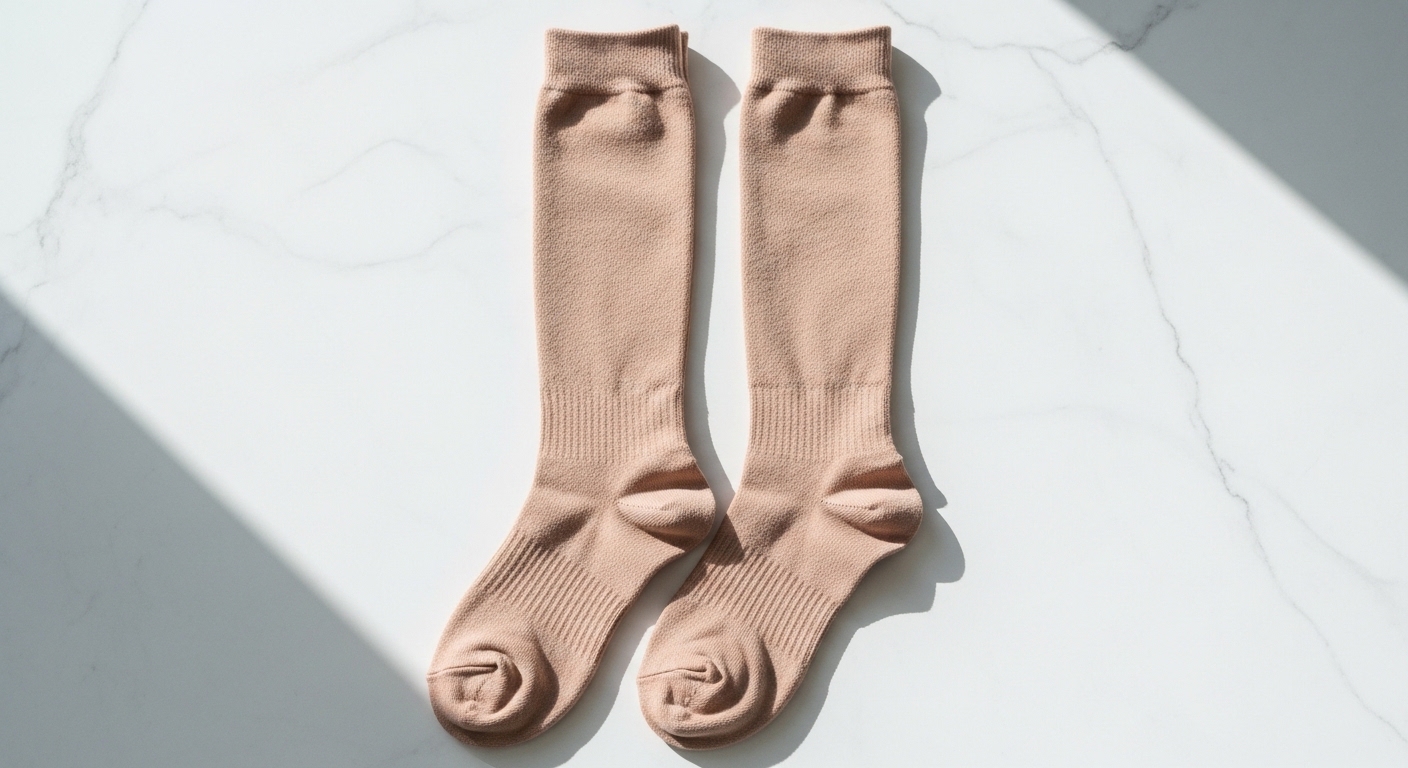
JOBST UltraSheer Knee-High
The go-to for uniform compliance. The sheer finish reads like regular hosiery; no visible compression lines, no bulk at the ankle. These stay on through a full shift without rolling.
Best for: Uniform compliance, full shifts, discreet wear
Pros
- ✓ Looks like regular hosiery
- ✓ No ankle bulk
- ✓ Stays put all day
Cons
- ✗ Delicate; careful laundering required
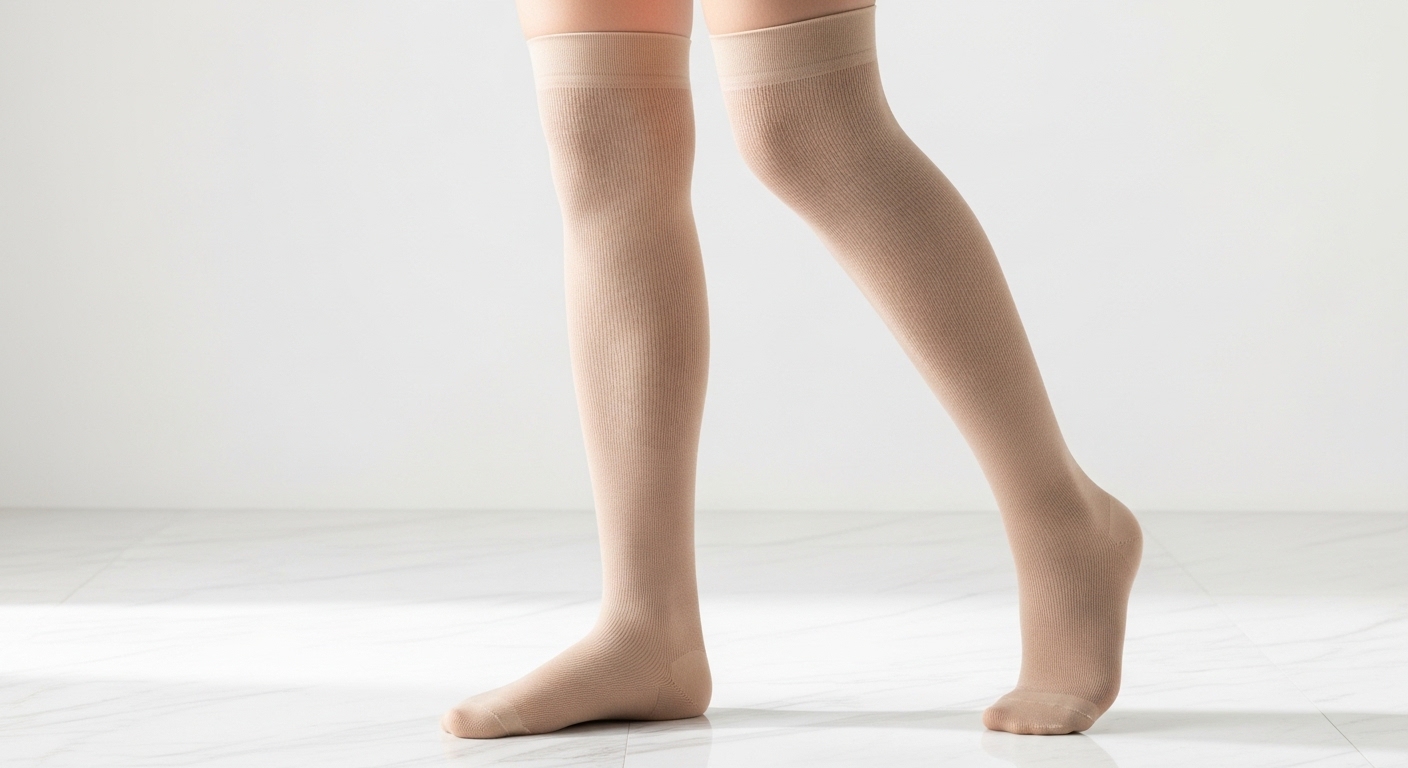
SIGVARIS Soft Silhouette Leggings
Full-length and sheer-finish; the knit stays cool and doesn't trap heat against the skin the way thicker compression leggings do. An alternative if you want a clinical brand for long summer days on your feet.
Best for: Summer days on your feet, full-length coverage
Pros
- ✓ Sheer, cool knit
- ✓ Doesn't trap heat
- ✓ 15 to 20 mmHg full-length support
Cons
- ✗ Premium price
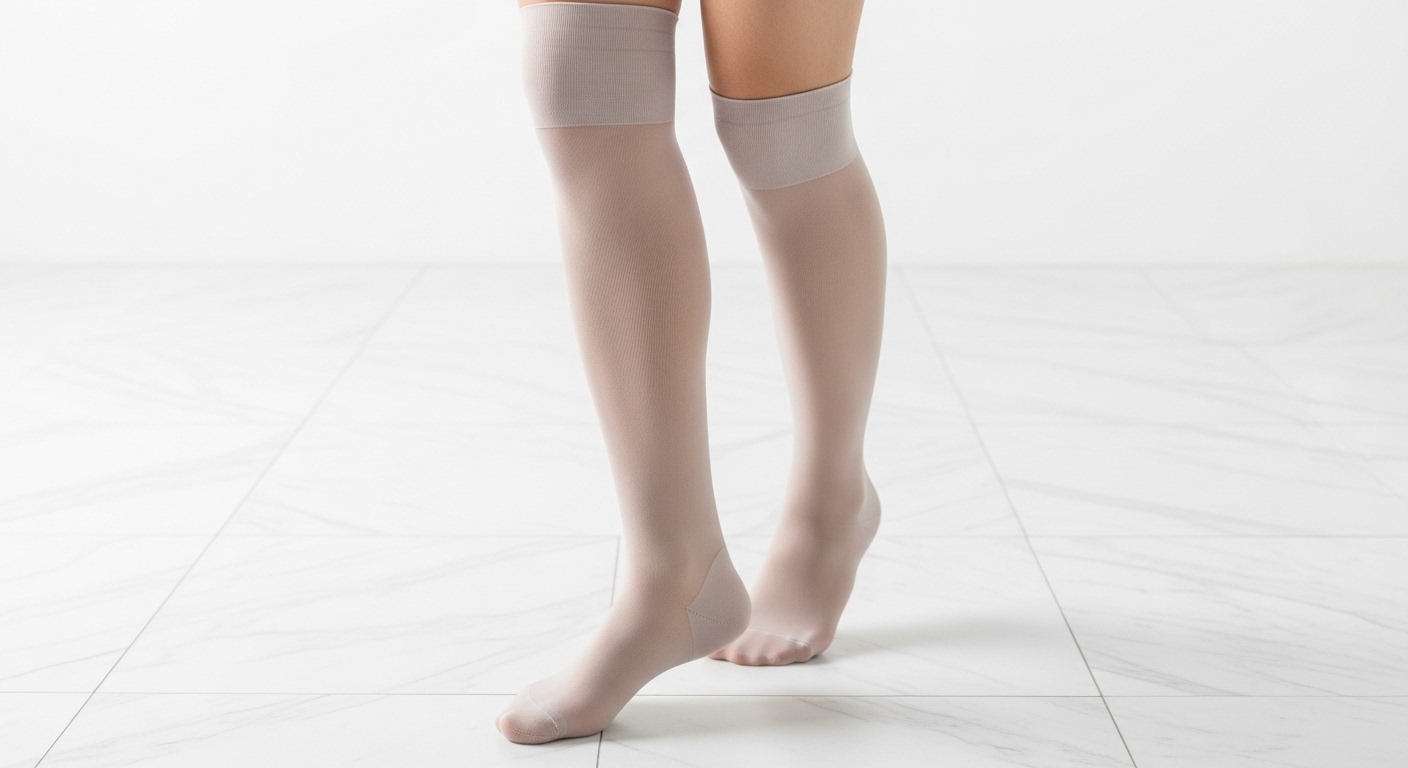
SPANX Mid-Thigh Sheers
More shapewear than medical compression, but the light graduated pressure at the leg is real, and they're genuinely invisible under summer dresses and skirts. Ideal for events or days when aesthetics matter as much as support.
Best for: Summer dresses, events, invisible under clothing
Pros
- ✓ Invisible under dresses
- ✓ Light graduated pressure
- ✓ Elegant finish
Cons
- ✗ Not medical-grade compression
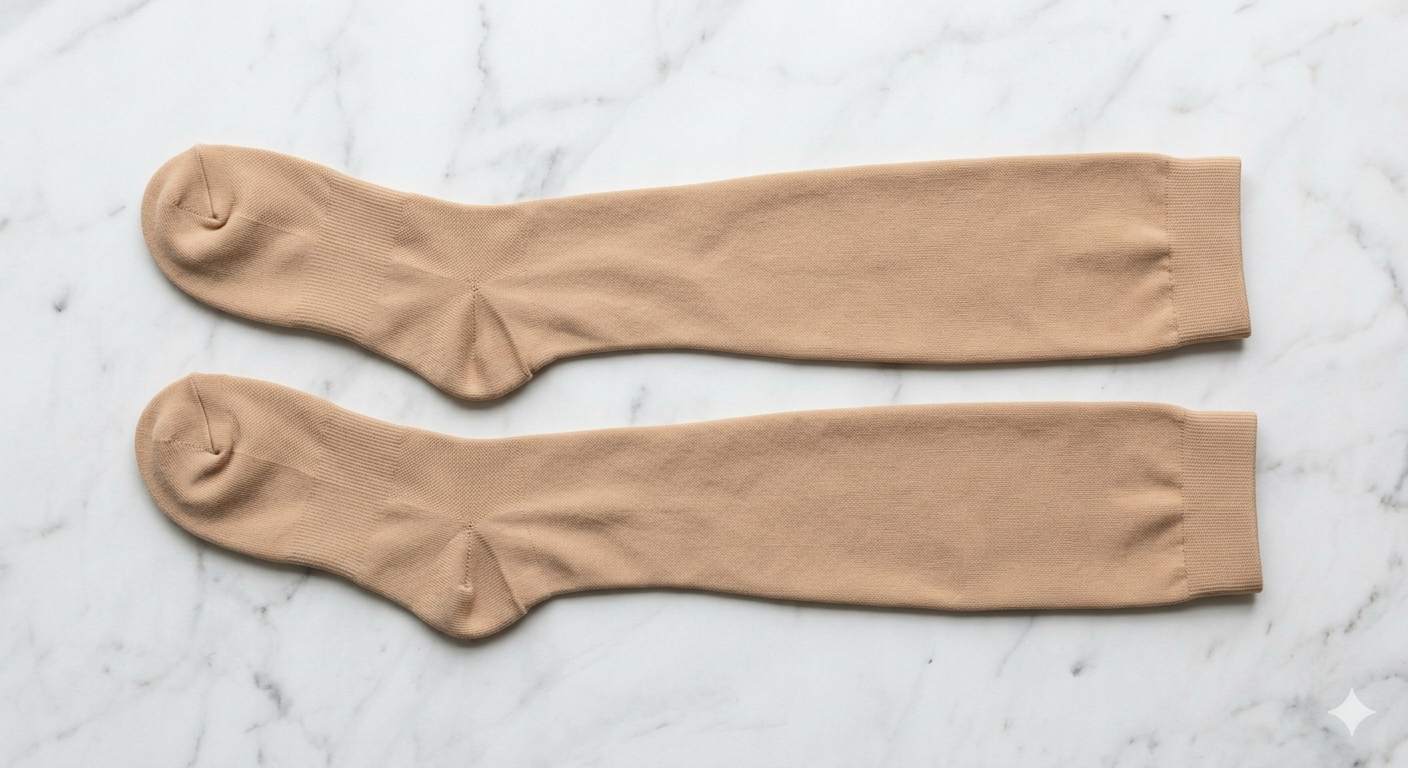
Wolford Individual 10 Control Top Tights
Ultra-sheer and worth the price if you're wearing them frequently. The 10-denier construction stays cool in a way most compression hosiery can't match. For women who won't sacrifice elegance in summer.
Best for: Elegance in summer, frequent wear, premium feel
Pros
- ✓ Ultra-sheer 10-denier
- ✓ Stays cool
- ✓ Premium European construction
Cons
- ✗ Premium price
- ✗ Delicate
Flight Attendants in Summer: A Different Challenge
Summer peak season adds layers that desk workers don't face. Emirates DXB-LHR in July means stepping between air-conditioned cabin air (10-20% humidity, equivalent to 6,000-foot altitude pressure) and ground-level heat at both ends. (Source: GPNotebook Cardiovascular Medicine)
The heat on the ground dilates vessels; the cabin altitude at cruise compounds the effect. After a DXB-LHR rotation, the legs you land with are not the legs you took off with.
Crew-specific advice: put compression on before you leave the hotel, not at the gate. By the time you're at the aircraft, your legs have already been standing in heat-stressed circulation for an hour. JOBST UltraSheer and SIGVARIS Soft Silhouette both comply with most airline uniform standards, no visible lines, no bulk under trousers or skirt.
We've put together a full guide specifically for flight attendants navigating summer schedules. If you want it, it's in the crew newsletter.
Join the Flight Attendant Edition
Summer-specific compression guidance, written for crew schedules.
Sign upFAQ
Is it safe to wear compression in the heat?
Yes, at 15 to 20 mmHg (Class 1). Higher classes (20 to 30 mmHg and above) can be less comfortable in extreme heat and should only be worn if prescribed. Stay hydrated; compression doesn't replace fluid intake.
What mmHg is best for summer?
15 to 20 mmHg is the standard recommendation for warm-weather wear. It's enough to support venous return without generating significant additional body heat. (Source: Norton School of Lymphatic Therapy)
Will compression leggings make me sweat more?
Depends on the fabric. Thick, opaque compression leggings can trap heat. Sheer-knit options like SIGVARIS Silhouette and JOBST UltraSheer are designed to minimize heat retention, and improved circulation often makes legs feel cooler, not hotter.
Can I wear compression on a summer flight?
You should. Aircraft cabins maintain pressure equivalent to 5,000-8,000 feet altitude, which promotes fluid pooling in the legs. Combined with summer dehydration, this makes in-flight compression more important, not less. (Source: GPNotebook Cardiovascular Medicine)
Where to Start
If you've never tried compression in summer, start with JOBST UltraSheer or the Rejuva Seamless Leggings, both are light enough to feel like regular hosiery. For deeper guidance on swelling, lymphatic drainage, and recovery after long flights, our guide to improving lymphatic drainage in your legs and our guide to compression socks for swelling cover the broader picture.