You notice it at baggage claim. The shoes that fit perfectly at check-in won't go back on after eight hours in the air. Your ankles are puffy, your calves feel heavy, and you've got another hour in a taxi ahead of you. This is what flying does to legs that have been stationary at altitude for too long, and it's preventable.
Compression socks don't require a medical condition to justify wearing them on a flight. They're practical kit, like a neck pillow or noise-cancelling headphones, except they actually affect how you feel when you land.
What flying does to your legs
Cabin pressure and reduced circulation
Modern aircraft maintain cabin pressure equivalent to 5,000 to 8,000 feet altitude. At this pressure, a 3% desaturation of arterial blood occurs, negligible in healthy individuals, but combined with low humidity (10 to 20%), prolonged immobility, and cramped seating that compresses the vein behind your knee, the conditions reliably slow venous return. (Source: GPNotebook)
For most travellers, the result is exactly what you'd expect: swollen ankles, tired legs, and that distinctive post-flight heaviness that takes hours to clear.
Modern aircraft maintain cabin pressure equivalent to 5,000 to 8,000 feet altitude. At this pressure, a 3% desaturation of arterial blood occurs, negligible in healthy individuals, but combined with low humidity (10 to 20%), prolonged immobility, and cramped seating, the conditions reliably slow venous return. For most travellers, the result is swollen ankles and tired legs. Graduated compression at 15 to 20 mmHg (Class 1) is the standard recommendation for this scenario.
The honest picture on DVT risk
You've probably read something alarming about blood clots and flying. The actual numbers are more reassuring than most articles suggest: the absolute risk of DVT per flight is approximately 1 in 4,656. (Source: ASMA)
A BMJ review went further, finding no definitive evidence that prolonged travel increases DVT risk in otherwise healthy individuals, and concluded that individual risk factors: genetics, OC use, prior clotting history, matter considerably more than flight duration alone. (Source: PMC434500)
Compression socks are worth wearing for the swelling and discomfort they prevent. The DVT picture is less clear-cut for healthy travellers, and worth discussing with your GP if you have specific risk factors.
What to look for in a travel compression sock
The most important spec is the pressure level. For travel, 15 to 20 mmHg (Class 1) covers the majority of scenarios and doesn't require a prescription. It's firm enough to make a difference on a long-haul flight; comfortable enough to wear from check-in through baggage claim without wanting to rip them off mid-air.
Beyond that, three things matter for travel specifically.
Sheer or low-profile. You're wearing these under travel clothes, through security, in the airport lounge. A bulky medical-looking sock is fine on a ward; it's less appealing in a business class cabin. Sheer options at 15 to 20 mmHg are widely available from medical brands and look indistinguishable from regular hosiery.
Packability. If you're in a carry-on-only situation, a thin nylon compression sock takes almost no space. Cotton options at 20 to 30 mmHg are bulkier and heavier, worth factoring in if you're packing light.
Fit at the ankle. This is where cheap travel compression socks fail. The ankle band should be snug but not dig in; if it leaves a welt after a few hours you've either sized wrong or bought a poor-quality option. Measure your ankle circumference before buying. Don't go by shoe size alone.
Best compression socks for travel: our picks
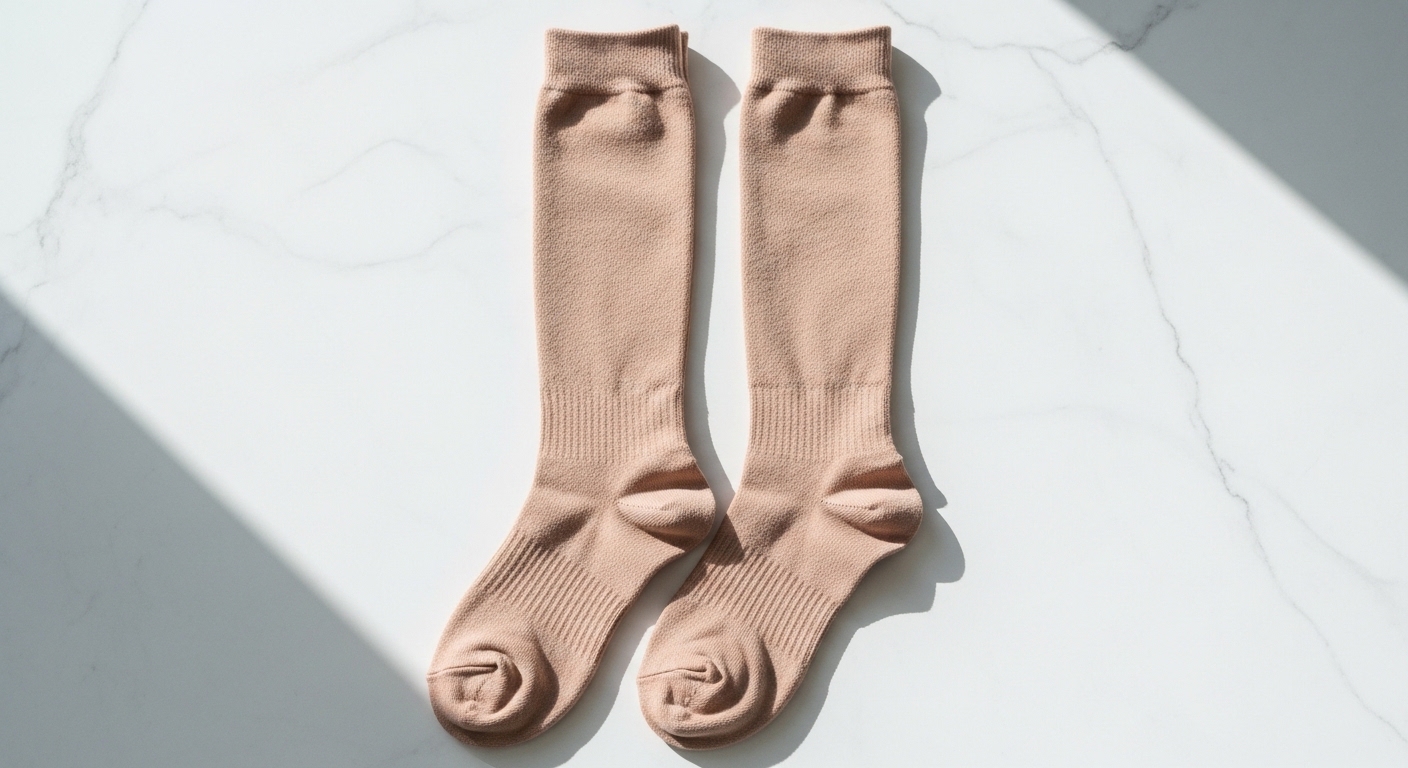
Comrad Nylon Knee-High 15 to 20 mmHg
Breathable nylon-spandex with consistent 15 to 20 mmHg compression. Packs flat, wears comfortably through a full travel day, and looks discreet under trousers.
Best for: Carry-on travellers, daily wear, first-time compression wearers
Pros
- ✓ Packs almost flat in a carry-on
- ✓ Comfortable for all-day wear
- ✓ Doesn't look clinical
Cons
- ✗ Knee-high only
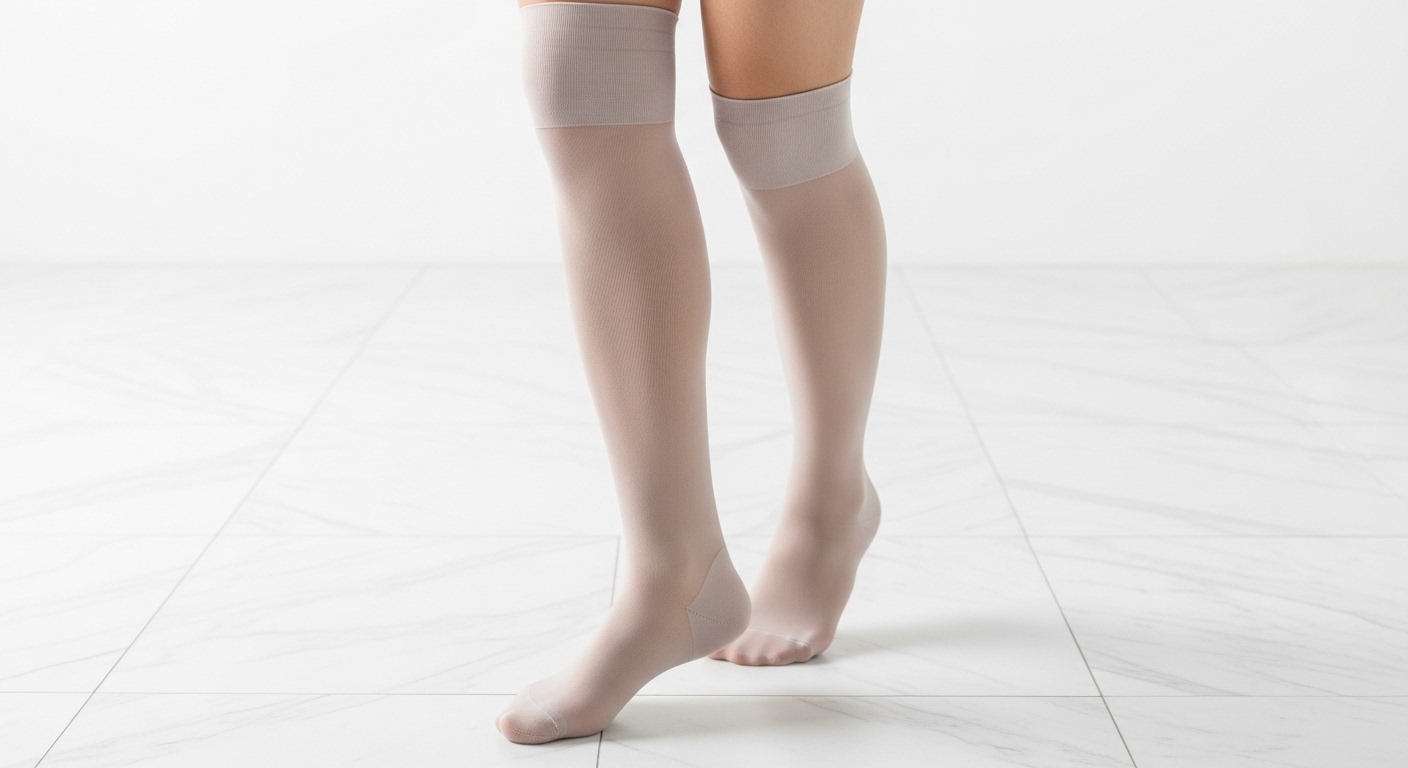
JOBST UltraSheer 15 to 20 mmHg
Medical-grade compression in a genuinely sheer finish. Looks like regular hosiery through security and in the lounge. Same circulatory support, more discreet appearance.
Best for: Business travel, dress code, sheer hosiery looks
Pros
- ✓ Sheer, elegant finish
- ✓ Medical-grade compression
- ✓ Trusted clinical brand
Cons
- ✗ Requires careful laundering
- ✗ Higher price point
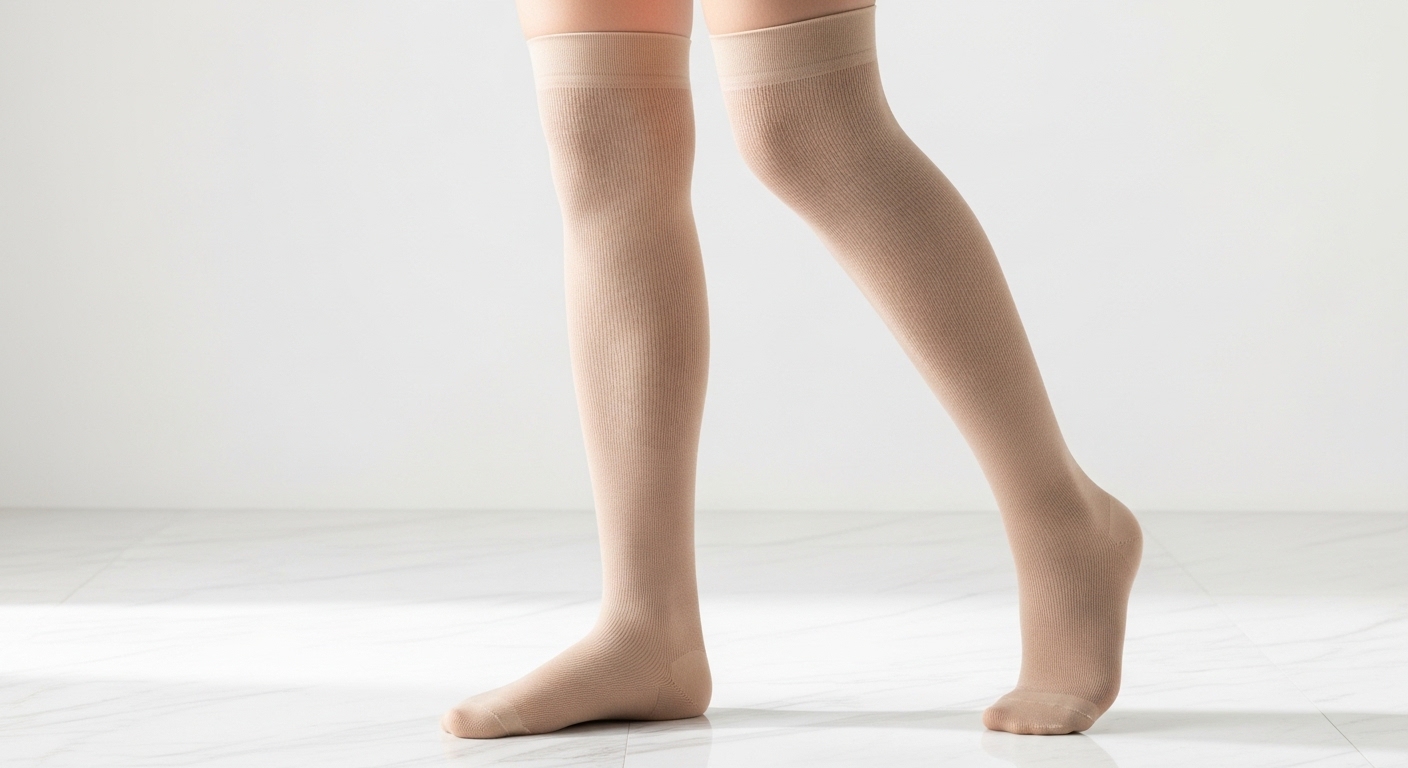
Rejuva Sheer Dot 15 to 20 mmHg
A playful sheer dot pattern at 15 to 20 mmHg that looks like fashion hosiery while delivering proper graduated compression. Ideal for travellers who want support without sacrificing style.
Best for: Style-conscious travellers, visible hosiery, fashion-forward looks
Pros
- ✓ Fashionable dot pattern
- ✓ Sheer, lightweight
- ✓ Proper 15 to 20 mmHg compression
Cons
- ✗ Pattern not for every outfit
- ✗ Less well-known brand
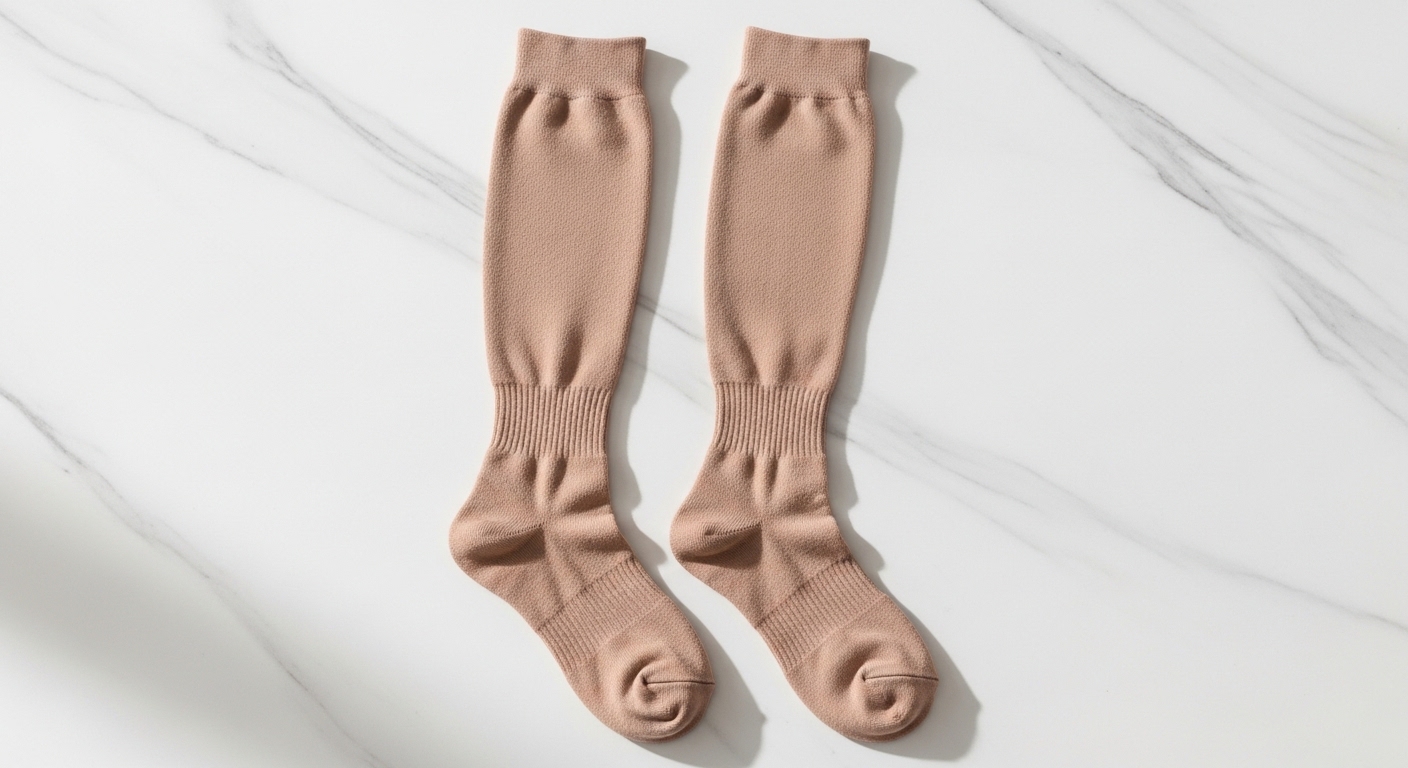
FALKE Vitalize 20 Den
Ultra-sheer 20 denier compression from a premium hosiery brand. Exceptionally thin and elegant, these are the closest you'll get to regular tights with genuine circulatory benefit.
Best for: Premium travel, ultra-sheer looks, European quality
Pros
- ✓ Extremely sheer and elegant
- ✓ Premium brand construction
- ✓ Barely visible under clothing
Cons
- ✗ Delicate; requires hand-washing
- ✗ Premium price
- ✗ Light compression only
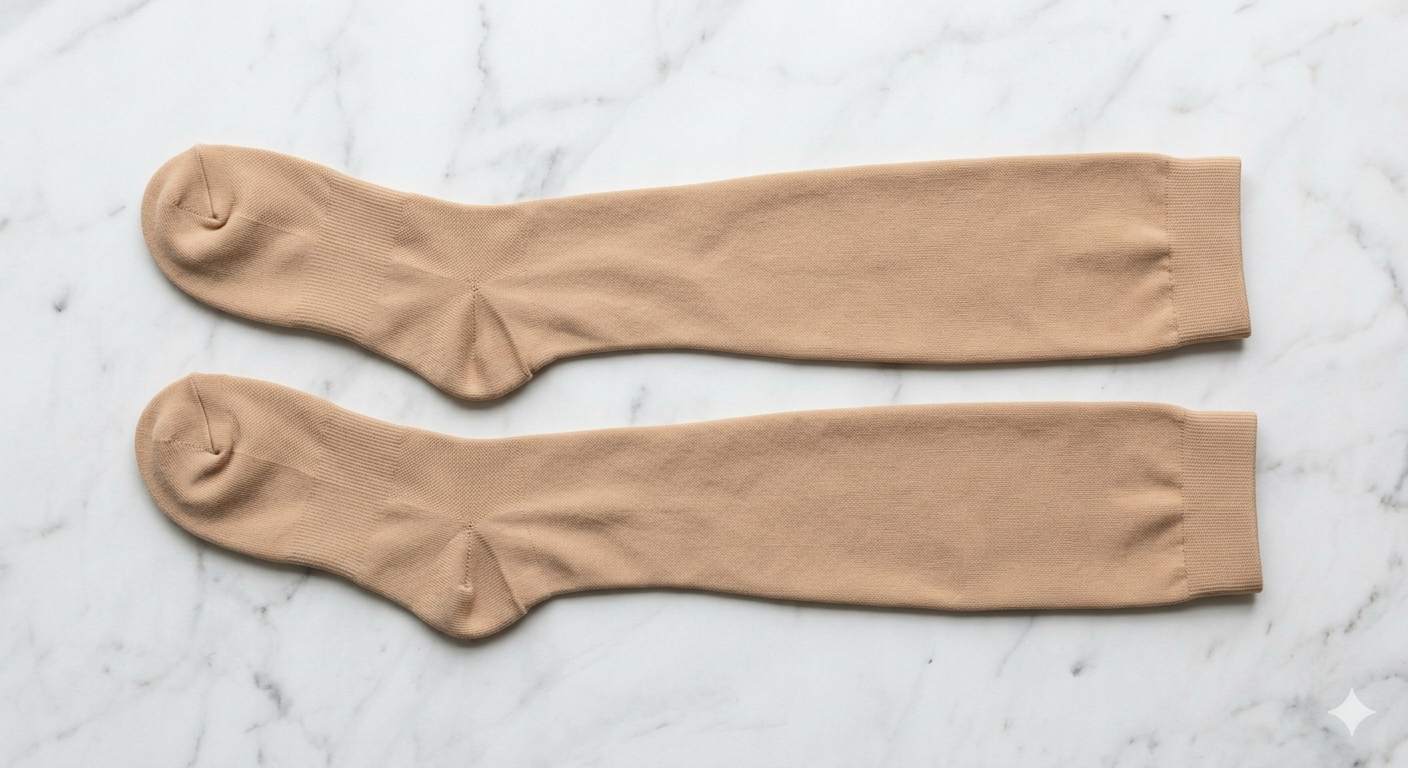
Sigvaris Style Sheer 780 20 to 30 mmHg
A firmer compression class in a still-elegant sheer finish. Appropriate when 15 to 20 mmHg hasn't been enough: persistent post-flight swelling or diagnosed venous insufficiency.
Best for: Persistent swelling, varicose veins, chronic venous insufficiency
Pros
- ✓ Firm 20 to 30 mmHg in a sheer finish
- ✓ Premium European construction
- ✓ Targeted for vein management
Cons
- ✗ Sizing is less forgiving at firmer compression
- ✗ Premium price
Common questions
Before your next flight
Put them on before you leave the house, not at 35,000 feet. The Comrad or JOBST UltraSheer at 15 to 20 mmHg are the easiest starting points. Both pack flat, look presentable, and hold their compression through a full travel day. If swelling is a recurring issue beyond flights, our guide to compression socks for swelling covers the broader picture.