Researched and fact-checked by the Shape & Support editorial team against the cited sources. Last updated October 2026. Informational only; not medical advice.
The shapewear that fitted perfectly in spring is sliding down by summer. Good news, in one sense. But it leaves you with a practical problem nobody's size chart answers: how do you buy something meant to fit closely when your body is still changing month to month?
The short answer: buy for your measurements today, never for a goal size. Measure your waist and hips in the morning, use the brand's own chart rather than your dress size, and favour pieces with hooks, adjustable straps or a wide size range so one garment follows you down. Re-measure about once a month, and replace a piece as soon as it starts sliding or rolling.
Why "buy the smaller size" backfires
It's tempting. You're losing steadily, so why not buy the size you'll be in two months? Because shapewear that's too small today does real harm today. Waistbands dig in and fold. Leg hems cut a line across the thigh. And loose skin gets pushed out over the edges, which is exactly the look you were trying to avoid.
The opposite mistake is just as common: keeping a piece long after it's become too big. A loose garment slides, and sliding fabric rubs. Friction and trapped moisture between skin surfaces are what cause the sore rash in skin folds (intertrigo). (Source: American Family Physician) A garment that fits closely and stays still is gentler on loose skin than one that's comfortably roomy.
So the goal isn't one perfect size. It's a sequence of close fits.
How to measure (and when)
You need a soft tape measure and two minutes. Do it in the morning before breakfast, standing relaxed, and write the numbers down with the date. Same time of day every time; otherwise you're comparing a morning body with an evening one.
| Measurement | Where exactly | Matters most for |
|---|---|---|
| Natural waist | Narrowest point, usually just above the navel | Briefs, torsettes, high-waisted shorts, fajas |
| Hips | Fullest part of the bottom, tape level all round | Shorts, thigh shapers, full-body pieces |
| Underbust | Directly under the bust, snug but not tight | Bodysuits and cami-style pieces |
| Upper thigh | Fullest part, about 5 cm below the crotch | Pieces with legs, where hems ride up |
Loose skin can make the tape sit unevenly. Keep it horizontal and snug against the body without pulling the skin; if a fold gets in the way, measure over it rather than lifting it.
Not sure what size you need after losing weight?
If you're choosing compression leggings, measure again first: your ankle, calf and thigh have probably changed. Our free size finder compares five brands' official size charts (Rejuva, JOBST, SIGVARIS, VIM & VIGR and CzSalus) from one set of measurements.
Find your size →Reading a shapewear size chart
Ignore your dress size. Shapewear brands size by body measurements, and one brand's medium can be another's large. Find the chart on the product page, look up your waist and hip numbers, and note which size each one points to.
If both measurements land in the same size, easy. If they don't, go by the measurement that matters most for that garment (see the table above). For a high-waisted brief, it's the waist; for shorts, the hips.
Between sizes? This is where the garment's construction decides. Adjustable pieces (hooks, straps) favour the larger size, because you can tighten them as you lose. Simple pull-on pieces have no adjustment, so pick the size that fits your key measurement now and accept you'll replace it sooner.
Features that let one piece last through a size change
Multi-row hooks. Two or three columns of hook-and-eye closures let you take a garment in as your waist shrinks. Common on fajas and torsettes, and the single most useful feature while you're losing.
Adjustable straps. On bodysuits and camis, adjustable straps keep the garment from sagging at the back and bust as your torso changes.
Wide size ranges. A style made from S to 4XL means you can buy the same piece again one size down and know exactly how it'll fit. That's worth more than it sounds; finding a style that works on loose skin is the hard part.
Silicone grip at the hems. Doesn't adjust anything, but it slows the sliding that starts when a garment is becoming too big, which buys you a few more weeks.
When to re-measure and replace
The CDC notes that people who lose weight gradually, about 1 to 2 pounds a week, are more likely to keep it off. (Source: CDC) At that pace your measurements change noticeably over a month or two, which is why a monthly check works well. Your garments will usually tell you before the tape does.
| Sign | What it means | What to do |
|---|---|---|
| Waistband folds over | Too big at the waist, or the edge sits on loose skin | Tighten hooks; if none, size down or choose a higher waist |
| Legs ride up | Too big at the thigh | Re-measure thighs and size down |
| Fabric wrinkles | Not enough tension to lie flat | Replace; it's no longer holding anything |
| Deep marks, numbness | Too small, or too firm for the hours worn | Size up or switch to a gentler level |
Adjustable picks that work while you're losing
Each of these handles a size change in a different way: hooks, straps, or a range wide enough to buy the same style again.
Takes in with hooks
SHAPERX Full Body Shaper (Faja)
Colombian-style faja with two rows of front hooks, so you can tighten it as your waist comes down instead of buying a new one straight away. Covers belly, hips and thighs in a mid-thigh cut, with an uncompressed bust that works with your own bra.
Best for: Events and fitted dresses while still losing
Pros
- ✓ Two rows of front hooks adjust as you lose
- ✓ Silicone strips at the leg hems stop rolling
- ✓ Zip crotch for the bathroom
Cons
- ✗ Too firm for all-day, every-day wear
- ✗ Hooks take longer to put on than a pull-on piece
Checking availability...
Adjusts at the straps
SHAPERMINT Scoop Neck Smoothing Cami
Gentle smoothing cami with adjustable straps, so the fit at the back and bust can follow your torso down. Comfortable enough to wear all day, which makes it a sensible everyday base while sizes are still moving.
Best for: Back and bra-band smoothing, everyday wear
Pros
- ✓ Adjustable straps follow your size down
- ✓ Sizes to 4X-Large
- ✓ Machine wash
Cons
- ✗ Gentle smoothing, not firm hold
- ✗ Ends at the hips, so it won't help lower-belly skin
Checking availability...
Easy to rebuy one size down
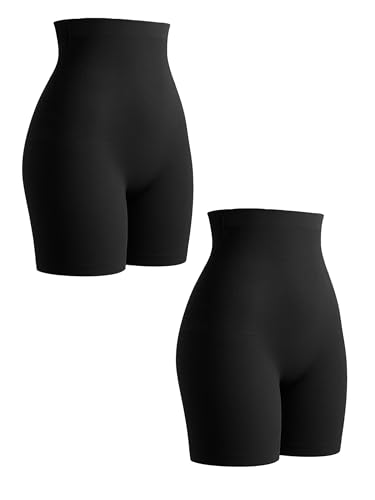
SHAPERMINT High-Waisted Shapewear Shorts
A simple pull-on short with no adjustment, but sold from S to 4XL at a price that makes buying it again one size down realistic. Once you know a style suits your shape, that consistency is worth a lot.
Best for: Everyday smoothing under dresses, a repeatable basic
Pros
- ✓ Sizes S to 4XL
- ✓ High waist sits above lower-belly skin
- ✓ Accessible price for rebuying
Cons
- ✗ No hooks or straps to adjust
- ✗ Replace it once it starts sliding
When your weight settles
Once your weight has held steady for a few months, it's worth buying your firmer, more expensive pieces in your settled size. If you're considering skin removal surgery, surgeons usually want your weight stable for at least six months first, and they'll specify the post-operative garments themselves. (Source: Cleveland Clinic)
Not sure whether you need shapewear or compression for a particular day? Our guide to compression garments vs shapewear for loose skin sets out which to wear when, and if most of your loose skin sits as a fold over the lower belly, see shapewear for an apron belly.
Read next
Best Shapewear for Loose Skin After Weight Loss
Picks by body area, where the edge should sit to stop rolling, and how firm to go for each occasion.
Common questions
Where to start
Measure tomorrow morning, write the numbers down, and check them against the chart of the piece you wear most. If it's already too big, that's the one to replace first.