Researched and fact-checked by the ShapeAndSupport editorial team. Last reviewed 26 August 2026. Product picks are chosen on fit, fabric and uniform compatibility, not commission rates.
Hour four is fine. Hour eight is when your shoes start feeling tight. By hour eleven, on a DXB to JFK sector, you're not thinking about service standards anymore, you're thinking about your feet. A 12-hour flight isn't a longer version of a 6-hour one; it's a different problem, and it needs a routine, not a single product.
Why a 12-hour flight is a different problem than a 6-hour one
Cabin pressure on a modern aircraft sits at the equivalent of 5,000 to 8,000 feet, which pushes fluid toward your lower legs over time (Source: GPNotebook Cardiovascular Medicine, gpnotebook.com). On a short flight, that shift barely registers. Past hour six or seven, it compounds: you've been mostly upright and moving less than usual, cabin humidity has been sitting at 10 to 20% the whole time, and your calf muscles (the pump that moves blood back up your legs) haven't done much work.
None of this is a single moment you can fix with one product mid-flight. It's cumulative, which means the routine matters more than any individual item in your bag.
The routine: before boarding, mid-flight, after landing
Before boarding. Put your compression on at the hotel or at home, not at the gate. It takes a few minutes to settle properly, and starting the flight already wearing it beats trying to catch up on swelling that's already started.
Mid-flight. Move your ankles and calves during service lulls; even standing in the galley for a few minutes helps more than staying seated the whole sector. Drink water on a schedule rather than only when you remember, since the cabin's low humidity dehydrates you faster than you'd notice on the ground.
After landing. Don't take your compression off the second you're through customs. Give it another hour or two if you can; that's often when the cumulative swelling from a long sector actually peaks, not at touchdown.
Your 12-hour kit: compression + shapewear that work together
These do two different jobs, and it's worth keeping that straight. Compression hosiery manages circulation and swelling. Shapewear manages silhouette and uniform fit. You often need both, but neither substitutes for the other.
For compression, the Comrad Nylon Knee High Socks at 15 to 20 mmHg, the standard range recommended for flight crew (Source: PMC4081237, pmc.ncbi.nlm.nih.gov), are easy to put on before a shift and just as easy to swap out during a layover. If you'd rather have full-leg coverage under trousers, the SIGVARIS Soft Silhouette Leggings hold the same 15 to 20 mmHg range without a waistband that digs in by hour ten.
For shapewear under your uniform, the SPANX Mid-Thigh Sheers Full Length combines sheer hosiery with light shaping in one piece, useful if your uniform includes a skirt and you don't want to layer two separate garments. For a solid, no-visible-line option under trousers or a fitted skirt, the HONEYLOVE ShadowSculpt High Waist Short holds its shape through a full shift without rolling at the waistband.
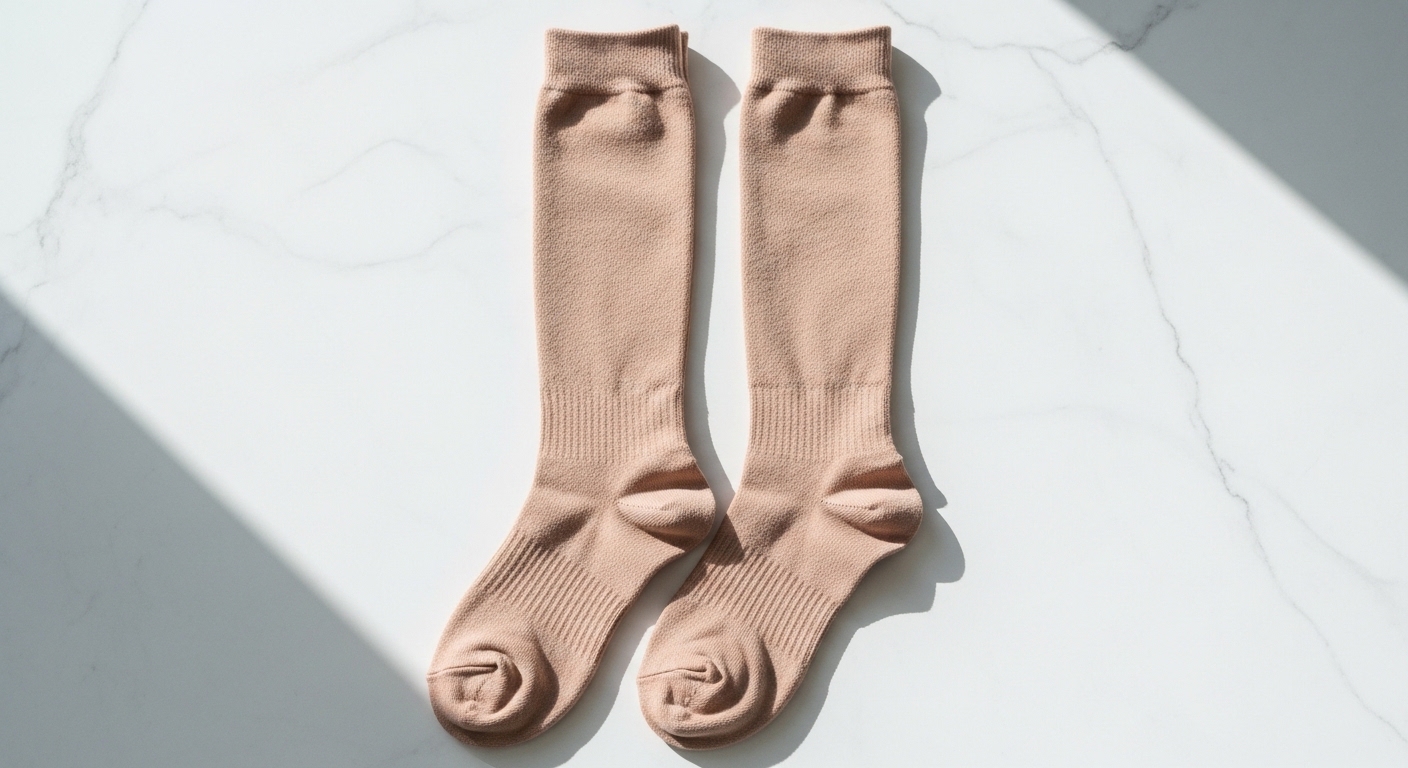
Comrad Nylon Knee High Socks 15-20 mmHg
Easy to put on before a shift and just as easy to swap out during a layover. The 15 to 20 mmHg range is the standard class recommended for flight crew, and the nylon knit breathes well on long sectors.
Best for: Crew who want a simple, reliable knee-high
Pros
- ✓ Standard 15 to 20 mmHg flight class
- ✓ Easy on and off at layovers
- ✓ Breathable nylon knit
Cons
- ✗ Thin knit shows wear sooner
- ✗ Fewer neutral shades
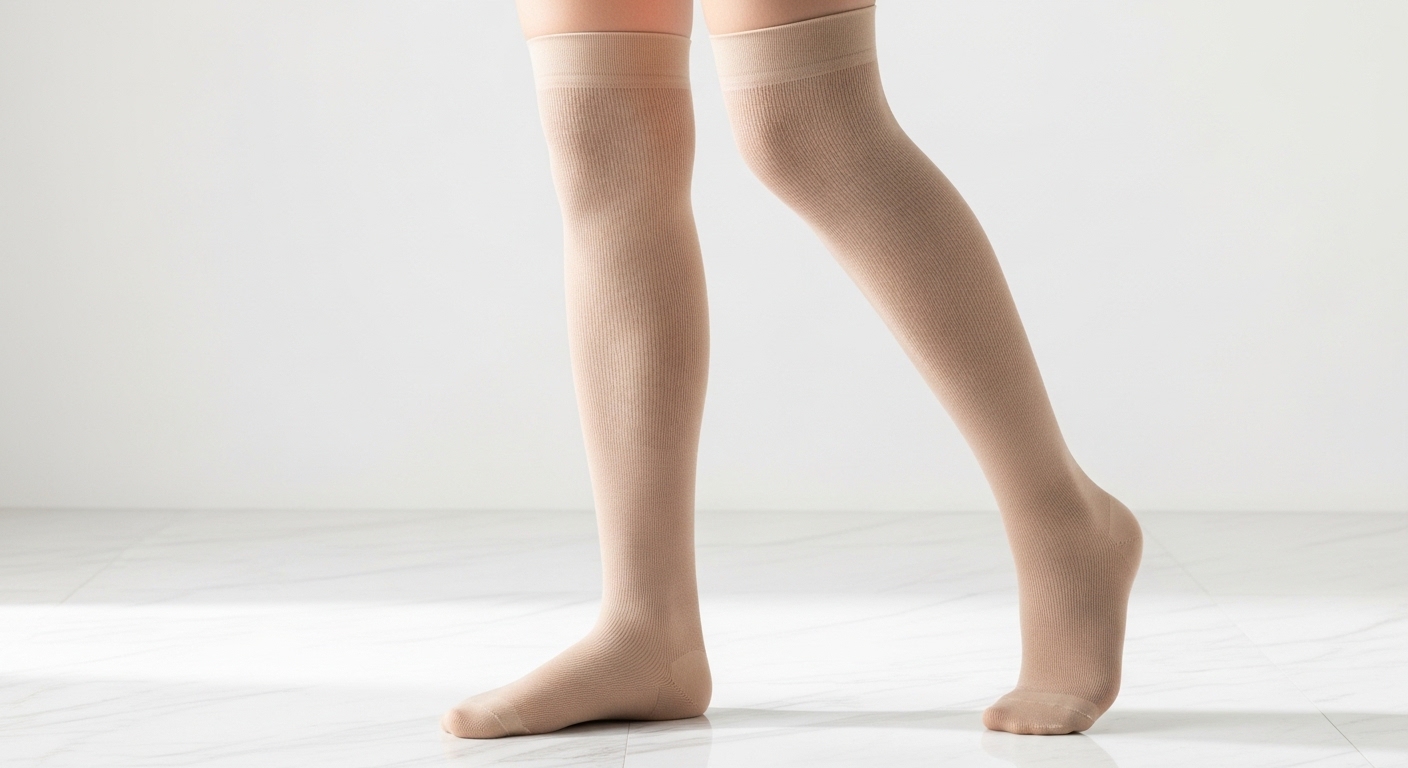
SIGVARIS Soft Silhouette Leggings 15-20 mmHg
Full-leg graduated compression in a legging that reads as ordinary hosiery under trousers. The waistband sits comfortably through hour ten, which is where most full-length options start to dig in.
Best for: Full-leg coverage under uniform trousers
Pros
- ✓ Same 15 to 20 mmHg class in a legging
- ✓ Comfortable waistband on long sectors
- ✓ Medical-grade knit quality
Cons
- ✗ Warmer than a knee-high
- ✗ Premium price
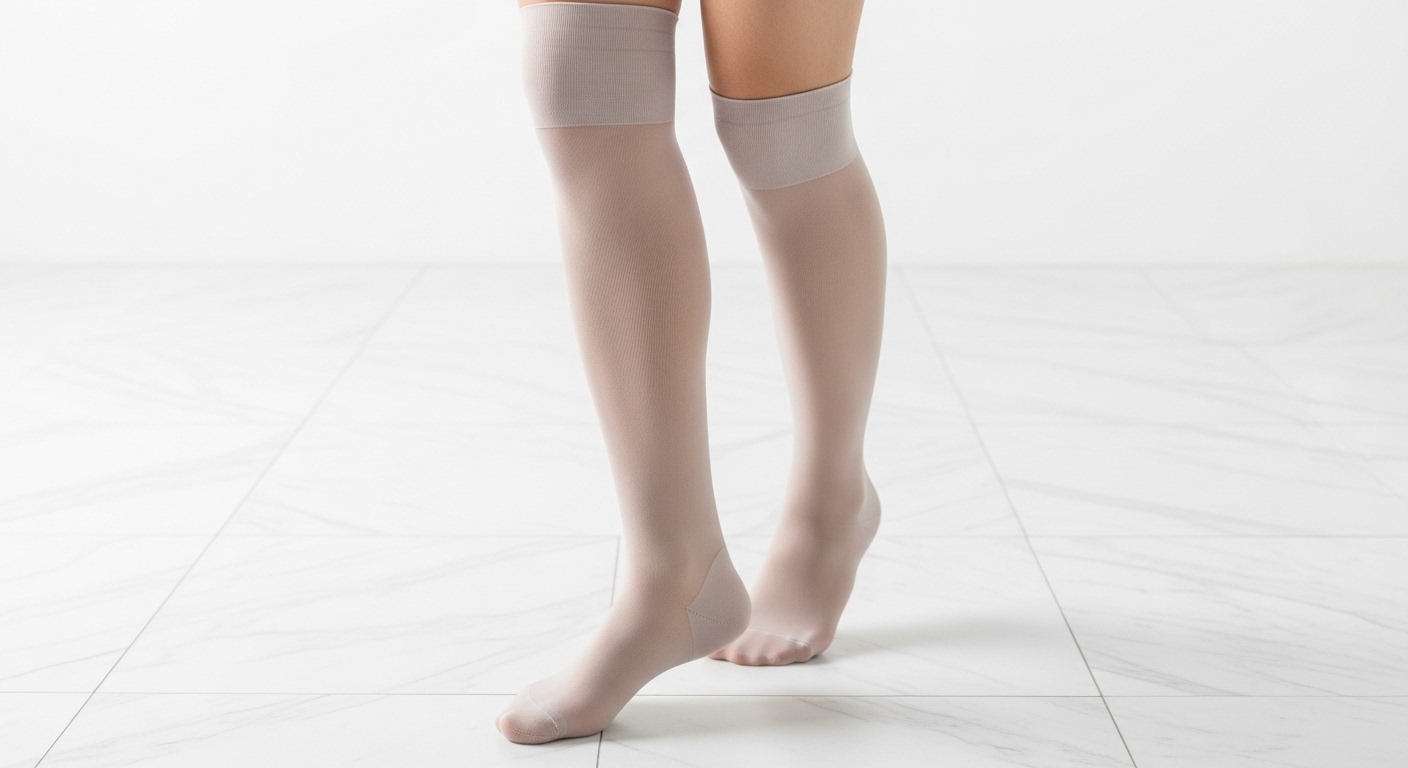
SPANX Mid-Thigh Sheers Full Length
Sheer hosiery with light shaping in one piece, so you are not layering two separate garments under a uniform skirt. The sheer leg reads as regulation hosiery while the shaping brief smooths the silhouette.
Best for: Uniform skirts without double layering
Pros
- ✓ Hosiery and shaping in one garment
- ✓ Sheer leg passes uniform standards
- ✓ No visible line at mid-thigh
Cons
- ✗ Light shaping only, not firm control
- ✗ Sheer knit can snag
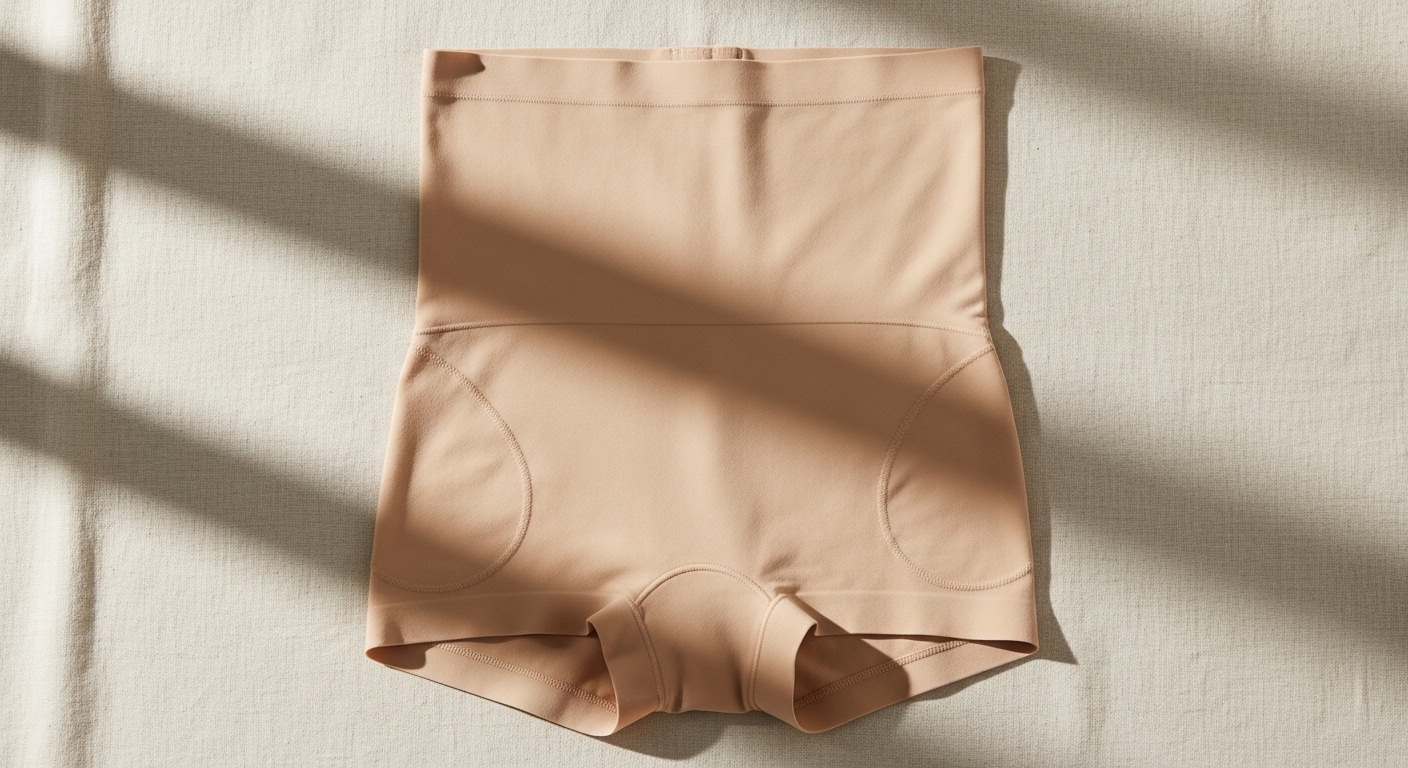
HONEYLOVE ShadowSculpt High Waist Short
A solid, no-visible-line short that holds its shape through a full shift without rolling at the waistband. Works under trousers or a fitted skirt where sheer hosiery is not required.
Best for: No-line shaping under trousers or fitted skirts
Pros
- ✓ Stays put through a 12-hour shift
- ✓ No rolling at the waistband
- ✓ Smooth under fitted uniforms
Cons
- ✗ Too warm for the hottest routes
- ✗ Firm fit takes getting used to
A necessary counterpoint on DVT
It's worth being direct about this, because long-haul swelling gets conflated with deep vein thrombosis (DVT) more than the evidence supports. A widely cited review found no definitive evidence that prolonged travel, air travel included, increases DVT risk on its own; of the DVT cases studied, only 9 of 39 patients had traveled by air at all (Source: PMC434500, pmc.ncbi.nlm.nih.gov). Aviation-specific data does put the absolute DVT risk at roughly 1 in 4,656 flights, higher for people with individual risk factors like oral contraceptive use or a personal history (Source: ASMA, asma.org). Ordinary swelling after a 12-hour sector is normal; sudden one-sided swelling, pain, or warmth in one leg is not, and that's a call to a doctor, not a compression sock.
Read next
5 Compression Tips for Long-Haul Flights
The five compression habits crew actually use on long-haul rotations: the right mmHg, the right timing, and the products that hold up under uniform.
Common questions
One last thing
Build your kit before your next long rotation, not the night before. For more on picking shapewear specifically for your uniform, see our uniform shapewear guide; for help choosing between compression leggings and knee-highs, LymphaticLeggingsGuide's format comparison covers that decision directly.
Related reading
The sock itself matters as much as the routine. See our best compression socks for nurses for a straight comparison of JOBST, Comrad and Sigvaris at each compression class, or our best compression socks for long shifts if you want picks that survive frequent washing.